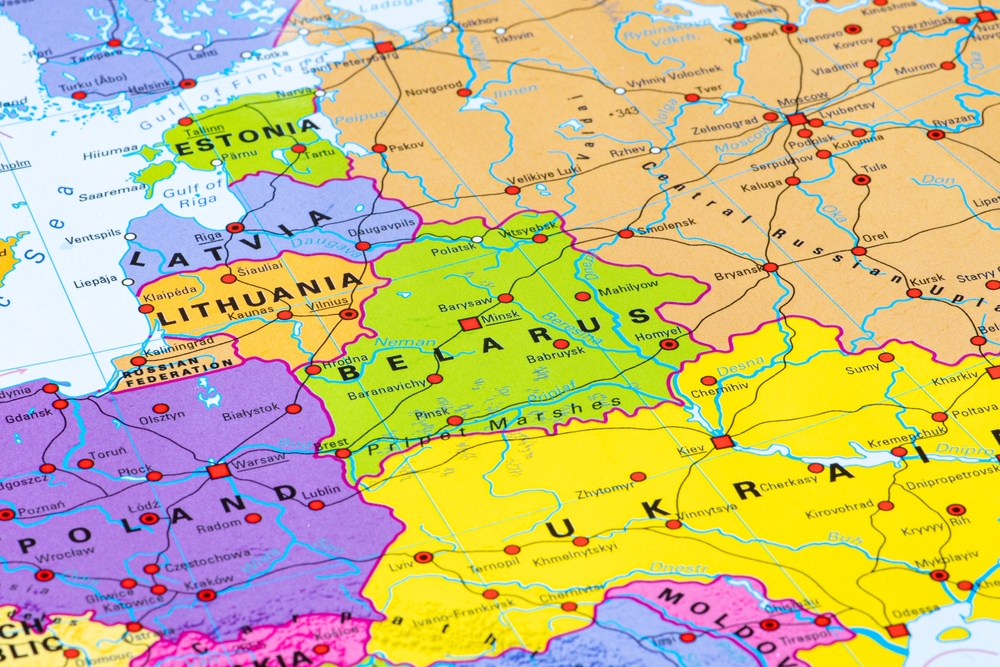
The Tension in Eastern Europe Intensifies: Poland and Latvia are taking unusual measures in their airspace to prevent further incursions by Russian unmanned aerial vehicles (UAVs) into NATO territories.
Latvia Closes Airspace at the Border
 Photo: Shutterstock
Latvia announced the closure of its airspace up to a depth of 50 kilometers along the border with Russia and Belarus, starting September 11 at 18:00 until at least September 18, with a possibility of extension.
The move follows events in Poland where swarms of drones crossed from Belarus, an incident described by Latvian Defense Minister Andris Spruds as "a blatant violation of NATO's airspace."
According to him, the measure will allow for better control over border areas, improve the operational response of air defense systems, and integrate additional mobile units. The restriction will apply up to 6,000 meters, allowing commercial flights to continue at higher cruising altitudes.
Poland Imposes Flight Restrictions and Broad Lockdown Until December
 Photo: Shutterstock
Simultaneously, Poland announced unusual flight restrictions in the eastern part of the country, from September 10 until December 9, 2025, at the request of the army's operational command.
The move comes after several instances of Russian drone incursions, including one shot down over a populated area, sparking public criticism over the need for better preparedness against aerial threats.
According to the announcement by the Polish Air Navigation Services Authority (PANSA), the restrictions include:
- At night (sunset to sunrise): An absolute ban on civilian flights, except for military flights.
- During the day (sunrise to sunset): Flights are allowed only for aircraft with an approved plan, an active transponder, and continuous communication with flight control.
- UAVs and Drones: Banned from flying at all hours without exception.
- Exceptions: Emergency flights only – medical evacuation, rescue, and critical infrastructure protection – and only with prior approval from the air command center.
The Polish Defense Ministry emphasized that this is a temporary but critical step as part of overall preparedness against increasing aerial threats.
NATO Boosts Readiness
Both decisions reflect the growing trend of NATO countries in Eastern Europe to take dramatic steps against the rising threat of Russian UAVs. The restrictions in Poland and Latvia aim to enhance tracking and response capabilities, provide broader operational freedom to air defense forces, and prevent further incursions into alliance territories.