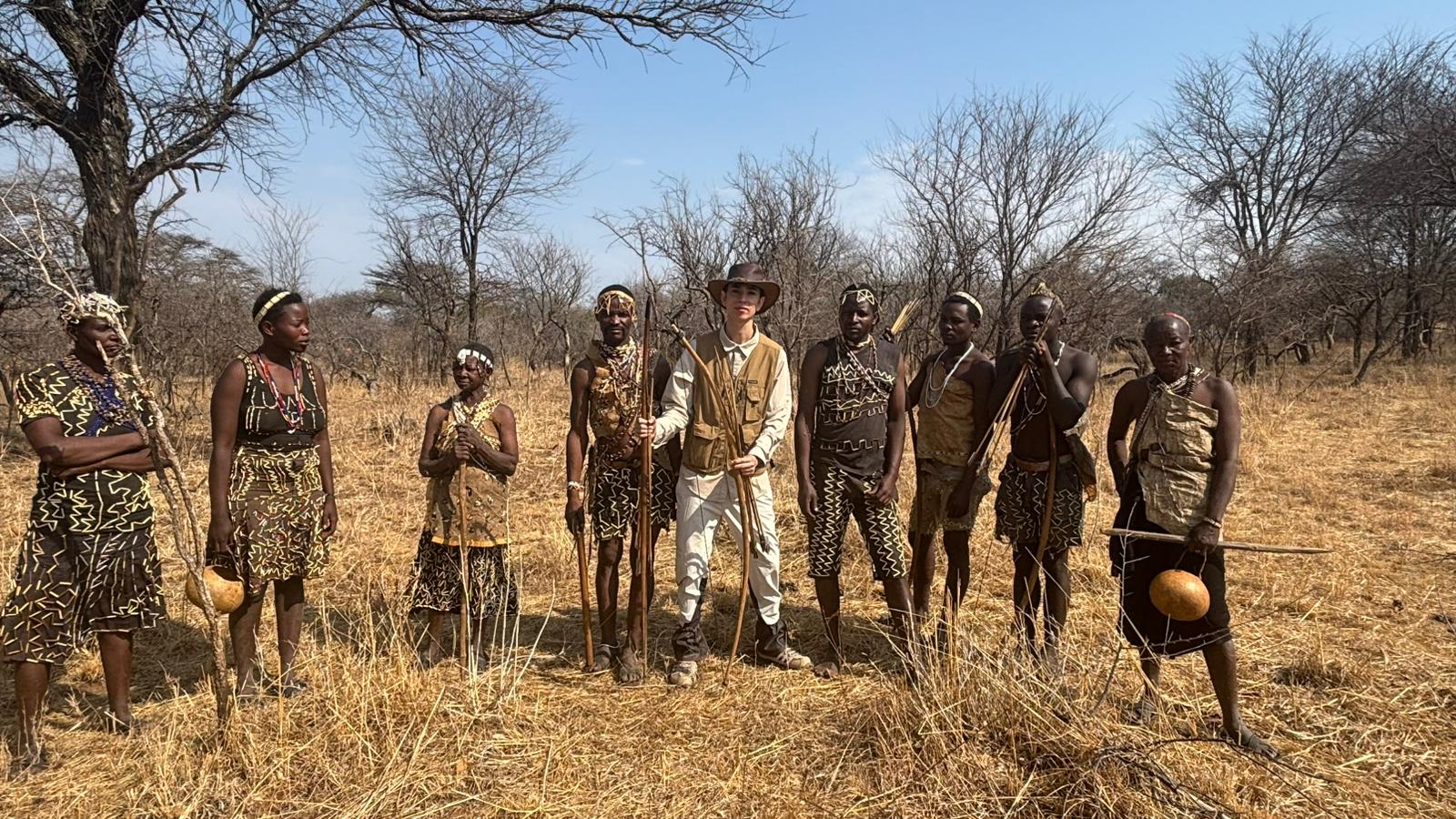
Encountering the Rare Hadza Tribe
In the early morning, around 5 a.m., several spotters from my lodge in Tanzania set out to find one of the rarest tribes, which consists of only 900 people.
"It is very difficult to find them, and the chances are very low," they told me. But I decided not to give up and gave it a small chance. According to stories, this tribe lives like prehistoric man. Unlike the Maasai, who have "been commercialized," this is something different—pristine, small, rare.
I traveled to Tanzania for a safari adventure for the second time, and this time, in addition to the magnificent wildlife, I chose to explore areas where I could meet the rarer tribes of Tanzania. Together with Safari Company, a firm specializing in African tours, we designed a route. "This is a small hunter-gatherer tribe, much like prehistoric man. They have no phones or money and are the only ones permitted to hunt animals for food," they told me. It seemed completely unimaginable.
Hadza tribe is one of the last groups in Africa, perhaps worldwide, that still lives as hunter-gatherers almost unchanged since the Stone Age. They reside in northern Tanzania, mainly around Lake Eyasi, near the Serengeti National Park, and they number fewer than 1,000. Only a few hundred maintain the traditional lifestyle, without agriculture, significant possessions, or permanent homes.
The Hadza live in small groups of about 20 to 30 people, moving according to the seasons and the availability of food and water. They neither own land nor grow crops or raise domestic animals. Men are responsible for hunting monkeys, birds, or antelopes using bows and arrows tipped with natural poison, while women gather tubers, roots, wild fruits, and honey daily. Their shelters are straightforward, made of branches and leaves, and sometimes they sleep under the open sky.
The Hadza language, also called Hadza, is considered isolated, with no known relation to other African or global languages. It includes rare click sounds reminiscent of the Khoisan languages in southern Africa, but there's no verified connection. In an era where many languages disappear, Hadza is notably rare and unique.
Genetically and anthropologically, the Hadza are considered one of the closest groups to our ancient ancestors. Studies show the tribe has lived in the same area for tens of thousands of years, with researchers viewing them as a group that can teach us about modern human life in its earliest form. All their knowledge and culture are passed orally from generation to generation without writing or formal documentation.
The Moment I Found Them
We reached them with the guide's whistles (they responded) and very long foot searches. When I met them, they weren't afraid but looked at me as if I had landed from Mars. However, the family matriarch, appearing around 80 years old, immediately offered me nuts she found and cracked for me. They were between rocks after starting a fire with stones.
Soon after, they simply got up and started walking briskly to find their next prey. Some tried to find honey in the trees but were unsuccessful. They walked and walked—and I quickly became exhausted. Let's say I was panting crazily while the tribe's matriarch walked much faster than me. They couldn't communicate with us, even the Swahili-speaking guide spoke to them with hand signals. They weren't given money or gifts—they understood it was a way to share their culture, welcoming visitors without hostility. Mainly, they focus on finding food, hence they didn't stand and pose for photographs.
The Hadza society is simple yet egalitarian. There is no rigid hierarchical structure, no fixed leader or "chief," and decisions are made collaboratively, involving all group members. Property is shared equally, and everything hunted or gathered is communal. They have no organized religion or regular religious ceremonies. Their belief system is directly linked to nature and the spirit of the environment, without religious institutions, written laws, or formal prayers.
But this lifestyle is under threat. In recent years, the Tanzanian government has been encouraging the Hadza to settle permanently, send their children to school, and transition to an agricultural lifestyle, leading to a gradual loss of cultural identity. Meanwhile, their traditional lands are being overtaken by farmers, mining companies, and tourism industries. Tourism, by the way, is both a blessing and a curse—it brings recognition but also risks turning them into a "tourist attraction," potentially harming their dignity and way of life.
The Hadza tribe sparks immense interest among researchers, anthropologists, and travelers—not out of romantic nostalgia, but from genuine curiosity about how humans lived before agriculture, cities, and technology. For many, meeting them is not just a glimpse into an imagined world but also a reminder of what we've lost along the way.
Matan Hetzroni is a content creator in lifestyle and luxury fields Matanhetzroni@