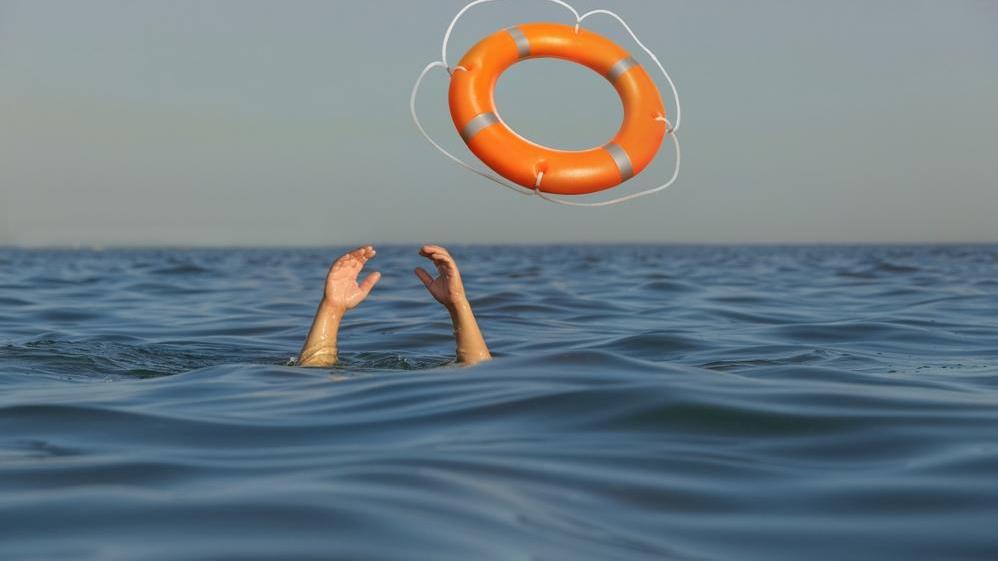
A passenger or crew member falling into the sea from a cruise ship is an extremely rare event. However, when the unfortunate thing does happen, the story receives extensive coverage in the world's media.
There have been several recent cases of people falling into the water. Just yesterday, we spoke about the tragic case of a passenger on the Norwegian Jewel, belonging to cruise giant Norwegian Cruise Line, who fell into the Atlantic Ocean and disappeared into the depths. The incident occurred on Monday, October 20, when the ship was in the Azores region near Portugal. Extensive searches for him ultimately did not lead to his location and he was declared missing. The passenger fell into the water for an unknown reason during a transatlantic voyage from Portugal to Miami.
"The appropriate authorities were immediately notified, and an extensive search and rescue initiative was carried out, involving several vessels. The search, unfortunately, was unsuccessful, and the ship was released by the authorities to continue its voyage. Our team is assisting the passenger's family at this difficult time, and our thoughts and prayers are with them," NCL stated.
Man Overboard Incident Statistics
These incidents are commonly referred to as Man Overboard Incidents. According to a report by the Cruise Lines International Association (CLIA) on these incidents, the decade between 2009 and 2019 saw a general decline in the number of cases in which passengers or crew members fell overboard from cruise ships, although there have been slight fluctuations in the number of incidents over the years.
According to the report, 23 incidents were reported in 2009, and their number remained almost stable in 2010 and 2011, with 22 cases each. In the following years, a downward trend was evident. In 2013, only 12 incidents were recorded, marking the lowest number in a decade. However, starting in 2014, a renewed increase was seen: 18 incidents that year and 24 in 2015. In 2017, the number returned to a relatively low level, but in 2018-2019, there was another increase to 23 and 25 incidents, respectively. Despite this, the general trend between 2009 and 2019 remained downward.
In 2019, the report highlighted 25 such incidents, the highest number in a decade. However, a particularly encouraging statistic is that the number of survivors reached an unprecedented high in 2019: about 36% of those who fell that year were rescued alive.
The Risk of Falling Overboard Is Lower
At the same time, the data shows that despite the expansion of the cruise ship fleet and the steady increase in the number of passengers, the rate of incidents relative to the size of the fleet has actually decreased. In other words, as the industry has grown and the ships have become more advanced and safer, the overall risk of falling overboard has decreased.
A third of all “person overboard” incidents in the entire decade involved crew members rather than passengers, with the number of fatalities among them remaining relatively constant at an average of about 4.5 per year, out of tens of thousands of crew members working in the fleet at any given time.
In summary, the data reflects an encouraging trend thanks to the low rate of incidents and the increasing chances of rescue, thanks in part to new technologies and stricter safety protocols.
So what causes people to fall into the sea? The findings indicate that most cases are the result of deliberate action or reckless error, such as a girl who fell into the Atlantic Ocean from a balcony railing on a Disney Cruise Line cruise ship in July of this year and was saved after her father jumped into the water and held her for about 20 minutes until rescuers arrived.
Oscar Code: How Ships Respond to “Man Overboard” Situations
As soon as a person is identified or reported to have fallen overboard, a maritime emergency procedure known as “Code Oscar” is activated. This is an international signal indicating the condition of a person in the water. The announcement is made over the internal public address system, and from that moment, the entire team moves into coordinated and rapid rescue action.
In the first stage, the ship slows down and stops to prevent drifting away from the scene, and an immediate search begins. The ship's crew throws flotation devices, such as a lifebuoy, into the water to mark the area where the person fell and provide temporary support. At the same time, the exact point of fall is located using cameras, sensors, and eyewitness reports.
Many modern cruise ships are equipped with automatic fall-over detection systems based on infrared cameras and motion sensors that detect when a person crosses the guardrail line and falls. The system sends an immediate alarm to the bridge, along with a video recording of the event, to determine the exact location.
In the next stage, rescue boats and rescue teams are dispatched to search for the person. At the same time, a call is sent to nearby local maritime authorities, such as the Coast Guard, Navy, or nearby ships that can join the search.
The bottom line is, despite all the precautions and technology, passengers should take responsibility for their safety and avoid risky behavior like climbing over railings or running on wet decks. Also, consider staying in an interior room without a balcony if you are traveling with small children and are concerned.