New route to the Philippines. While Vietnam has become a magnet for Israeli tourists and Thailand a familiar Asian classic, the Philippines is on the brink of a major breakthrough in the Israeli market.
In December 2024, a joint tourism agreement between the Philippines and Israel was signed, with a clear central goal: launching direct flights between Tel Aviv and Manila by next year.
A major barrier for Israeli travelers so far has been the long flight and the need for layovers through Dubai, Ethiopia, or Bangkok.
The Philippine Ambassador to Israel, Ms. Aileen Mendiola, reveals in an exclusive interview with Passport News, that the issue is a top priority for her: "We are in very serious talks with an Israeli airline that is showing great interest in the route. The goal is to launch direct flights during 2026. Once there is a direct flight, our tourism department will significantly increase its advertising and exposure budget in Israel—this is one of my main goals as an ambassador."
 Philippine Ambassador Aileen Mendiola. Courtesy of the Philippine Tourism Office
The ambassador also reveals surprising statistics: currently, only about 25,000 Israeli tourists visit the Philippines each year, placing Israel 27th on the list of tourist source countries for the Philippines. But in the opposite direction, the numbers are much more impressive: this year, approximately 45,000 Filipino tourists came to Israel—who are not caregivers, but tourists arriving through Jordan or Dubai, mostly for religious reasons, seeing Israel as the Holy Land and the origin of Christianity.
"That's 70,000 passengers round-trip," the ambassador explains. "Numbers like these justify at least a weekly direct flight." Indeed, the ambassador tells us that after a conversation with the Israeli Minister of Tourism, Khaim Katz, there is a mutual understanding that establishing direct flights could attract about 100,000 Israeli tourists annually to dive in the Philippines and also strengthen Filipino tourism coming to Israel.
A direct flight is expected to change the picture entirely, shorten the journey, reduce costs, and make the Philippines a much more accessible destination for the Israeli audience, which is currently searching for new destinations in Asia.
 Courtesy of the Philippine Tourism Office
Much More Than Beaches and Surfing - 7,641 Reasons to Fly to the Philippines
For many Israelis, the Philippines is associated with white beaches, turquoise waters, and surfing waves, but that's just one layer of the story. The country offers a vast array of experiences that Israelis are not familiar with. With 7,641 islands, the Philippines is essentially a natural amusement park suitable for all types of travelers: from diving and extreme sports enthusiasts to those seeking romance and tranquility.
In the north of the country are the Batanes Islands—a wild and traditional area with almost no cars and often closed to entry and exit. On the other hand, it is a beautiful area with dramatic landscapes of green hills and cliffs over the sea, an atmosphere of another world, and lots of peace. "This is my dream destination," the ambassador reveals to us.
Not far from there are the ancient rice terraces in the north of the Philippines, often called "the eighth wonder of the world." The area is home to local tribes, and one of the surprising attractions is a traditional tattoo artist over 100 years old, already known among Israeli backpackers. For adventure seekers, there are also active volcanoes, led by Mount Pinatubo, with treks, lakes, and even natural mud baths.
 Chocolate Hills - Courtesy of the Philippine Ministry of Tourism
And in the romance department? Palawan Island, especially Coron, is considered one of the great gems of the Philippines: resorts located on entire islands, hidden lagoons, and romantic dinners on a golden sand strip that disappears with the tide.
Palawan is considered a must-visit in the Philippines, with stunning limestone cliffs, crystal-clear waters, and white sandy beaches. El Nido, located in the north of Palawan, offers hidden lagoons, sea caves, and about 40 diving sites. It's the perfect postcard picture of a tropical paradise.
The Religious Connection: The Jubilee Year and Filipino Catholics
One surprising factor for the high number of Filipino tourists in Israel is the religious connection. "We are 90% Catholics and Christians," the ambassador explains. "The Holy Land is a dream destination. And this year is the Jubilee Year, which occurs only once every 25 years. According to our belief, one receives a special blessing if visiting the Holy Land in such a year." There is also a large religious organization called Iglesia Ni Cristo (Church of Christ) with millions of believers, for whom Israel is the Holy Land. "They are very wealthy tourists," the ambassador emphasizes. "It's worth investing in them."
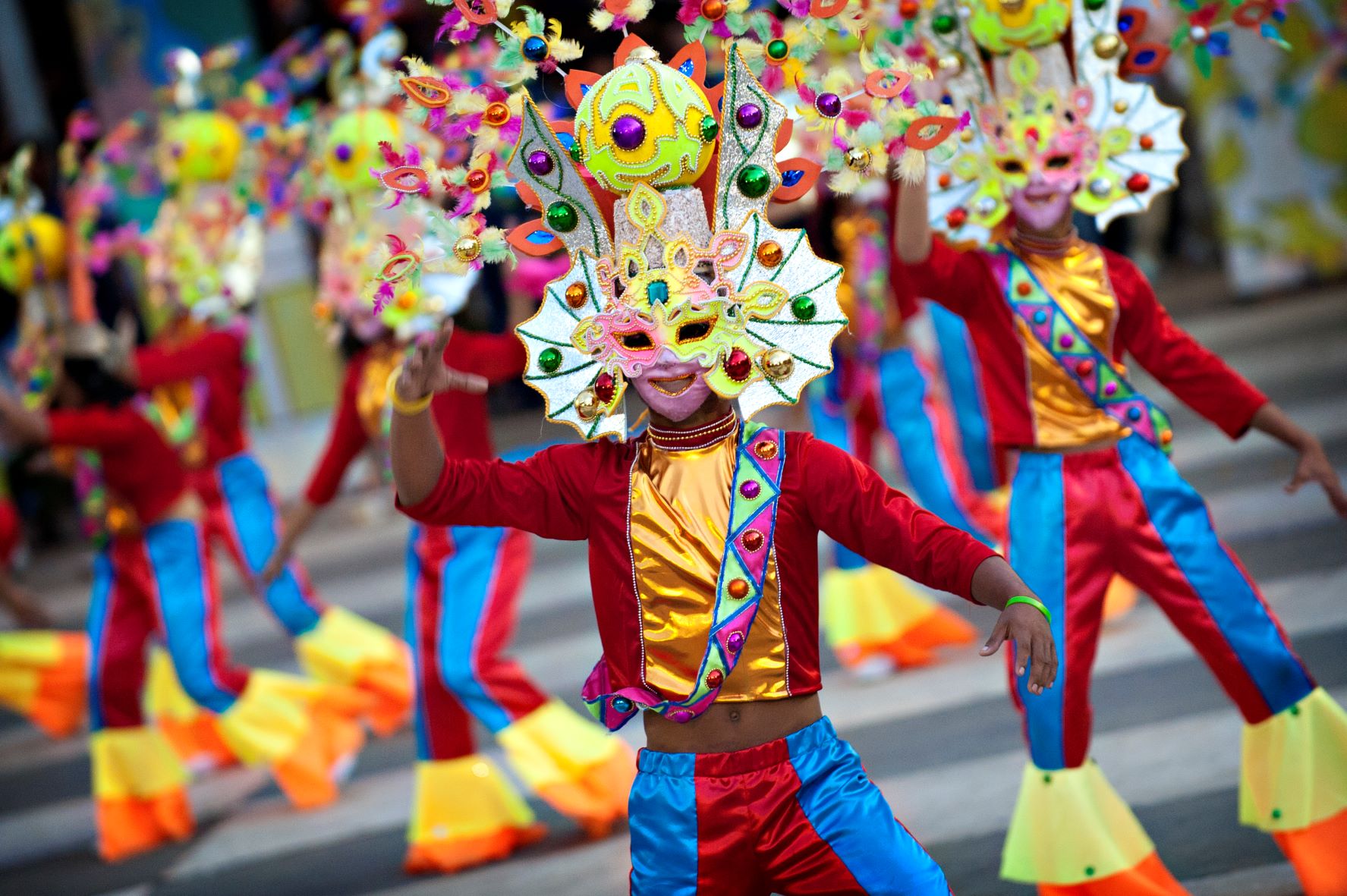 Mascara Festival - Courtesy of the Philippine Ministry of Tourism
The Filipino Community in Israel: Ambassadors in Practice
According to the ambassador, the Filipino community in Israel serves as a natural promoter of the country. "They post pictures from Jerusalem and the Dead Sea, and Israelis are exposed to us," she says. "On Fridays and Saturdays, many Israelis come to the central station in southern Tel Aviv because it's so colorful and tasty there."
This creates a unique cultural connection. Israelis become familiar with Filipino food, hear the language, and indirectly get exposed to the culture. This is something that doesn’t exist with other Asian destinations.
Cuisine, Personal Security, and Warm Hospitality
The Philippines offers culinary wealth that combines Spanish, Chinese, and American influences. In Manila alone, there are over 100 places recognized in the Michelin Guide (stars and Bib Gourmand). The ambassador emphasizes that beyond the food, the real experience is the people: "Our culture is based on family and caring for others. The Israeli traveler will feel immediately at home thanks to the widely spoken English and the authentic smile that accompanies every encounter."
The Philippines is considered a safe destination for tourists, especially Israelis, except for certain areas in the far south that locals also avoid. Beyond that, it is the largest Catholic Christian concentration in a predominantly Muslim Asia, making the Philippines politically safe for Israelis, aside from the local warmth and hospitality.
With direct flights on the horizon, a warm hospitality culture, and attractive prices, the Philippines is no longer just a destination for backpackers and surfers, but the next destination for families, couples, and Israeli culinary enthusiasts looking for their next paradise. We only have to wait for the direct flights to reveal this wonderful destination to us.