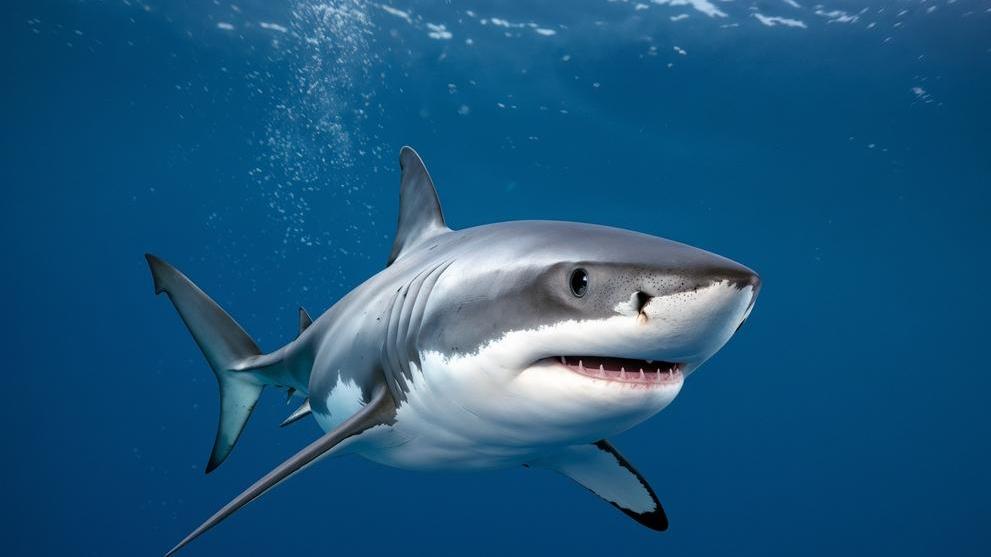
Sharks in Danger: 51 out of 74 species of sharks in the Mediterranean Sea are in danger of extinction, according to a new report by World Wildlife Fund (WWF), an international non-profit organization dedicated to conserving nature, species diversity, and promoting a sustainable marine and terrestrial environment.
According to the report, 74 species of cartilaginous fish, including sharks, rays, and chimaeras, are documented in the Mediterranean Sea. Of these, 51 species, which constitute about 69%, are defined as threatened species with varying levels of risk of extinction. This situation reflects a deterioration in the conservation assessment since the update of a previous report.
Chimeras are a group of cartilaginous fishes, evolutionarily close to sharks and rays, but with distinct characteristics. They are not ordinary sharks, but belong to the order of cartilaginous fish. Rays also have cartilaginous skeletons, like sharks, but have broad bodies and fins that resemble wings and usually live near the sea floor.
The report indicates that, despite the high number of species at risk, 28 species still lack management or protection measures within the framework of international policy. Of these, 10 species are already classified as threatened (7 vulnerable, 3 endangered), highlighting a striking gap between the need for protection and the actions implemented.
The main figure in the report shows that the threat to marine species in this area of the Mediterranean Sea is much higher than the global situation: while only about 37% of the world's species are classified as threatened, the Mediterranean Sea report states that 69% of species are threatened. Thus, the report identifies the Mediterranean Sea as a particularly sensitive area, even relative to other oceans.
A general assessment is that the Mediterranean Sea is already experiencing regional extinctions of certain marine species, and conservationists warn that continued faltering in conservation efforts could lead to more extinctions in the coming years, unless effective measures are formulated and implemented at the regional and subnational levels.
The report concludes with an unequivocal call for action: full implementation of fisheries and habitat protection laws, improved monitoring and enforcement, and increased scientific data collection on shark and ray populations to monitor and assess changes in real time.