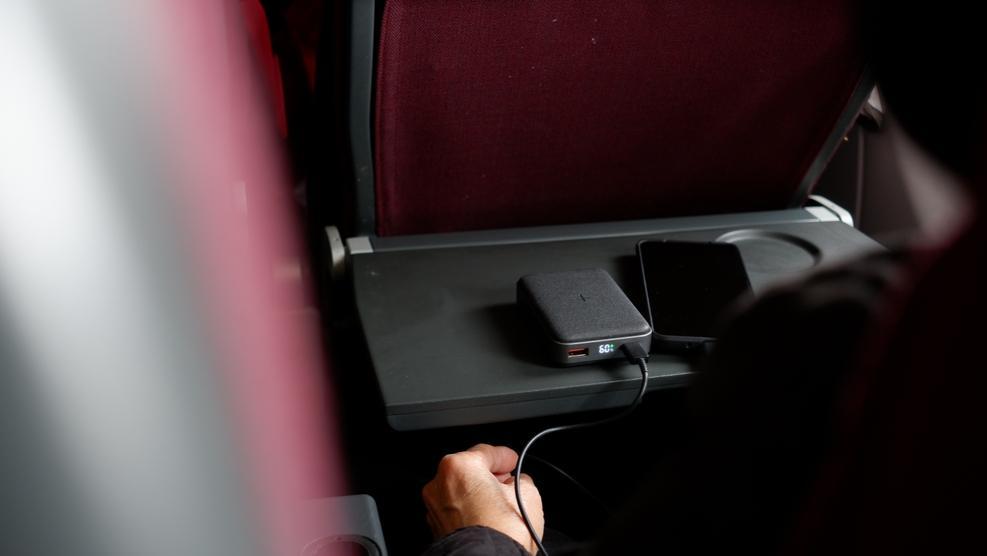
SWISS Airlines and the Lufthansa Group announce stricter procedures for carrying and using backup batteries (power banks) on flights, as part of a move to enhance onboard safety.
The new procedures will come into effect on January 15, 2026 and will apply to all group companies.
According to the new guidelines, it is prohibited to use backup batteries to charge electronic devices during flight, and to charge the batteries themselves from aircraft electrical outlets. In addition, each passenger will be allowed to carry a maximum of two backup batteries.
Moreover, backup batteries should not be stored in overhead storage compartments; they must be kept on the passenger's person, in the seat pocket, or in hand luggage placed under the seat in front of them. Similar to the existing rules, there is now a complete prohibition on bringing backup batteries into checked baggage.
The companies state that the tightening of procedures is due to the potential risk posed by lithium batteries, which could cause a fire in the event of a malfunction. The new procedures are consistent with the updated recommendations of international aviation bodies, including EASA, FAA, IATA and ICAO.
One key rule is that the maximum power allowed for a backup battery is 100 watt-hours. Batteries with a capacity of 100 to 160 watt-hours may be flown only with prior approval from the airline. The rules also apply to e-cigarettes, with the sole exception of using batteries to power essential medical equipment, which remains permitted.
 The new branding of the Lufthansa Group. Source: Lufthansa
What About Other Airlines?
In 2025, there was an increase in in-flight incidents involving portable chargers and lithium batteries, including cases where chargers overheated, caught fire, or even exploded during flights.
This has prompted other airlines around the world to tighten procedures in order to protect the safety of passengers and crew.
Last December, Qantas significantly tightened its safety procedures on its flights, now allowing passengers to bring up to two portable chargers (not exceeding 160 watts per hour) on board and not use them during the flight. Before it, airline giant Emirates completely banned the use of portable chargers from October 2025.
Many Asian airlines also banned the use of backup batteries to charge devices during flights last year, and also prohibited charging the battery itself using the aircraft's electrical system. In addition, most airlines prohibit storing backup batteries in overhead bins; they must be kept in carry-on luggage, in the seat pocket, or under the seat in front of the passenger.
Restrictions have been implemented or expanded in a number of countries, including South Korea, Taiwan, Thailand and Singapore, with carriers such as Vietnam Airlines and VietJet now banning the use of backup batteries during flights. Other carriers that already ban the use of backup batteries in the cabin include Singapore Airlines, Scoot, EVA Air, Thai Airways, AirAsia, Starlux, Tigerair Taiwan, China Airlines and Air Busan .
In China, procedures have been tightened on domestic flights, with backup batteries only permitted if they bear the Chinese regulator's 3C standard mark. Batteries without the mark will be confiscated or sent to the passenger for an additional fee.
Despite the restrictions, it is not a complete ban on carrying lithium batteries. Backup batteries are still allowed in hand luggage, but their use and charging during the flight has been banned by many airlines.
Please note that procedures are updated frequently, and it is recommended to check the airline's policy in advance before your next flight.