NTSB investigation: Metal fatigue failure led to engine disconnection on takeoff
The United States National Transportation Safety Board (NTSB) has released another investigation update regarding the UPS cargo plane crash in November 2025, including new technical findings on the failure that led to the incident shortly after takeoff.
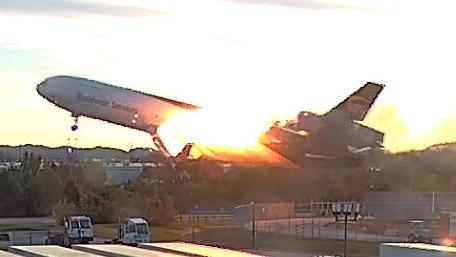
As a reminder, the disaster occurred on Tuesday, November 4, 2025, at around 5:15 pm (local time), shortly after the plane took off from Louisville Muhammad Ali International Airport in Kentucky. The plane, flying as UPS Flight 2976, crashed shortly after takeoff.
According to the investigation update, tests conducted at NTSB's laboratory revealed that the left engine and its connection system to the wing (the pylon) separated from the aircraft seconds after takeoff, following severe fatigue cracks in a critical structural component.
The tests identified cracks around the entire circumference of the pylon's rear connection bearing, extending across approximately 75% of the fracture surface. These findings indicate a continuous failure process, rather than a sudden failure.
The NTSB notes that the identified failure type was previously known but was not defined as a safety hazard under the relevant procedures at the time. According to the report, the cracks were not identified as a factor requiring corrective action prior to the incident.
It was also reported that the engine and pylon separation occurred shortly after takeoff, as a result of the collapse of the attachment system, which was affected by cumulative metal fatigue. The investigation continues to examine the design, maintenance, and inspection aspects related to the failed component.
The NTSB emphasizes that this is an investigation update, and that no additional findings, final conclusions, or safety recommendations have yet been released. The investigation is ongoing.
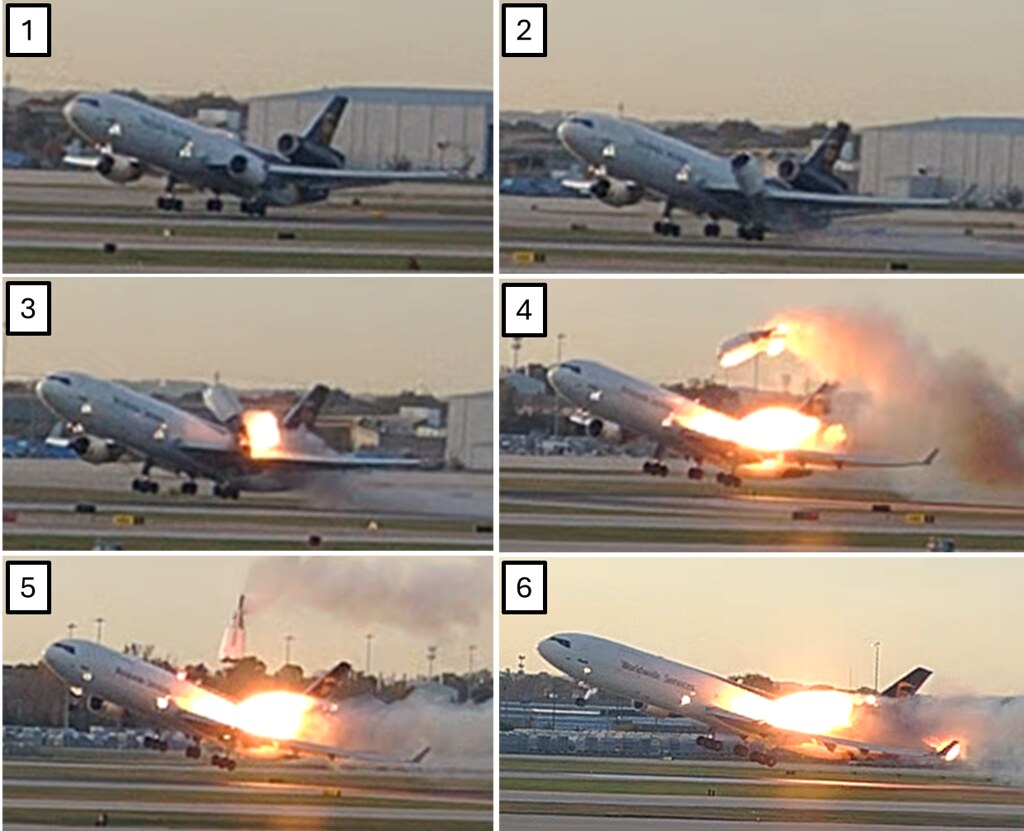 Photo: NTSB