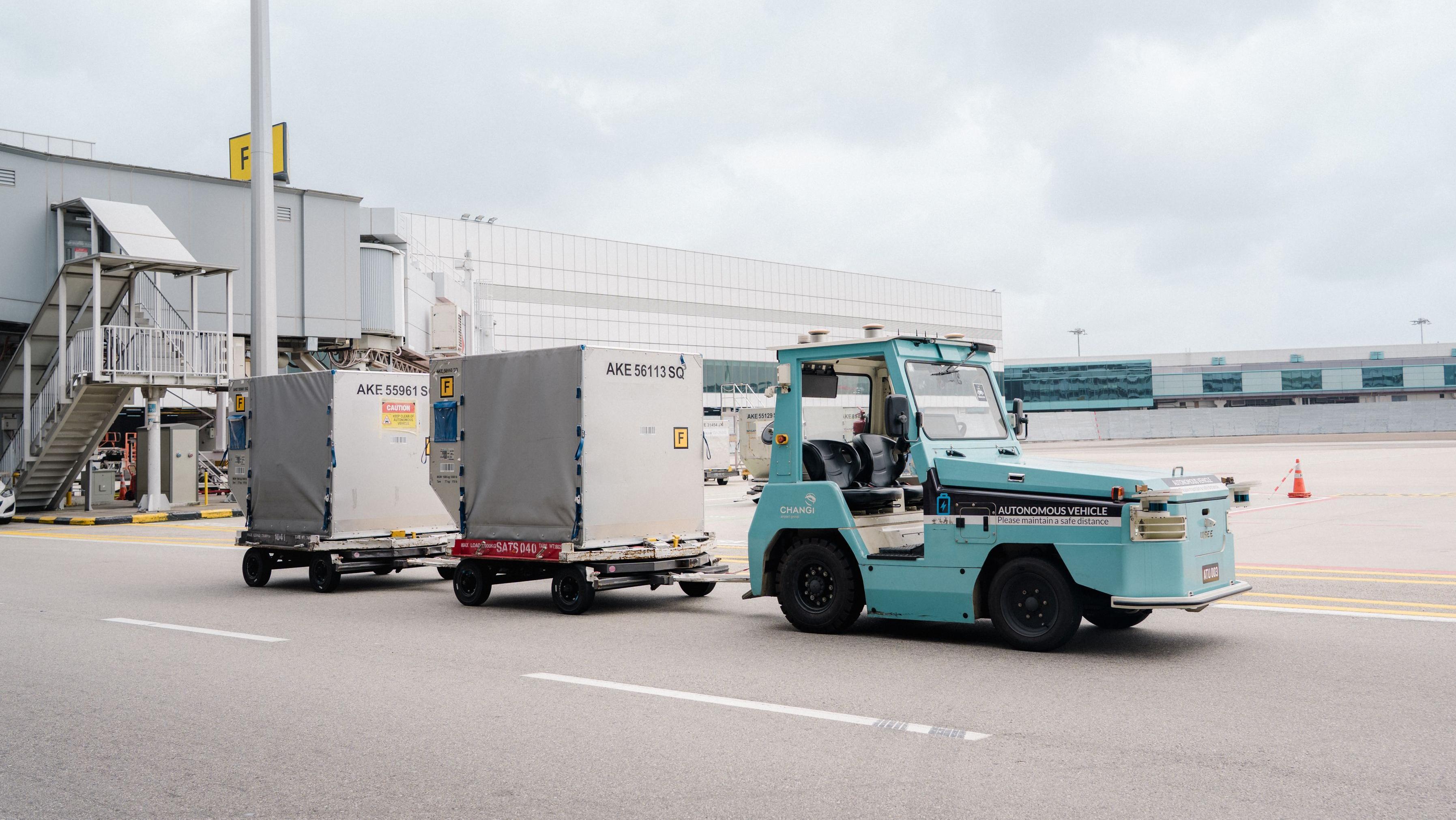
The future is here, and it starts in Singapore. Today, January 20, 2026, Changi Airport launched its first fleet of autonomous baggage vehicles. The fleet entered service after nearly a year of trials, including more than 5,000 test trips.
According to the airport's announcement, this is "another step in the country's commitment to leading smart technologies at airports." As we reported in July last year, similar vehicles were also put into service in Dubai.
At this stage, only two autonomous vehicles are operating in the area, and they are already transferring baggage between the handling areas in Terminal 1 and Terminal 4.
 Singapore Airport. Photo: Shutterstock
Each vehicle is equipped with more than 10 sensors and cameras, enabling safe movement in the complex air environment, and in all weather conditions, day and night. The activity is monitored from a dedicated control center, where a human operator can intervene immediately if necessary.
Later this year, six more autonomous vehicles are expected to be deployed on another route, between the baggage handling area in Terminal 2 and the aircraft stands, as part of a collaboration between Changi Airport Group and SATS. By 2027, the fleet is planned to be expanded to 24 vehicles, and autonomous vehicles will later be used to tow cargo and equipment.
The project is funded in partnership with the Civil Aviation Authority of Singapore (CAAS), and is part of Changi's broader innovation strategy, which includes integrating autonomous technologies in the airspace, using artificial intelligence in various operational initiatives, as well as automation and robotics to improve workforce productivity.
The autonomous vehicles are designed to free air traffic workers from driving tasks, allowing them to focus on more complex front-end operations. To this end, designated areas of operation for the autonomous vehicles have been marked, and clear markings have been attached to them for identification.