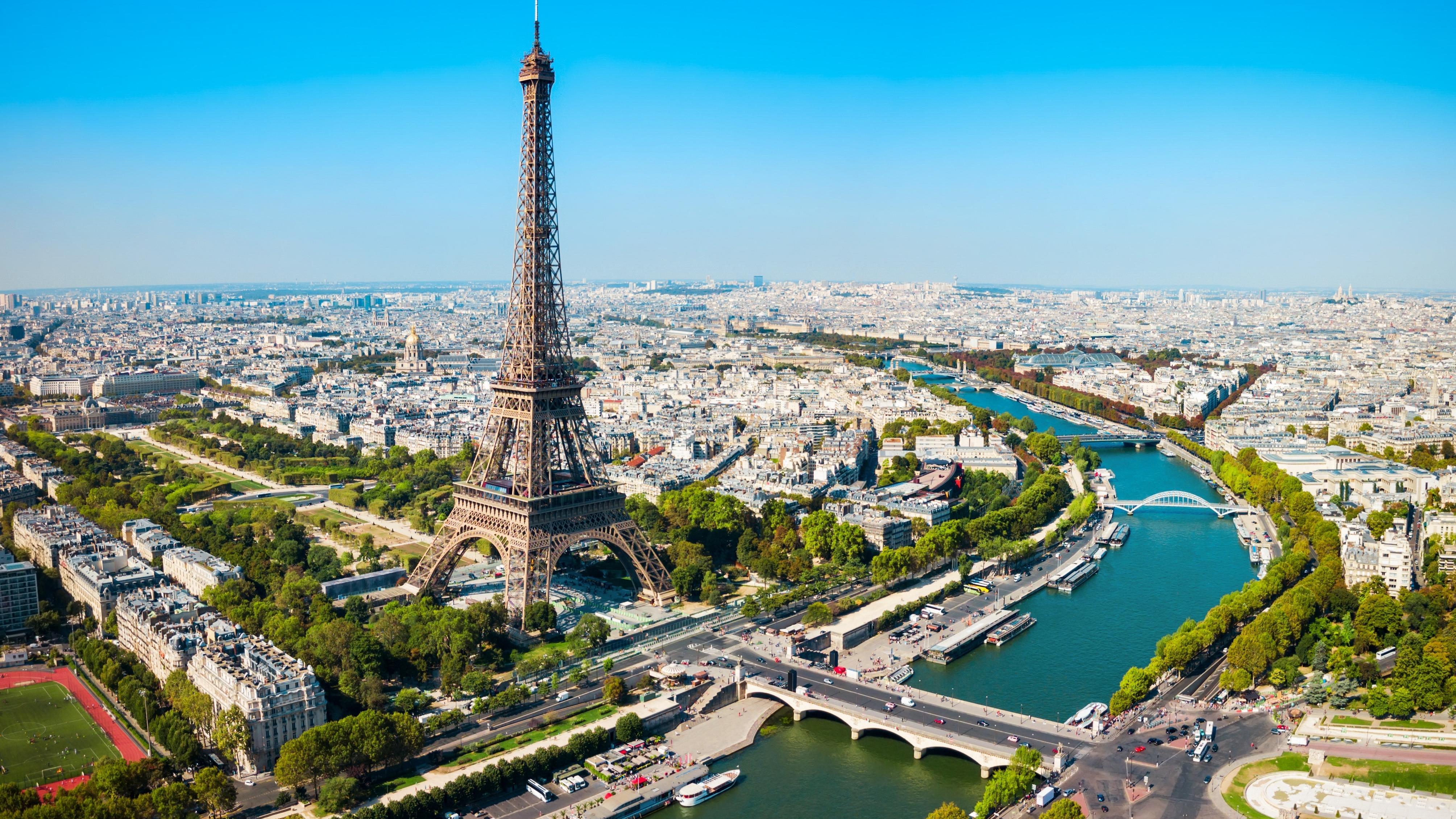
The Eiffel Tower is expected to soon bear the names of 72 female scientists, in recognition of their significant contributions to the development of science, as part of the Hypatia project led by the City of Paris in collaboration with the tower's operating company and the Femmes & Sciences association.
The move will complement, for the first time since the end of the 19th century, the 72 names of male scientists engraved in gold letters on the first floor of the tower.
When the Eiffel Tower was built, the names of 72 scientists who lived between 1789 and 1889 were chosen to symbolize the hopes and scientific vision of the era. However, the names of women who worked in science were left out of the narrative. Now, Paris is seeking to right this historical wrong and give women scientists their rightful place at the heart of one of the world's most prominent symbols.
The list, compiled after months of research, includes 72 women from diverse fields including mathematics, physics, medicine, chemistry, astronomy, biology and engineering. The French academies of sciences, technology and medicine still need to give their consent regarding the 72 names.
Among them are key figures from the worlds of science, including Marie Curie, Sophie Germain, Rosalind Franklin, Irène Joliot-Curie, Marguerite Perry, Jeanne Barre, Anita Conti, Yvette Cauchois, Yvonne Choquet-Brouil, Denise Albes-Passard, Eugenie Cotton, Martha Gauthier, Suzanne Noel, Alice Raccoc, Paulette Lieberman, Marie-Louise Dubreuil-Jacotin, Dorothea Klumpke and Jeanne Villeperroux-Pauve.
According to the project's initiators, this is a tribute to women scientists whose contributions have been hidden or forgotten over the years. The project is named after Hypatia, the first female astronomer in history, and is also intended to serve as a contemporary cultural statement about gender equality in science and to provide inspiring female role models for future generations.
As part of the move, a broad scientific team was established in March 2025 to examine the criteria for selecting the names and the technical methods for engraving them on the tower, while fully ensuring the preservation of the site's historical heritage.
The project was first unveiled in 2022 at the Paris Observatory during a partial solar eclipse and has since undergone adjustments and developments. With its implementation, the Eiffel Tower is expected to continue to serve as a symbol not only of engineering progress but also of equality, inclusion, and recognition of the contributions of women to the world of science.