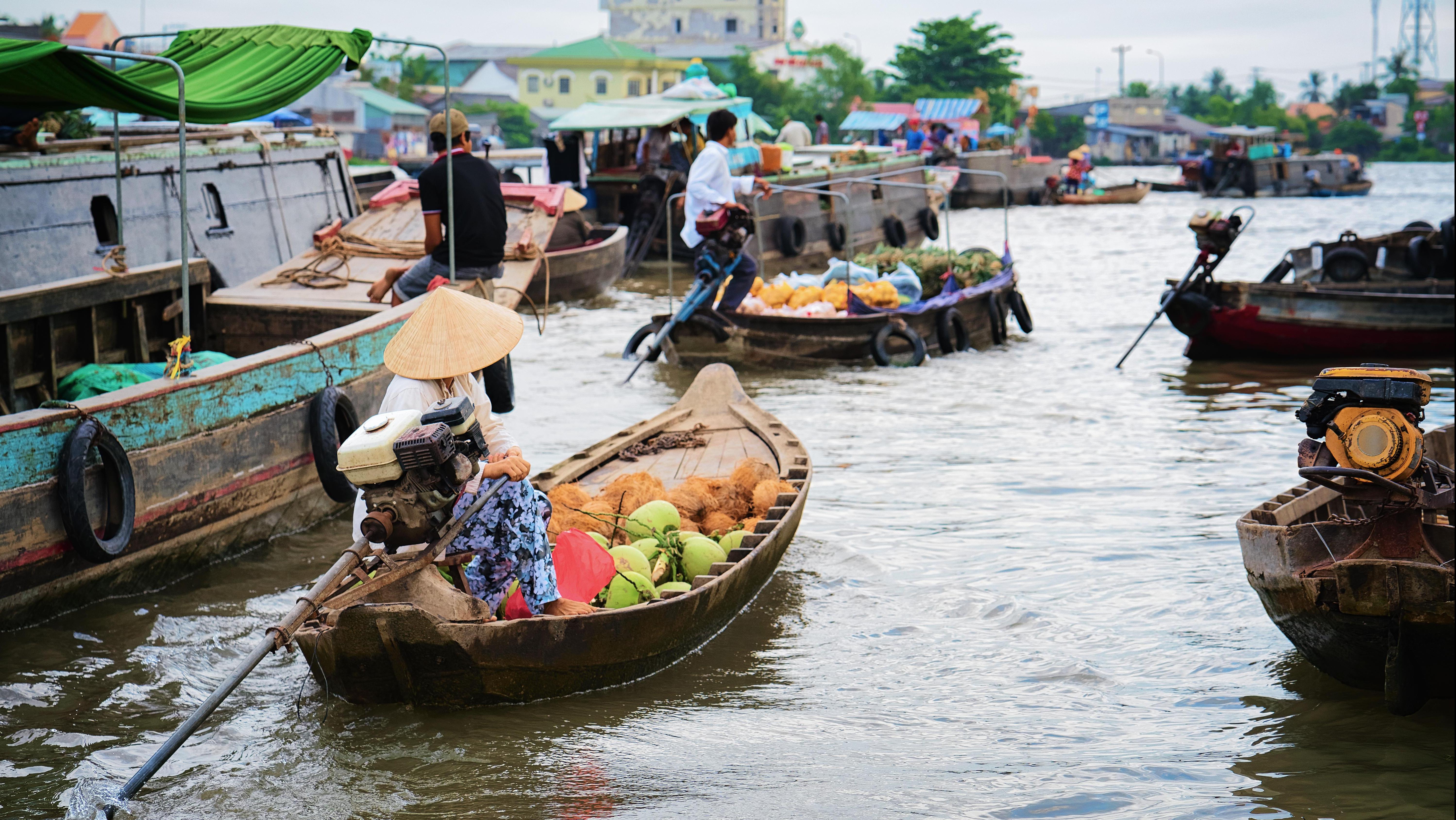
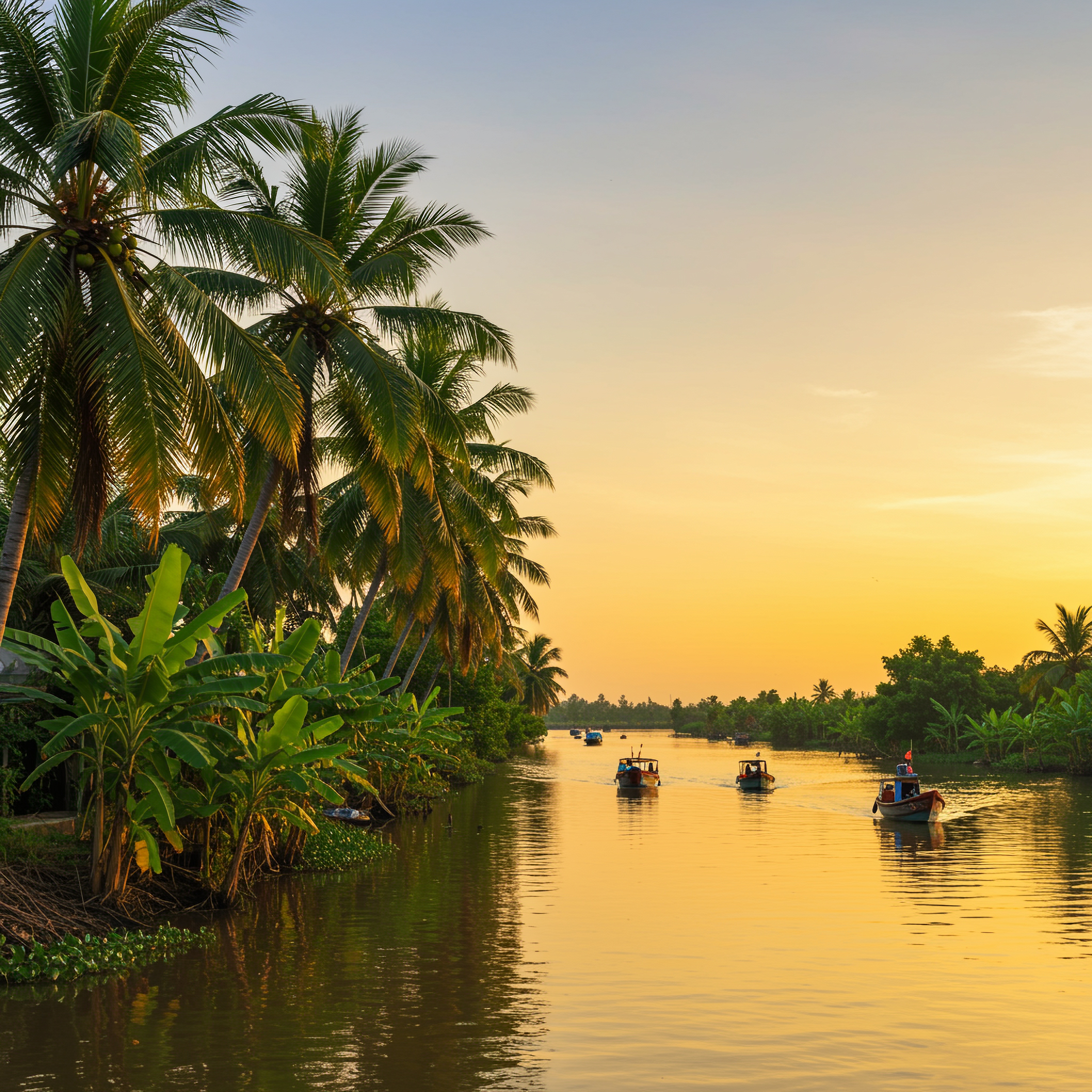
Far from the mountains of Sapa and the stone cliffs of Halong Bay, the Mekong Delta reveals a completely different side of Vietnam, one that is flat, green, and full of life. The delta is a world of rivers and canals, wooden boats, endless plantations, and villages that live on the water. It is one of the most fertile and important regions in the country, yet many travelers skip it.
The Mekong is not just a river, but a way of life. Houses stand on stilts, children row small boats to school, and bustling markets take place above the river.
Can Tho: Gateway to the Delta
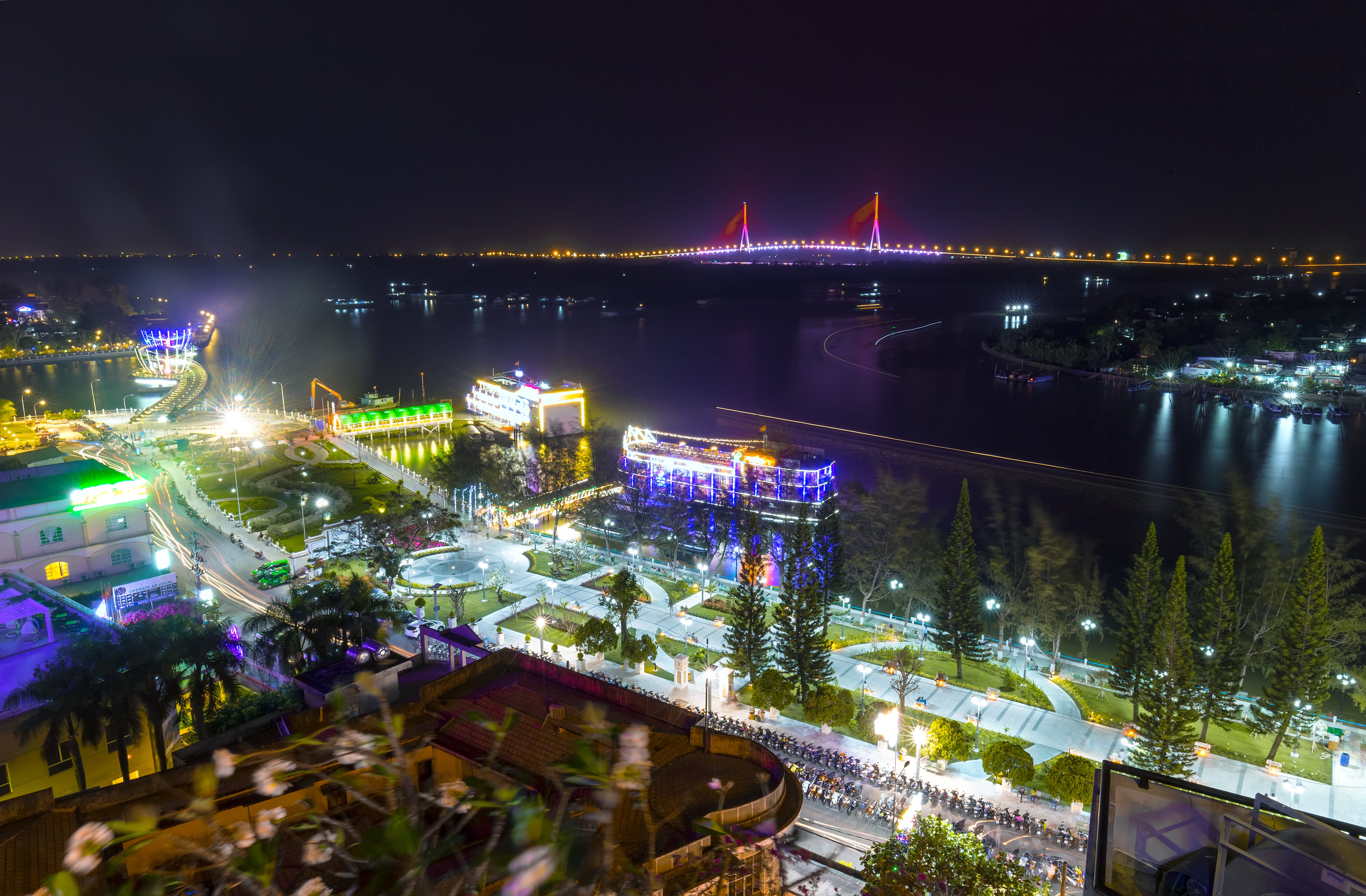
In the heart of the delta lies Can Tho, the largest city in the region and the most convenient base for exploring. This is not a city that tries to impress: it has a modern shopping mall alongside simple streets, golden Buddhist pagodas, local markets, and a relaxed riverside promenade. Can Tho is a place where you can experience the delta's atmosphere without sacrificing comfort.
 Credit: shutterstock
Floating Markets: Trading on the Water
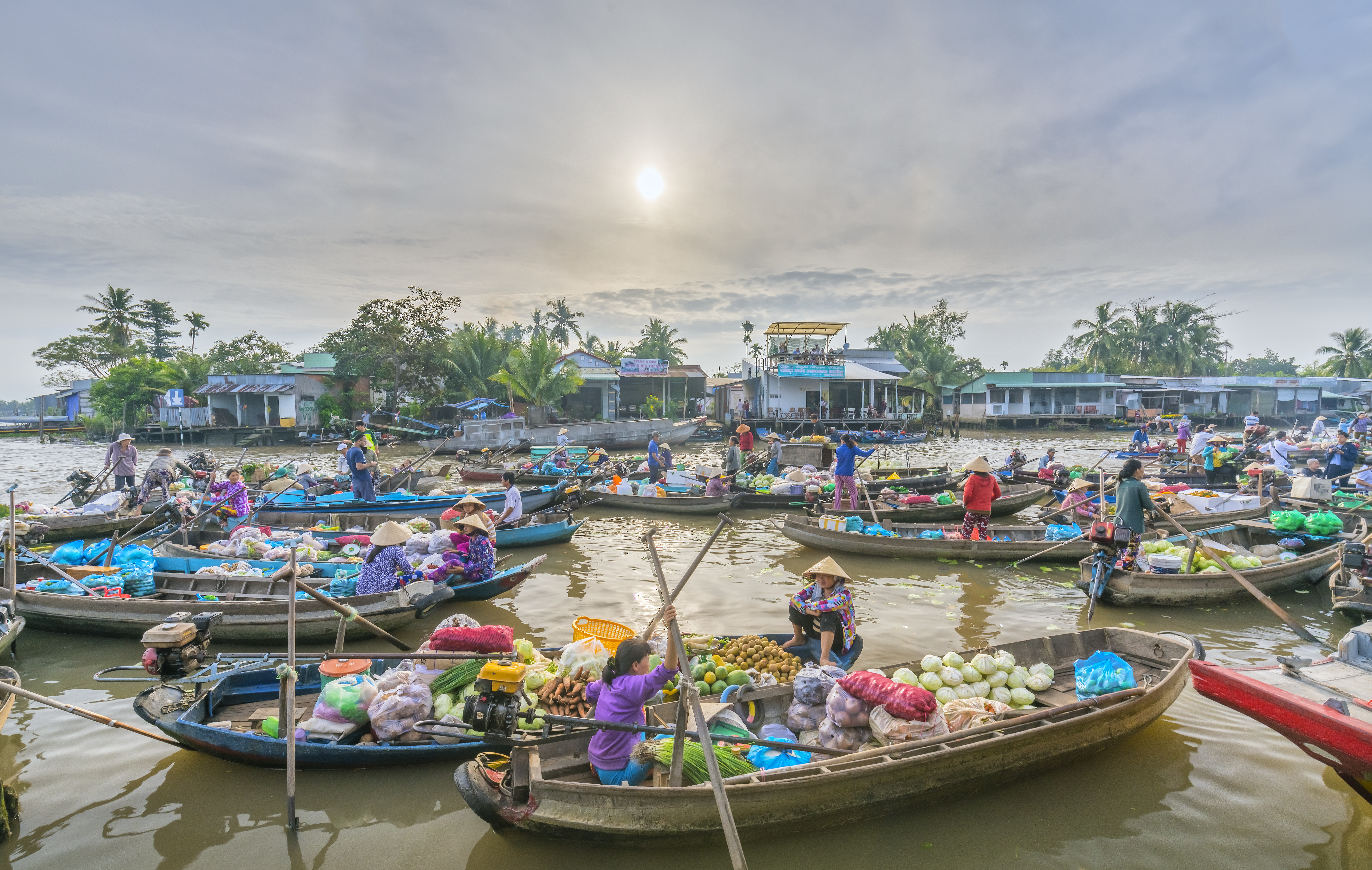
Cai Rang is the unofficial symbol of the Mekong Delta. In the early morning, the river fills with boats laden with tropical fruits, vegetables, and agricultural produce. Each boat is a stall, and each bamboo pole indicates the item for sale. Beyond the colors and smells, it is a glimpse into how trade has been conducted in the region for centuries.
Market tours depart early in the morning from the piers along the Can Tho promenade, by group boat or by small, personal boat. The tours include stops at traditional factories and peaceful villages along the riverbanks.
 Credit: shutterstock
The Flavors of the Mekong Delta
Food in the Delta is largely based on fish and seafood. The taste of the local cuisine is considered sweeter compared to the spicy cuisine of central Vietnam and the delicate flavors of the north. It is recommended to try the local version of Banh Canh, a soup with tapioca noodles that is reminiscent of Japanese udon.
Uncover the Colonial Past
Those who want a glimpse into local history will find it at the Binh Thuy Ancestral House. The 19th-century house combines French architecture with Asian elements, and tells the story of merchant families who lived here during a time when the Mekong was an international trade artery.
 Credit: shutterstock
Accommodation on the Riverfront
Accommodation in the delta is part of the experience. Boutique hotels and local accommodations offer peace, quiet, and a green view of the river. Among the notable options: Azerai Can Tho for design lovers and tranquility, Victoria Can Tho for classic riverside accommodation, or a rustic homestay at Mekong Rustic.
When and How to Get There
The climate in the delta is tropical, hot year-round, with a rainy season from July to November. December and January are considered the most pleasant months. You can reach Can Tho by internal flight, by bus from Ho Chi Minh City (about 4 hours), or by boat along the river, an experience in itself.