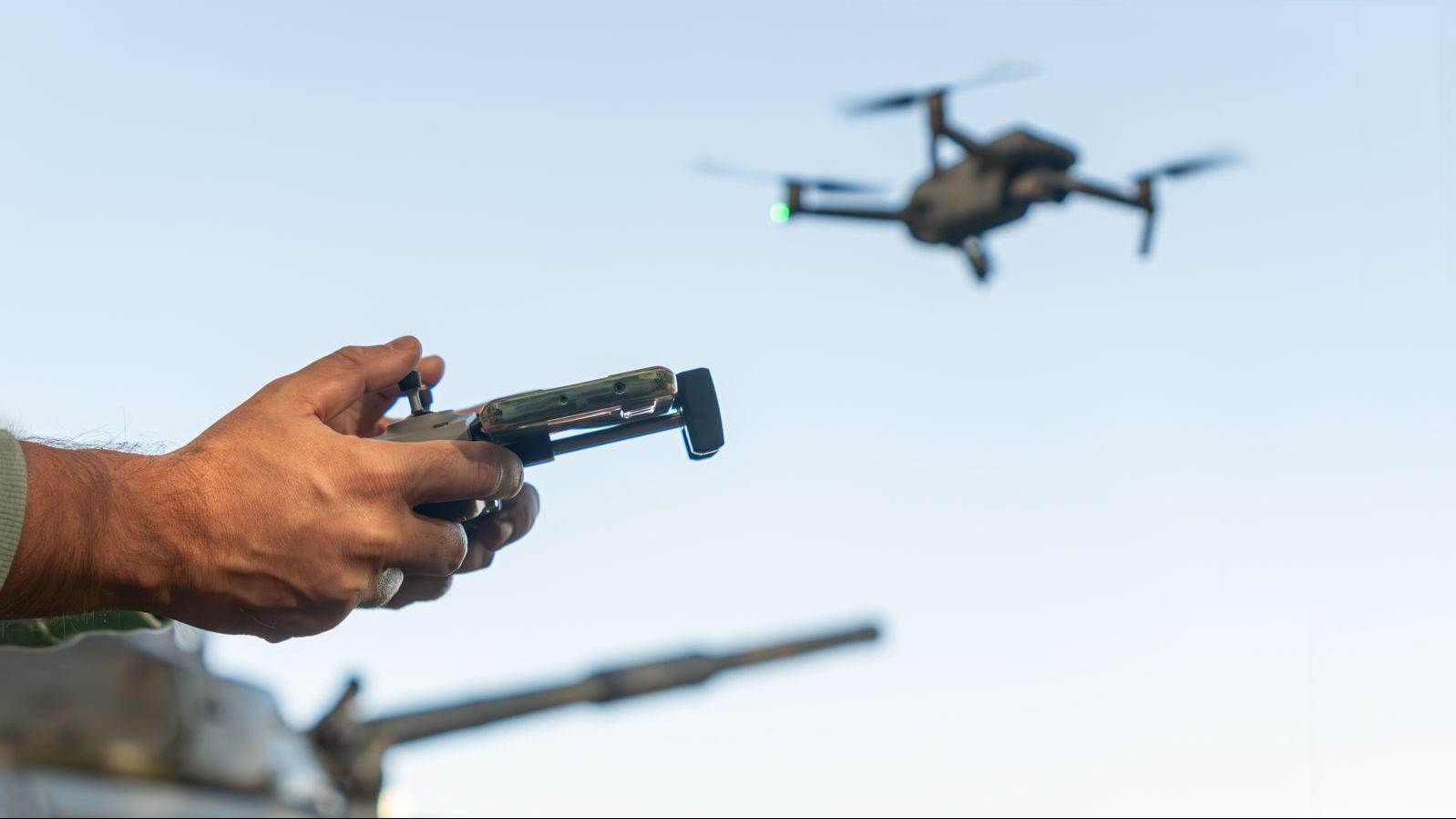
The United States Department of War has published a comprehensive guide to technologies used to identify and locate drone threats.
"As the threat from unauthorized and nefarious small unmanned aerial systems continues to evolve, JIATF-401 (Joint Interagency Task Force 401) is leading the effort to deploy effective countermeasures while upholding critical privacy protections," the U.S. Department of War said.
The department also announced that "this new guide provides insight into the passive, non-intrusive sensor technologies, such as Radar, Electro-Optical/Infrared, and Radio Frequency Detection, that allow security personnel to maintain airspace awareness without interfering with civilian drone operations."
According to Brigadier General Matt Ross, director of Joint Interagency Task Force 401 (JIATF-401), “Countering drones is not just a battlefield problem, it's a homeland defense imperative. Our goal is to integrate sensors, effectors and mission command systems in a distributed network that protects service members and American citizens alike.”
Brigadier General Ross also noted that "this guide is part of our commitment to transparency, ensuring that as we deploy these critical technologies, we do so in a way that is responsible, respects privacy, and maintains public trust."
Col. Scott Homer, Deputy Director of Science and Technology for JIATF-401, added, "Our approach is to protect privacy by design. The technologies we are fielding are engineered to be effective while adhering to strict privacy principles. By focusing on data minimization and secure handling processes, we collect only what is necessary to identify a potential threat. This allows us to protect critical infrastructure and public safety without compromising the civil liberties that we are sworn to defend."