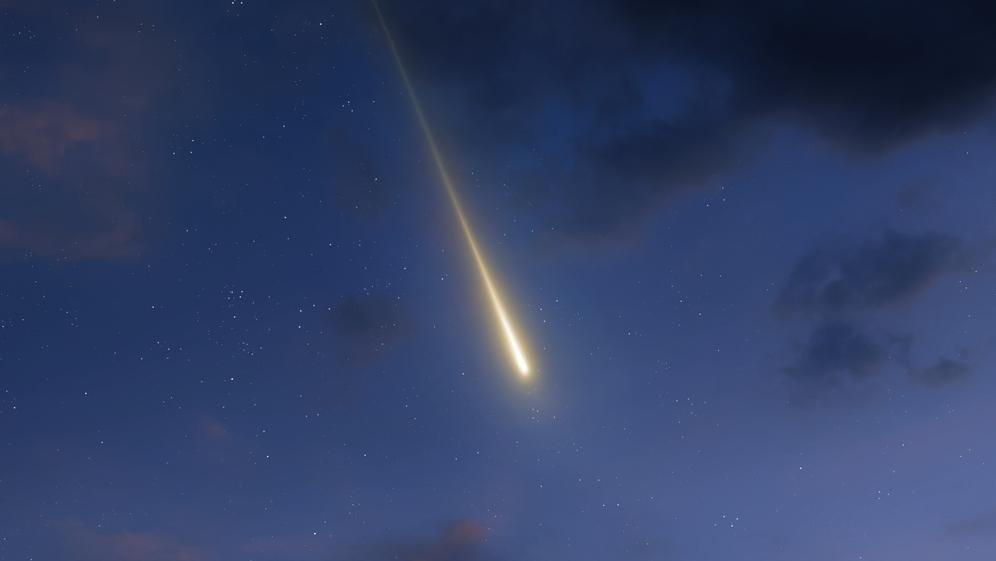
A meteor shook the skies of the United States. An unusual event occurred yesterday (Tuesday, March 17), when a meteor entered the atmosphere over the Lakes region in the US and caused a bright fireball that was observed in the morning hours.
According to data published by NASA, the meteor was first detected at an altitude of about 80 km above Lake Erie, off the coast of Ohio, and continued moving eastward at a speed of about 40,000 miles per hour.
The object, which originated from an asteroid with a diameter of about 2 meters and a weight of about 7 tons, traveled more than 50 km in the upper atmosphere before breaking up over the Medina area of Ohio, and the meteorite fragments continued south, and according to estimates, some even fell in the Medina area.
According to NASA's analysis, the disintegration released energy equivalent to about 250 tons of TNT and created a shock wave that reached the ground. As a result, there were reports of loud explosions and even tremors felt in homes in Ohio.
The event was documented not only through citizen testimony from many states in the US and even Canada, but also through advanced satellite systems, including the lightning sensors of the GOES satellites, which recorded the unusual flash of light. At the same time, the US weather services updated the event in real time and cross-referenced the data with satellite photographs.
"We’re receiving reports across western Pennsylvania and eastern Ohio of a loud boom and a fireball in the sky," the National Weather Service posted online.
"Our satellite data suggest it was possibly a meteor entering the atmosphere."
The US National Weather Service in Cleveland also updated: "The latest GLM imagery (1301Z) does suggest that the boom was a result of a meteor."