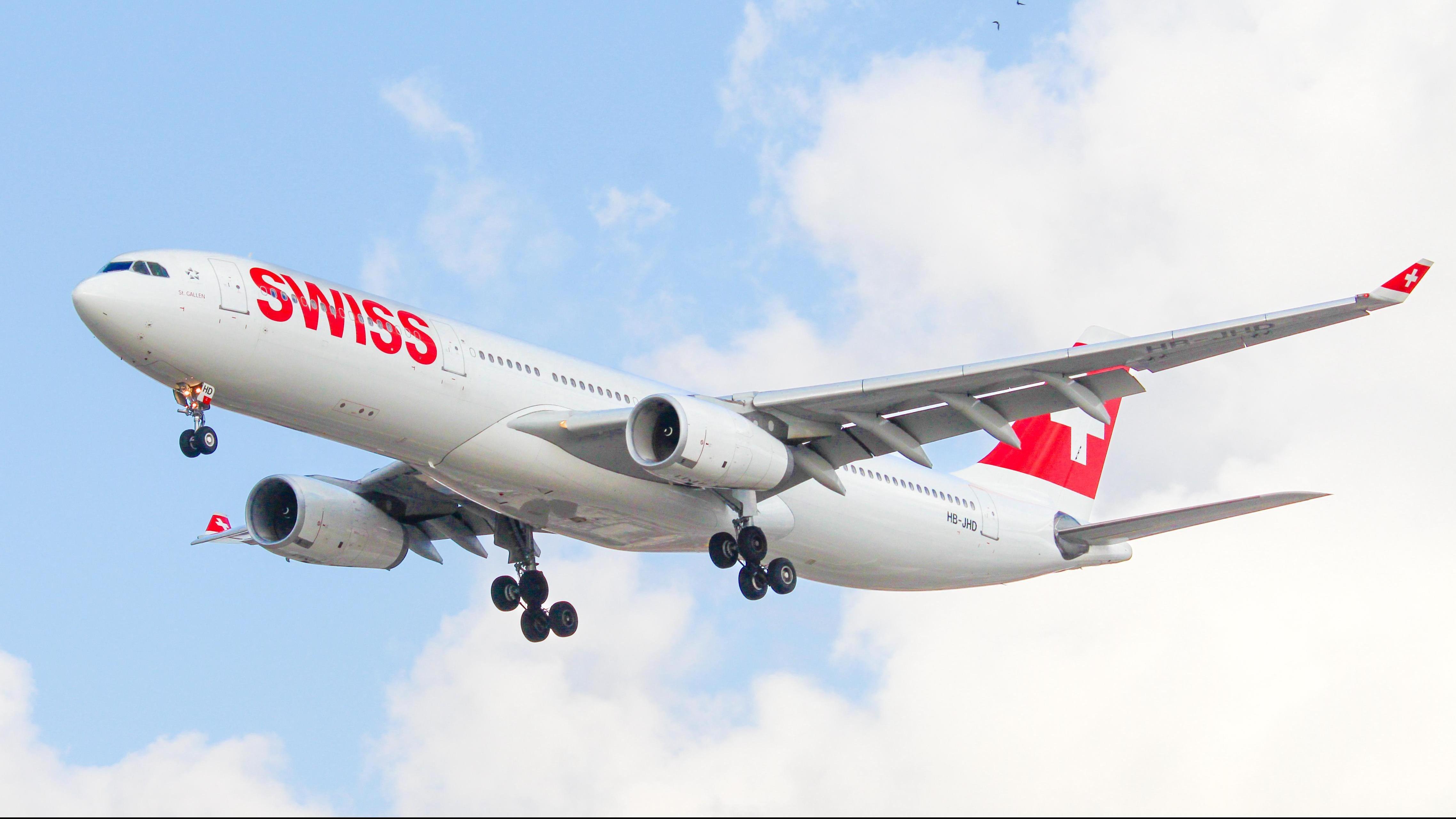
SWISS has published its results for the first quarter of 2026, with a significant improvement in operating profit (Adjusted EBIT) totaling approximately 30 million Swiss francs (32 million EUR or 38.4 million USD), compared to only 3.3 million francs (3.4 million EUR or 4.1 million USD) in the same period last year.
The company's revenue remained relatively stable and amounted to approximately 1.22 billion francs (1.3 billion EUR or 1,5 billion USD), despite a decrease in seat supply.
The company notes that the positive performance was influenced, among other things, by geopolitical developments, primarily tensions in the Middle East, which led to a temporary increase in demand, especially on routes to Asia. This increase contributed to improved yields and strengthened revenues, but the company emphasizes that this is only a temporary effect.
According to the company's CFO, Dennis Weber, March was particularly strong and had a significant impact on the results for the entire quarter. However, he warns that the sharp increase in fuel prices has not yet been fully reflected in the reports, and is expected to have a negative impact as early as the second quarter. According to him, the price of oil has almost doubled since the outbreak of the conflict with Iran, and its impact has already begun to be felt in April.
In terms of operations, the company flew about 3.7 million passengers in the first quarter, a slight decrease of about 0.4% compared to last year. The number of flights decreased by about 7.1% to about 29,600 flights, due in part to a shortage of engines and pilot crews. The available seat supply (ASK) also decreased by about 3.4%, while passenger traffic (RPK) increased by 0.8%, leading to a 3.4 percentage-point improvement in seat occupancy.
At the same time, there was a slight decrease in punctuality and flight schedule stability, mainly due to strikes in other Lufthansa Group markets and the implications of the security situation. However, the flight schedule stability rate remained high at 97.4%, while the takeoff punctuality rate was 75.2%.
The company's CEO, Jens Fehlinger, notes that despite the positive results, the company faces significant structural challenges, including equipment shortages, declining productivity, and ongoing cost pressures. According to him, the company will continue to implement a broad efficiency program designed to strengthen its financial base over time.
Looking ahead, the company reports stable demand ahead of the summer season, especially on routes to Asia, alongside a trend of last-minute bookings and an increase in demand for premium classes. However, it emphasizes that the business environment remains volatile, and it is difficult to provide accurate forecasts.
SWISS notes that they will continue to work to maintain stable flight schedules and provide a quality flight experience, even during a period of global uncertainty, while quickly adapting to market changes.