How does the current geopolitical situation in the Middle East and Gulf region affect tourism? This question was recently asked by the research institute of the Greek Tourism Confederation (INSETE).
According to the study, which included thousands of vacationers from across Europe, more than three out of four travelers on the continent indicated that, in light of economic and geopolitical uncertainty, they tend to prefer destinations closer to home.
This trend gives an advantage to countries accessible by car or train, such as Spain, Italy, and Croatia, while Greece depends mainly on air connectivity.
 Going on vacation. Photo: Shutterstock
The data also show that, given the situation, the trend of last-minute bookings is strengthening across all markets, requiring the tourism industry to prepare with flexible policies and targeted marketing campaigns.
In terms of spending, Germans and Britons are more willing to pay for flights and accommodation, while Italians and Spaniards are more price-sensitive.
Encouraging Data for Greece
Greece continues to maintain its position as one of Europe's leading tourist destinations. The country ranks third among Germans and Italians, fourth among Britons and French, and sixth among Spaniards.
It was also found that demand for beach and city breaks remains particularly high. This is a significant advantage for Greece, whose main tourism product is based on a combination of beaches, islands and historic cities.
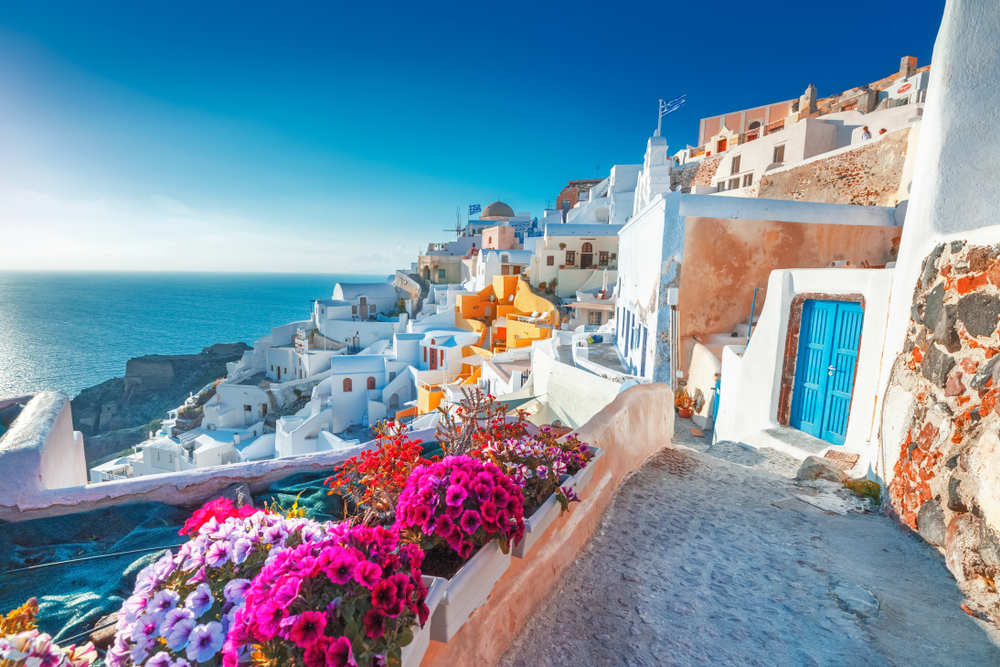 Greek Islands. Photo: Shutterstock