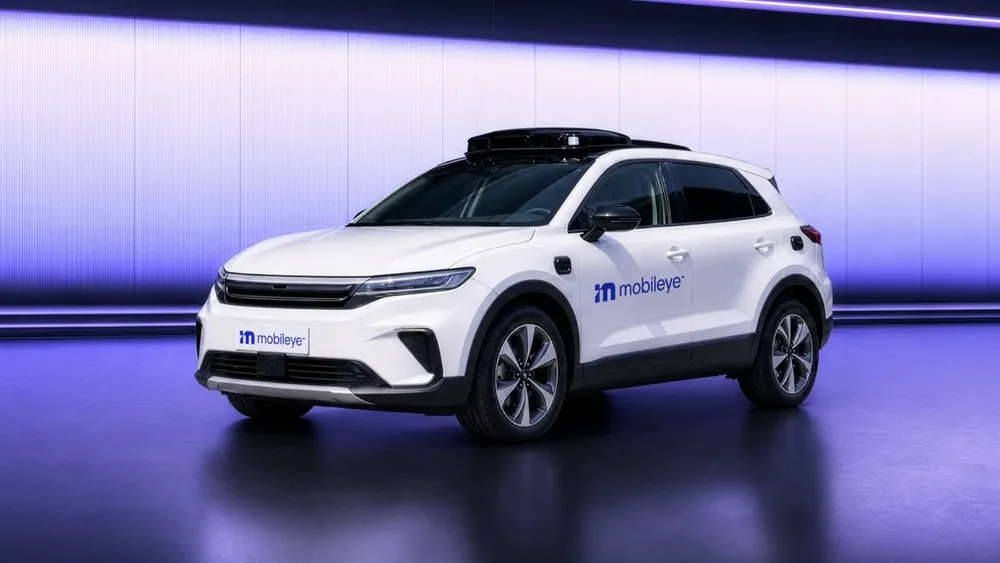
Mobileye announced today (Tuesday. June 16, 2026) a new strategic move in which it will establish and operate an independent robotaxi business, and will no longer be content with just supplying autonomous driving systems to automakers and transportation partners.
The Jerusalem-based company plans to launch the service in a major city in the United States in 2027. The first phase will involve operating a fleet of about 100 driverless autonomous vehicles to test the operating model. The company aims to expand operations to about 17,000 vehicles within five years.
The move marks a significant expansion of Mobileye's operations, which will combine under one roof the autonomous driving system Mobileye Drive, the transportation platform of the subsidiary Moovit, fleet management services, command and control systems, and remote operation infrastructure.
The company emphasizes that the new move does not replace existing collaborations with automakers, transportation operators, and mobility companies, but is intended to operate in parallel with them and accelerate the penetration of autonomous transportation into the market.
According to Mobileye, operating an independent service will allow the company to gain direct operational experience, improve systems in real time, and showcase its platform capabilities on a large scale.
The company will collaborate with specialized vehicle platform manufacturers, fleet operators, integration partners and various technology providers to establish the new system.
Mobileye technology is currently installed in more than 230 million vehicles worldwide. At the same time, the Moovit platform serves more than 1.7 billion users in more than 3,500 cities in 112 countries.
Prof. Amnon Shashua, founder and CEO of Mobileye, said: "The robotaxi revolution has only just begun, and its potential for transforming how we travel around the world continues to increase," said Prof. Amnon Shashua, founder and chief executive officer of Mobileye. "As interest in autonomous mobility accelerates, the industry has become increasingly dependent on a small number of technology providers and business models. We believe there is an opportunity for a new approach,one built on deep autonomous-driving expertise, strong industry partnerships, and proven capabilities across the mobility ecosystem.
Last month, we announced Europe’s first commercial robotaxi service launched in Zagreb, with autonomous rides available via a dedicated app.