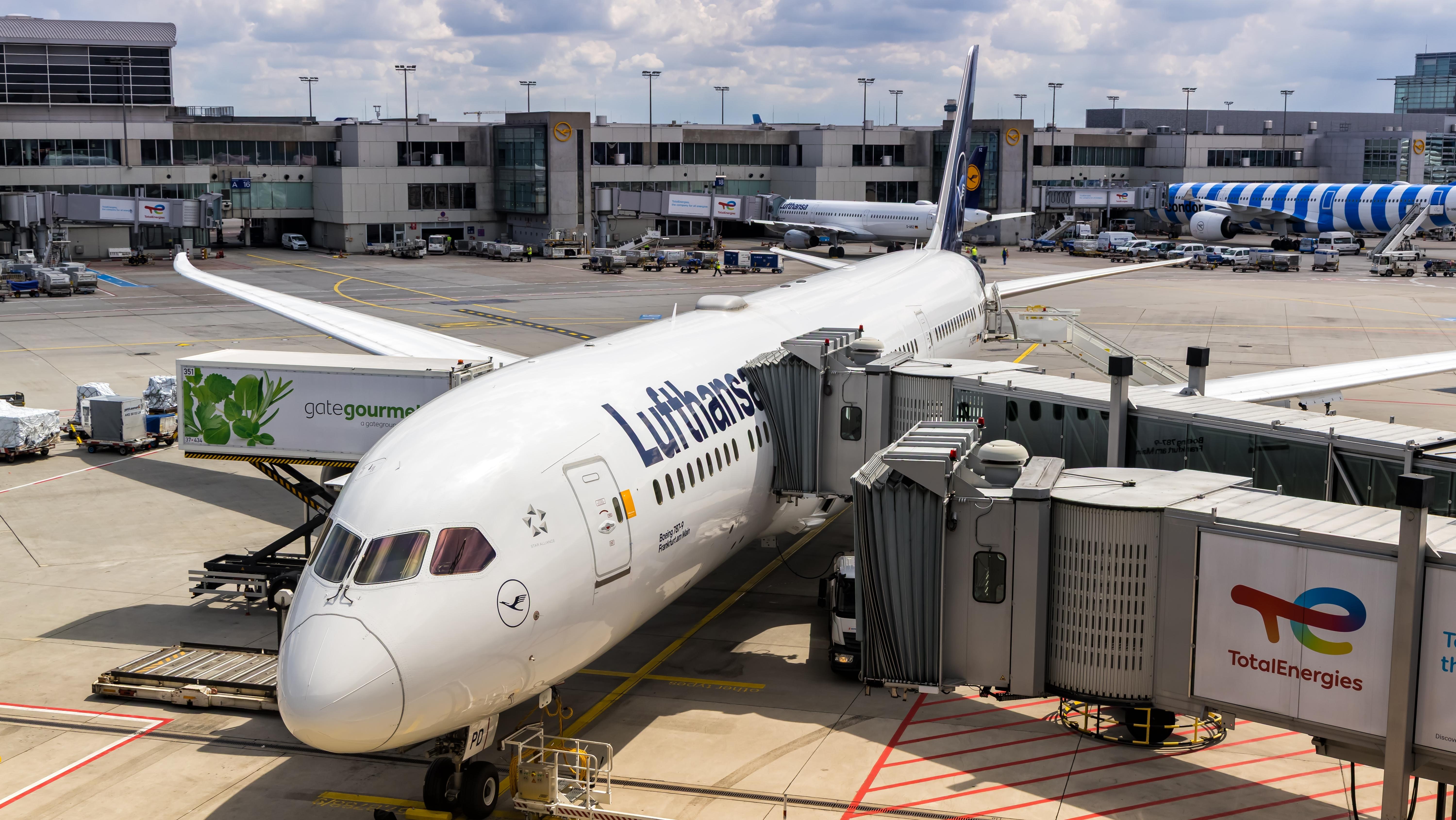
Germany's Federal Bureau of Aircraft Accident Investigation (BFU) has released its interim report into the June 4, 2026, accident involving a Boeing 787-9 Dreamliner at Frankfurt Airport, revealing that the aircraft's nose landing gear unexpectedly retracted during maintenance preparations, causing the jet to collapse onto the apron and injure 23 people.
According to the BFU, the Boeing 787-9 had arrived from Austin, Texas, and was parked at Gate A15 at Frankfurt Airport ahead of a scheduled flight to Los Angeles. Passenger boarding had not yet begun, but 28 people, including flight crew, maintenance technicians, and ground handling personnel, were on board when the accident occurred.
The report states that two licensed maintenance technicians were in the cockpit troubleshooting an unresolved fault involving the main landing gear door control system. Following procedures in the aircraft's Fault Isolation Manual, one of the required test steps involved moving the landing gear lever to the "UP" position.
Immediately after the lever was selected, the nose landing gear retracted unexpectedly, causing the aircraft's nose and both engine nacelles to slam into the concrete apron. The impact also forced the cockpit door shut and cut electrical power throughout the aircraft.
Missing Safety Pin Identified as a Key Factor
Investigators found that the nose landing gear downlock pin, which is designed to mechanically prevent the gear from retracting while the aircraft is on the ground, had not been installed.
The BFU discovered the pin inside the aircraft's avionics compartment rather than secured in the nose landing gear. During recovery operations, once the aircraft's nose was lifted using airbags, the nose gear extended and locked into place on its own, confirming it had not suffered a structural failure.
The report notes that both the Fault Isolation Manual and the Aircraft Maintenance Manual specifically required technicians to install the landing gear downlock pins before performing the maintenance test.
The accident injured 23 people, including, 2 people seriously injured and 21 people with minor injuries.
Among those on board were flight crew members, technicians, cleaners, security personnel, and other ground handling staff. One additional ground worker inside a high loader positioned at the forward cargo door also suffered minor injuries when the aircraft collapsed onto the loading equipment.
Emergency services arrived within about 15 minutes, and several injured workers were transported to local hospitals.
Aircraft Suffered Substantial Damage
The Dreamliner sustained significant structural damage to its forward fuselage, nose gear bay, engine cowlings, and cargo door area. A high loader servicing the forward cargo hold was also heavily damaged after becoming trapped beneath the aircraft's nose.
The aircraft, delivered only months earlier in January 2026, had accumulated just 1,093 flight hours and 147 landings before the accident.
The BFU emphasized that the investigation remains ongoing and that the interim report is intended solely to improve aviation safety rather than assign blame or legal responsibility. A final report will be issued once investigators complete their analysis of the maintenance procedures, human factors, and organizational issues surrounding the accident.