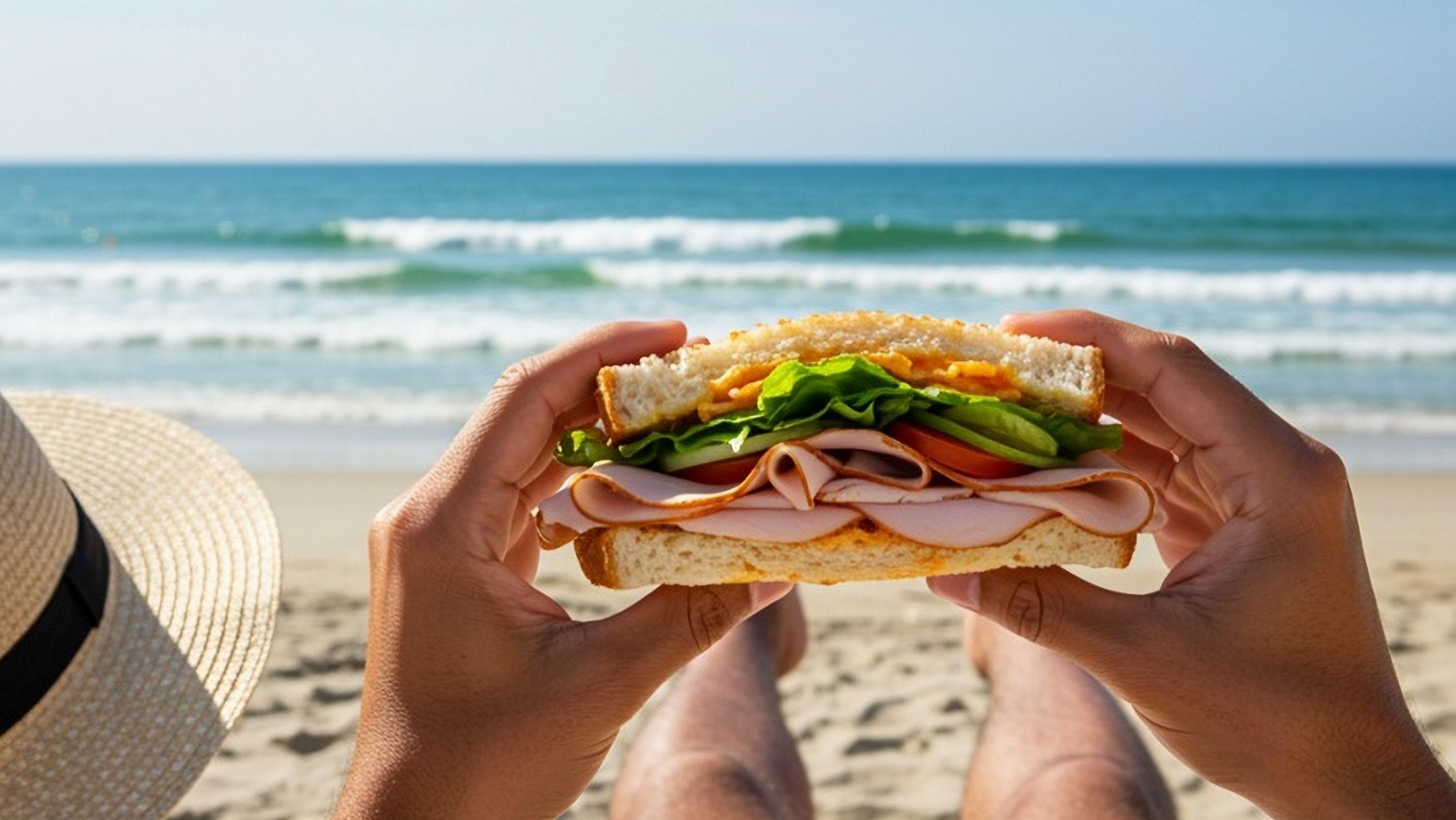
Imagine the following situation. You've paid tens of euros for a parasol and a sunbed on a picturesque beach in southern Italy. The sun is blazing, the kids are hungry, and you pull out of your bag a plastic box of cold pasta or a "panini" sandwich (singular of panini, the traditional Italian sandwich) with prosciutto and mozzarella that you made that morning.
Suddenly, a burly guard from the beach appears above you, demands that you close the box and makes it clear to you unequivocally: "Bringing in food from outside is prohibited. Want to eat? The beach restaurant is open."
This is not an absurd fantasy, but the new and bizarre reality that crowds of vacationers have been facing on private beaches (Lidi) across Italy in recent weeks.
The phenomenon, which has earned the derisive nickname "Panino Police" on social media, has sparked a national uproar that touches on one of the most sensitive nerves of Italian culture: their food.
Valuable Combination
The beach owners' method is simple and cynical: they try to take advantage of the hot summer to maximize profits and force customers to purchase only the expensive food and drinks sold at the beach's official restaurants and kiosks.
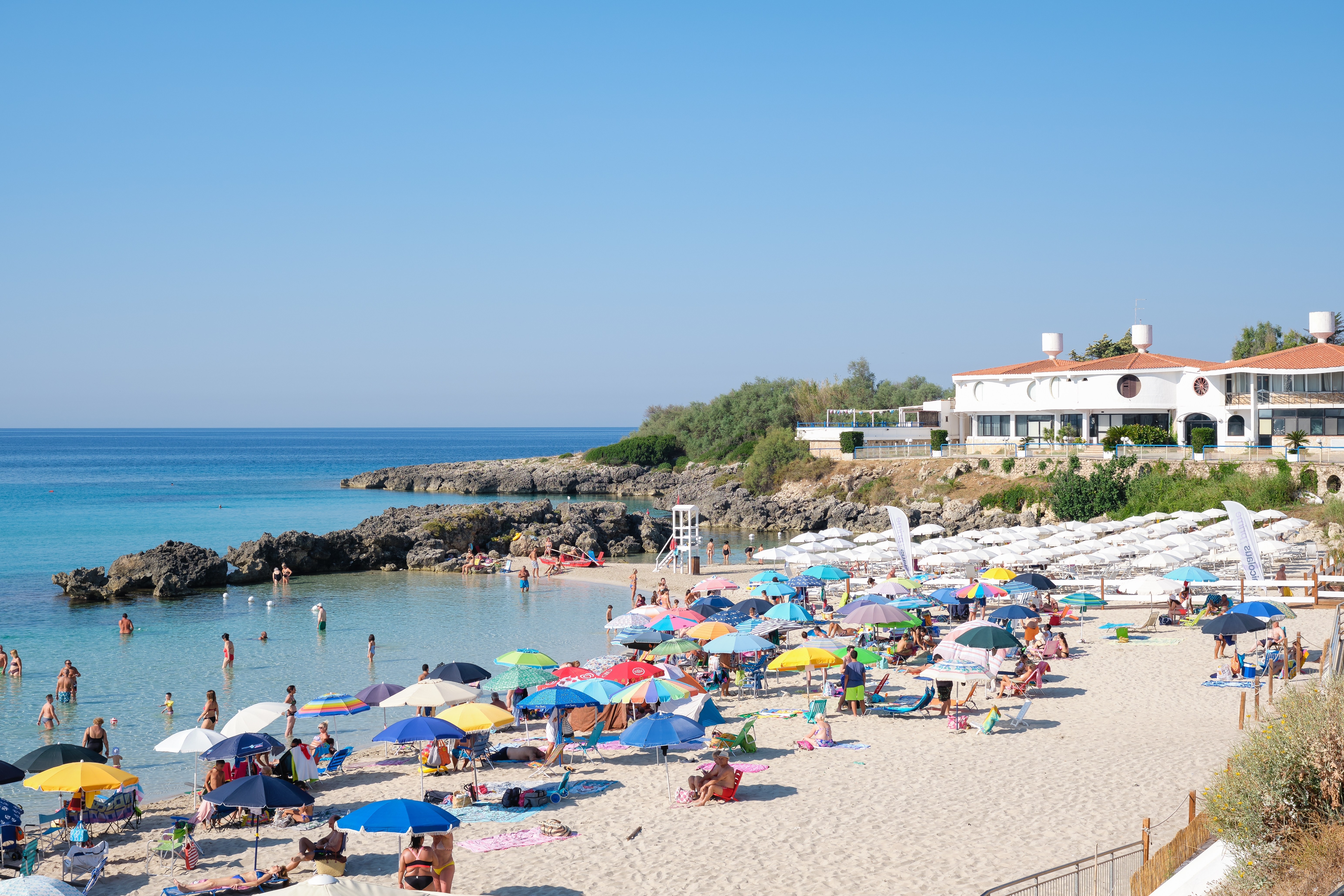 Puglia, Italy. Photo: Shutterstock
Many tourists and locals have reported guards literally rummaging through backpacks at the entrance to the beaches, forcing entire families to stand outside the gates of the complex to finish eating a peach or half a sandwich.
For Italians, this is a declaration of war on a sacred institution. The concept of Pranzo al sacco, meaning a traditional beach picnic with home-cooked food, has been an integral part of the Italian summer experience for decades.
Plot Twist: What Does the Prohibition Law Say?
While beach owners wave "internal regulations" and fabricated signs, the Italian media and local authorities have launched a counterattack, revealing the truth to the public: the food boycott is clearly illegal bullying.
According to Italy's public land law (Codice della Navigazione), the coastline is public property and the property of the state. The "franchise" granted to beach owners allows them to charge for renting equipment such as umbrellas, but does not give them ownership of the area or the legal authority to restrict citizens' freedom of movement, let alone to rummage through their personal belongings.
The storm reached its peak when the government of the Puglia region in the south of the country was forced to officially intervene. The official government bathing order (Ordinanza Balneare 2026) issued by the region states in black and white in Article 4: "Food and drink for personal consumption is always permitted on beaches and in public areas... including food not purchased on site."
The president of the Puglia region, Antonio Decaro, joined the fight and issued a strong statement against the beach clubs: "No one can stop you from eating food at sea that you brought from home. The sea belongs to the public and will not become a luxury for the rich only."
Italy's national consumer organization (Federconsumatori) also joined in and called on vacationers to disobey the security guards, to stand up for their rights, and if necessary, to call the local police on the extortionate beach owners.
The Great Consumer Revolt: "How to Smuggle Sandwiches Overboard"
Meanwhile, Italian vacationers are not left in the lurch. Social media is flooded with videos showing how to "smuggle sandwiches into the sea" inside rolled-up towels, and consumer groups have already filed huge lawsuits against several popular beaches.
The battle for Italy's beaches is far from over, but the message from the Italian public this summer is sharp and clear: you can take our money for a sunbed, but don't touch our sandwich.