Most travelers visit the Faroe Islands for dramatic cliffs, puffins, waterfalls, and some of Europe's wildest landscapes. Few expect one of the country's most remarkable attractions to be hidden beneath the Atlantic Ocean.
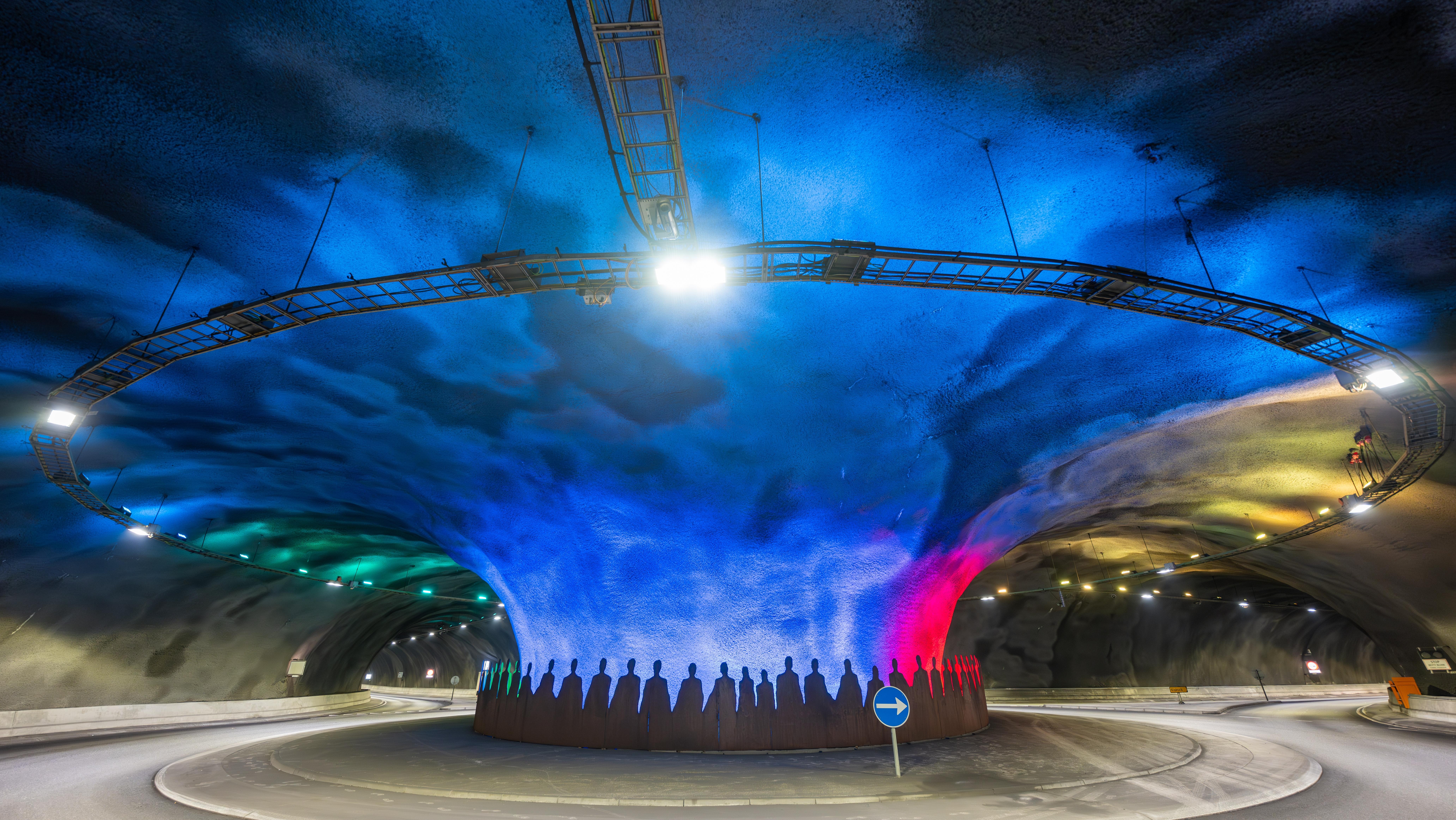
Seventy-two meters below the seabed lies the world's first underwater roundabout, an engineering masterpiece that has quietly become one of the Faroe Islands' most photographed landmarks.
Located inside the Eysturoy Tunnel, the unusual junction is unlike anything drivers will find anywhere else in the world. Instead of a conventional concrete traffic circle, motorists enter a vast illuminated chamber dominated by a glowing blue installation that many visitors compare to a giant jellyfish, an alien spaceship, or an underwater cathedral.
The centerpiece is built around a massive natural rock pillar that was intentionally left untouched during construction. Faroese artist Tróndur Patursson transformed it into a striking public artwork using dramatic blue lighting and an 80-meter steel sculpture depicting life-sized figures holding hands.
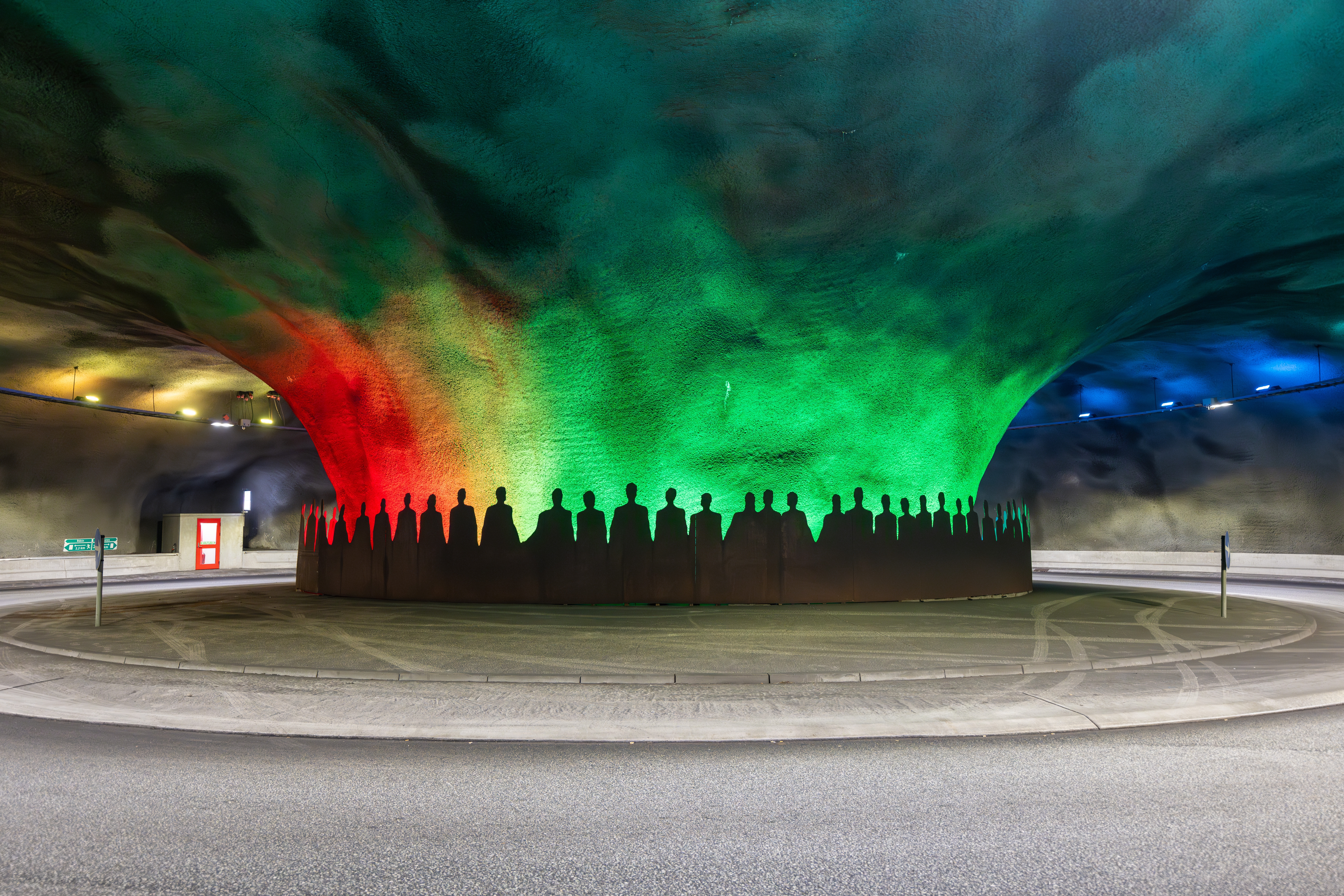 Photo: Felix Lipov / Shutterstock.com
According to the artist, the installation symbolizes unity and the Faroese belief that communities achieve great things by working together.
Beyond its visual appeal, the tunnel has dramatically changed daily life across the islands.
The 11.2-kilometer subsea tunnel links the islands of Streymoy and Eysturoy, connecting the capital, Tórshavn, with surrounding communities in a fraction of the previous travel time. Journeys that once required more than an hour along winding mountain roads can now take as little as 15 minutes. The tunnel also shortens several regional routes, making commuting and travel significantly easier for residents and visitors alike.
The engineering is just as impressive as the artwork. At its deepest point, the tunnel reaches approximately 189 meters below sea level. An extensive drainage system constantly pumps away water while sophisticated ventilation, lighting, and monitoring systems keep traffic moving safely through the Atlantic seabed. Drivers can even tune into a dedicated FM radio frequency featuring specially composed music created exclusively for the journey underground.
Since opening in December 2020 after four years of construction, the Eysturoy Tunnel has attracted visitors from around the world, many of whom admit they drive through it more than once simply to experience the remarkable roundabout again.
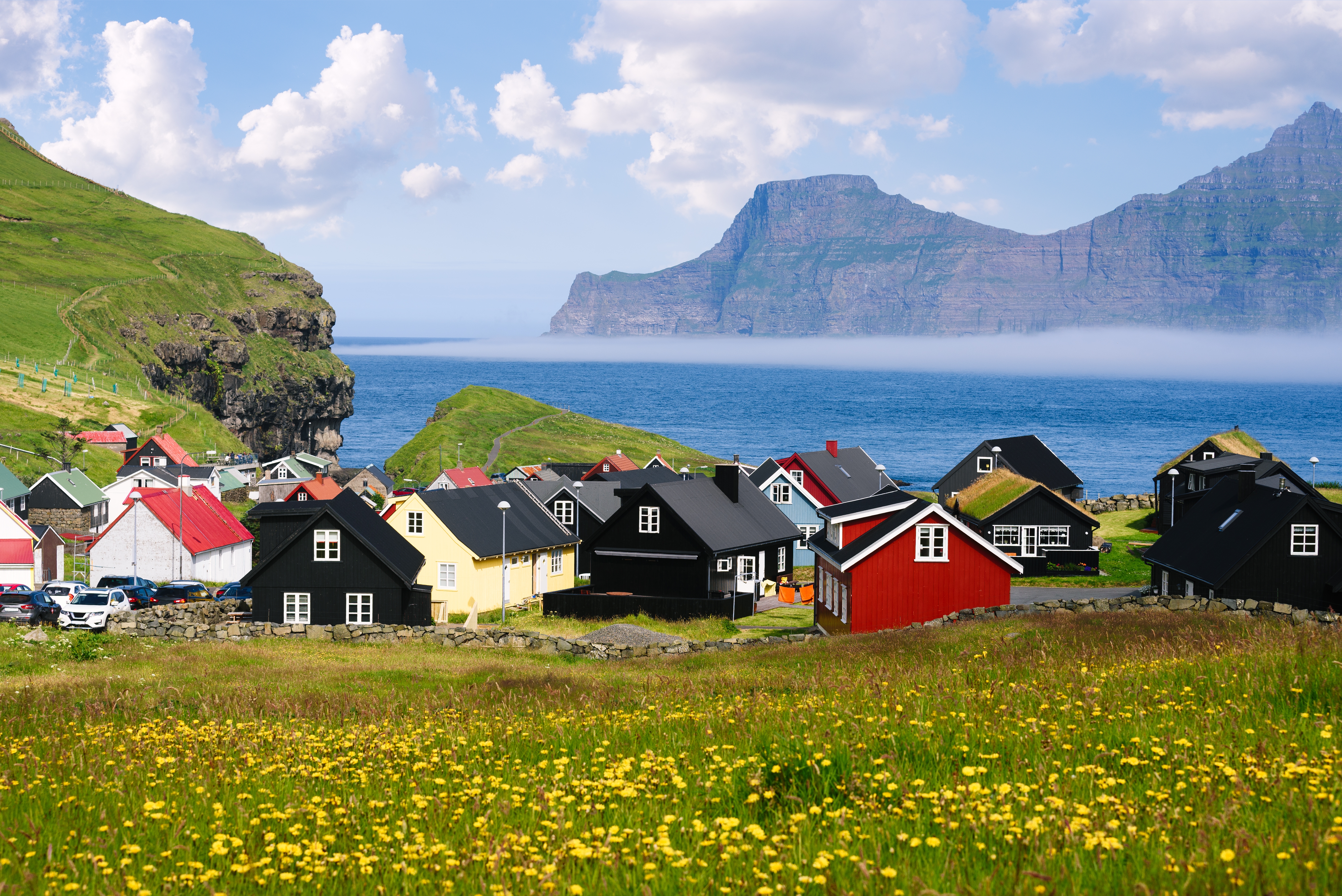 Eysturoy, Faroe Islands. Photo: Shutetrstock
While the Faroe Islands remain one of Europe's least visited destinations, this extraordinary piece of infrastructure has become a destination in its own right.
For travelers planning a road trip through the North Atlantic archipelago, the world's first underwater roundabout proves that sometimes the most unforgettable attraction isn't above ground at all.