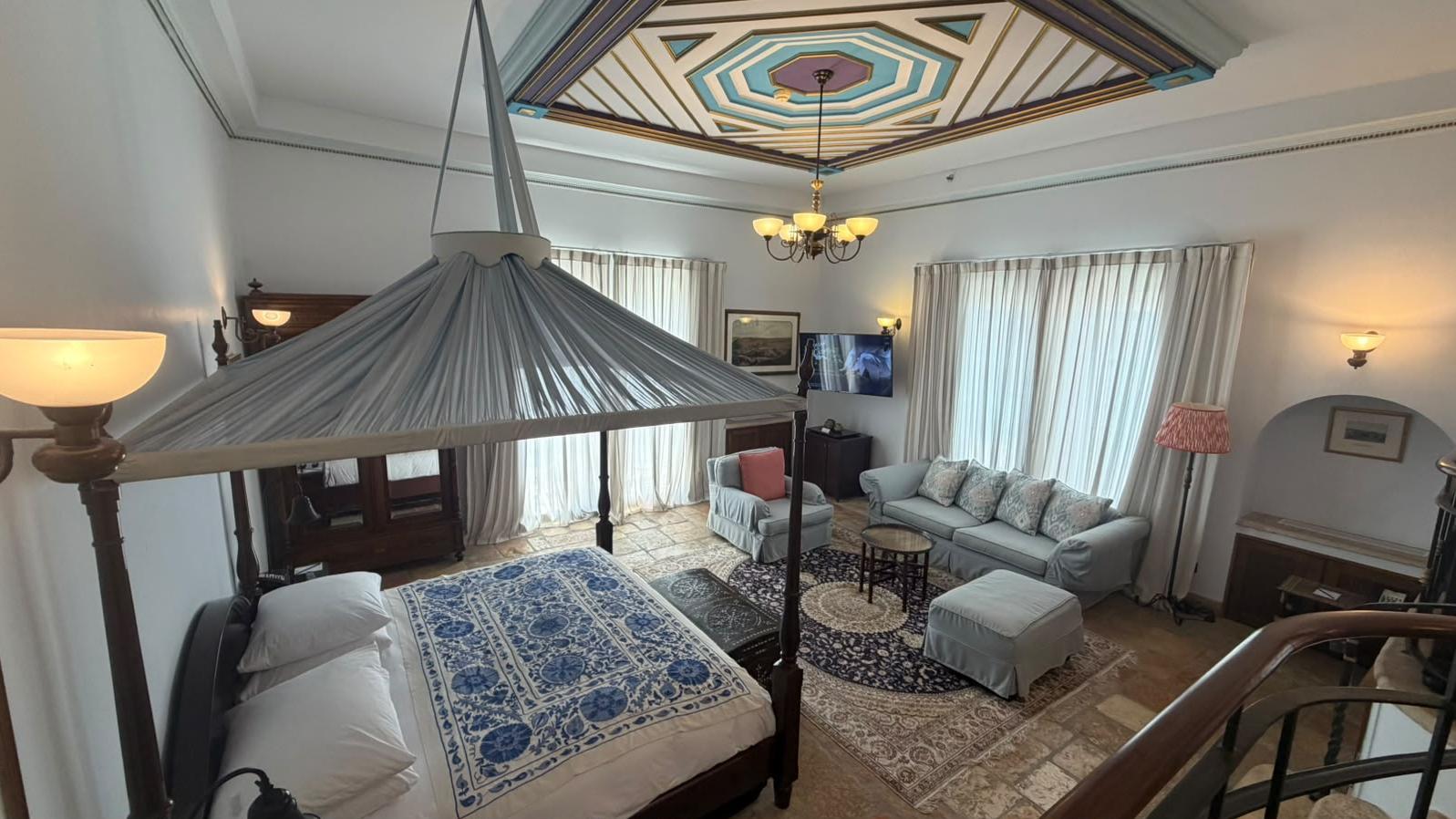
There are hotel rooms you remember because of the view, there are those that stick in your memory because of the bed and breakfast, and there are rooms that are hard to explain exactly why they continue to follow you even after you return home. Suite number 6 at the American Colony Hotel in Jerusalem is one such room. I slept in it for one night, and from the moment I entered, I felt like I wasn't entering just another luxury suite, but a space with its own personality and story.
Even today, the hotel treats room number 6 separately from the other guest rooms in the main house, and on the Small Luxury Hotels website it is listed as "the famous Suite Number 6." But you don't need that title to feel that something about the room is different.
The first thing that caught my eye was the four-poster bed. It's the kind of bed you hardly see in hotels in Israel these days, and in the suite it doesn't feel like an accessory designed to create a romantic effect, but rather like a natural part of the room. It's surrounded by antique furniture, impressive wood carvings above the window, historic wall and ceiling decorations, and small details that make the eye keep searching.
The suite itself doesn't behave like a modern hotel room. It's built on two levels, with internal stairs and a special balcony. Instead of entering one large space and seeing everything right away, you discover it gradually. Going up, going down, approaching the window, going out onto the balcony, going back inside and raising your head to the ceiling again.
And there's also the bathtub. For me, it's one of those bathtubs that you get into and after a few minutes there's no good reason to get out. Outside is Jerusalem, a noisy, intense city full of history, and inside there's almost total silence.
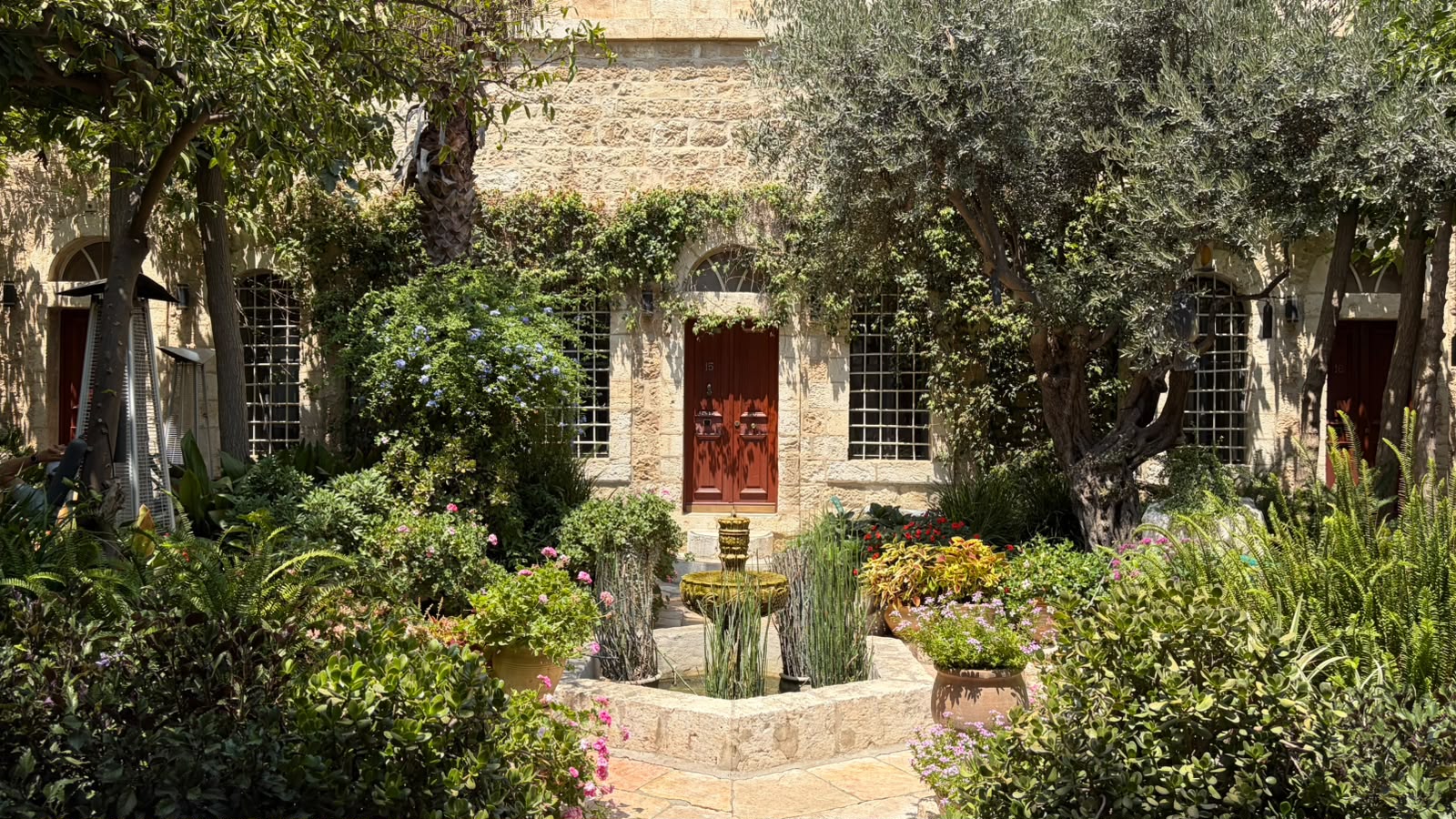 A special visit to the historic suite in Jerusalem. Photo: Matan Hetzroni
Before the Hotel, There Was a Palace Here
To understand the magic of the room, you first need to understand the building it's in. The American Colony didn't start life as a hotel. The main building was a magnificent residence built for an Ottoman Pasha and his family. The hotel's official website describes it as a palace built for the Pasha and his four wives, before it was passed on to the community that would later become known as the American Colony.
The community's roots are actually in Chicago. Anna and Horatio Spafford arrived in Jerusalem in 1881 after a series of family tragedies, along with a small group of Americans. They sought to live a communal life and help Jerusalem's residents. Later, other members joined them, including a large group of Swedes, and in 1896 the community moved to the complex where the hotel is located today.
From here, the hotel story gradually began. In 1902, Baron Plato von Ustinov, grandfather of actor Peter Ustinov, was looking for a suitable place in Jerusalem for his guests from Europe and America. The people of the colony began hosting more and more Western travelers and pilgrims, and the hospitality that developed in the house laid the foundation for the American Colony as a hotel.
With this in mind, Suite No. 6 takes on a different meaning. It is not a new room built inside a hotel decorated in a historic style. It is part of a house that lived long before it became a hotel.
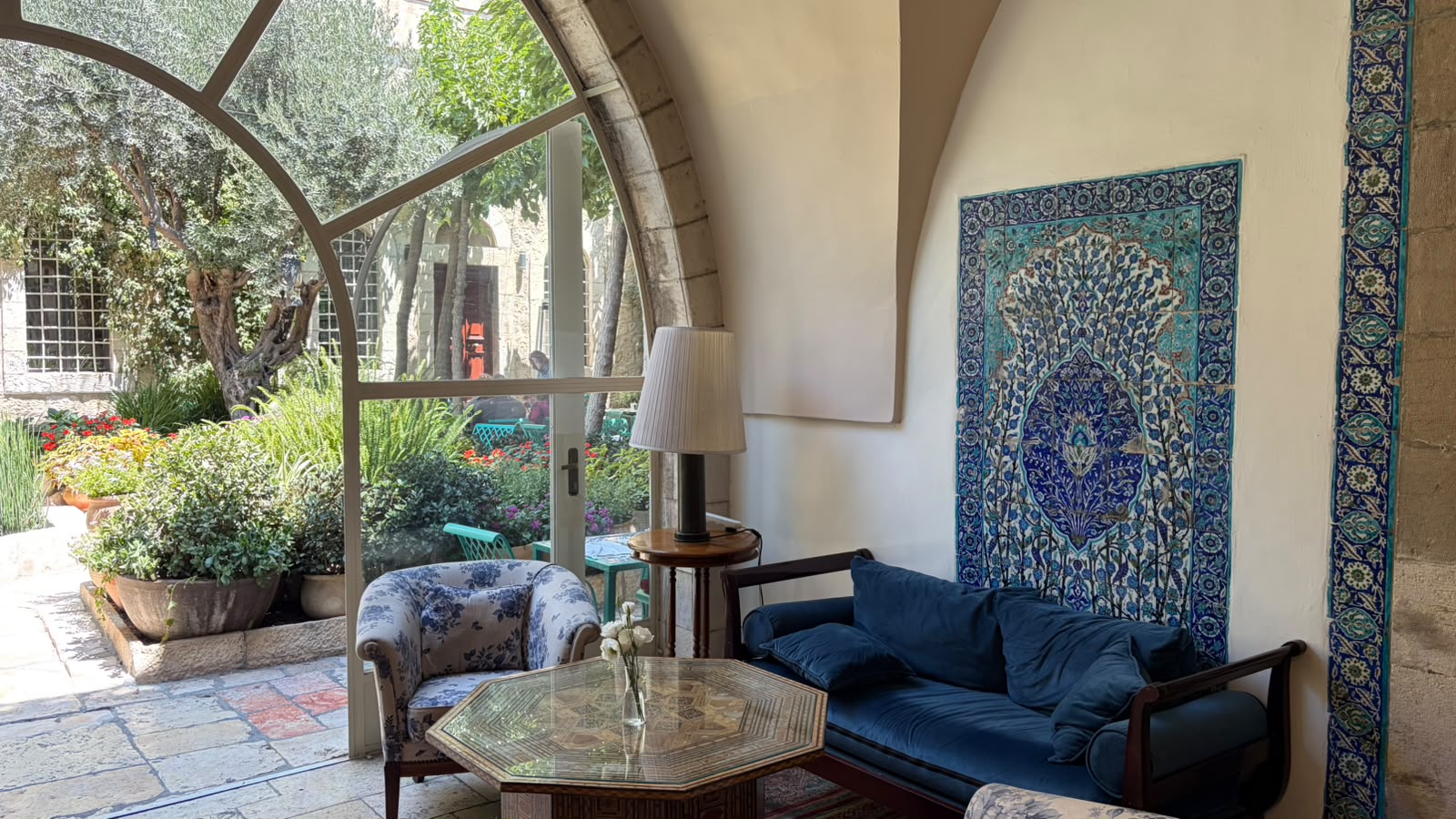 American Colony Hotel in Jerusalem. Photo: Matan Hetzroni
Churchill, Richard Gere and Us
Suite No. 6 is not just one of the special suites at American Colony. Over the years, its name has been associated with an extraordinary line of famous guests who have stayed there, including Winston Churchill, Bob Dylan, Richard Gere, Robert De Niro, Sting, Ingrid Bergman, Jane Fonda, Marc Chagall, and others.
It's hard to ignore this story when you're sleeping in the room. You look at the four-poster bed and think about the people who slept here before you. You go up those stairs, out onto the balcony, go back inside and look at the decorations on the ceiling.
The American Colony's entire list of famous guests is even longer. Over the years, the hotel has hosted leaders, artists, musicians, writers, actors and journalists from all over the world. Among the names the hotel itself mentions are Lawrence of Arabia, Giorgio Armani, Miuccia Prada, Tony Blair and Mikhail Gorbachev, among many others.
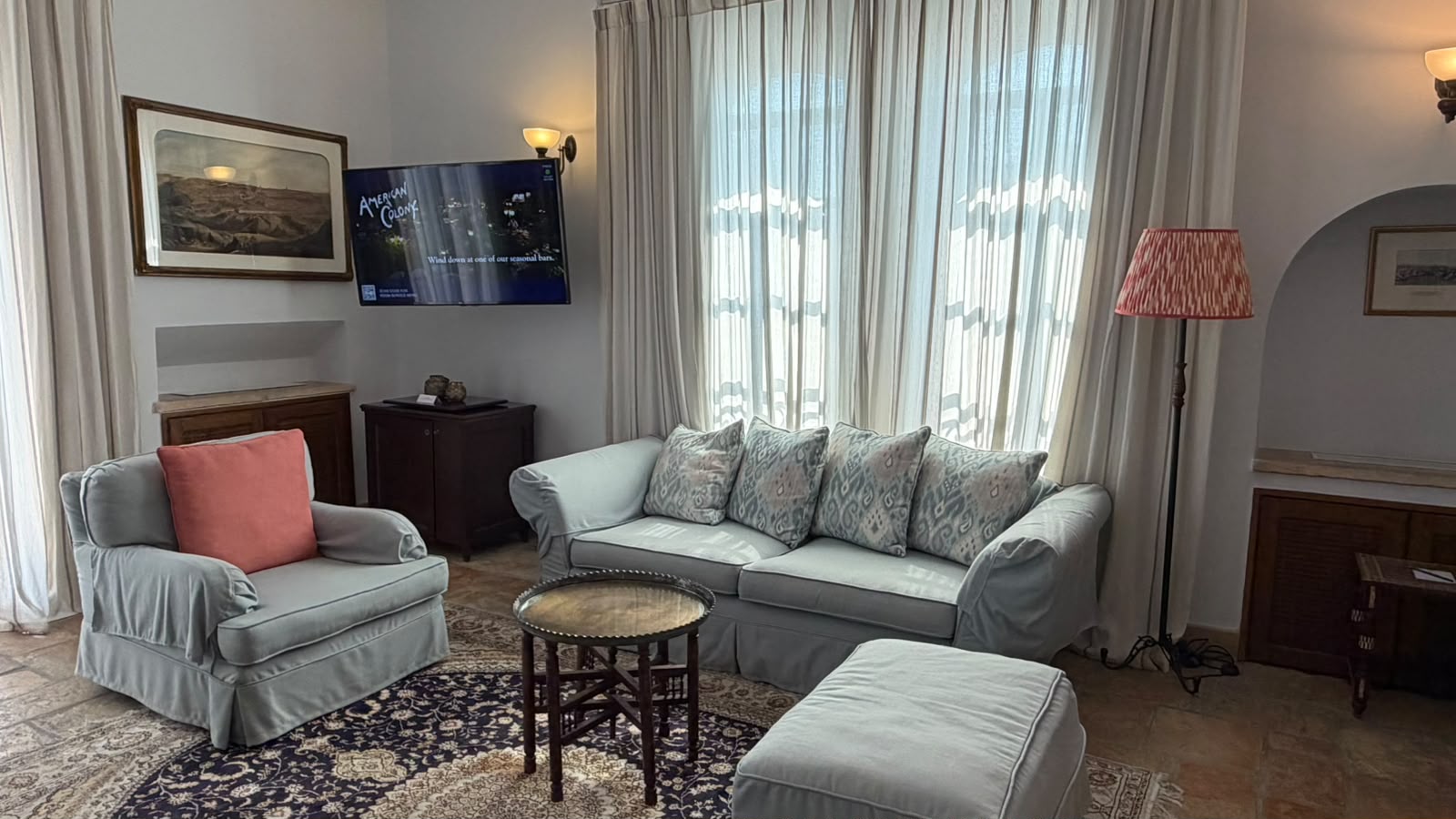 Suite number 6 at the American Colony Hotel in Jerusalem. Photo: Matan Hetzroni
A Hotel That Witnessed History
American Colony is not just a hotel that has amassed an impressive list of guests over the years. Historical events have come right to its doorstep. In 1917, a white flag, made from a sheet from one of its hospitals, was taken from the colony, as part of the events that accompanied the end of Ottoman rule in Jerusalem. The flag is currently preserved in the Imperial War Museum in London.
This is perhaps what sets the place apart from many hotels that use the word "historic." Here, history is not just a story told to guests. It took place within and around the buildings.
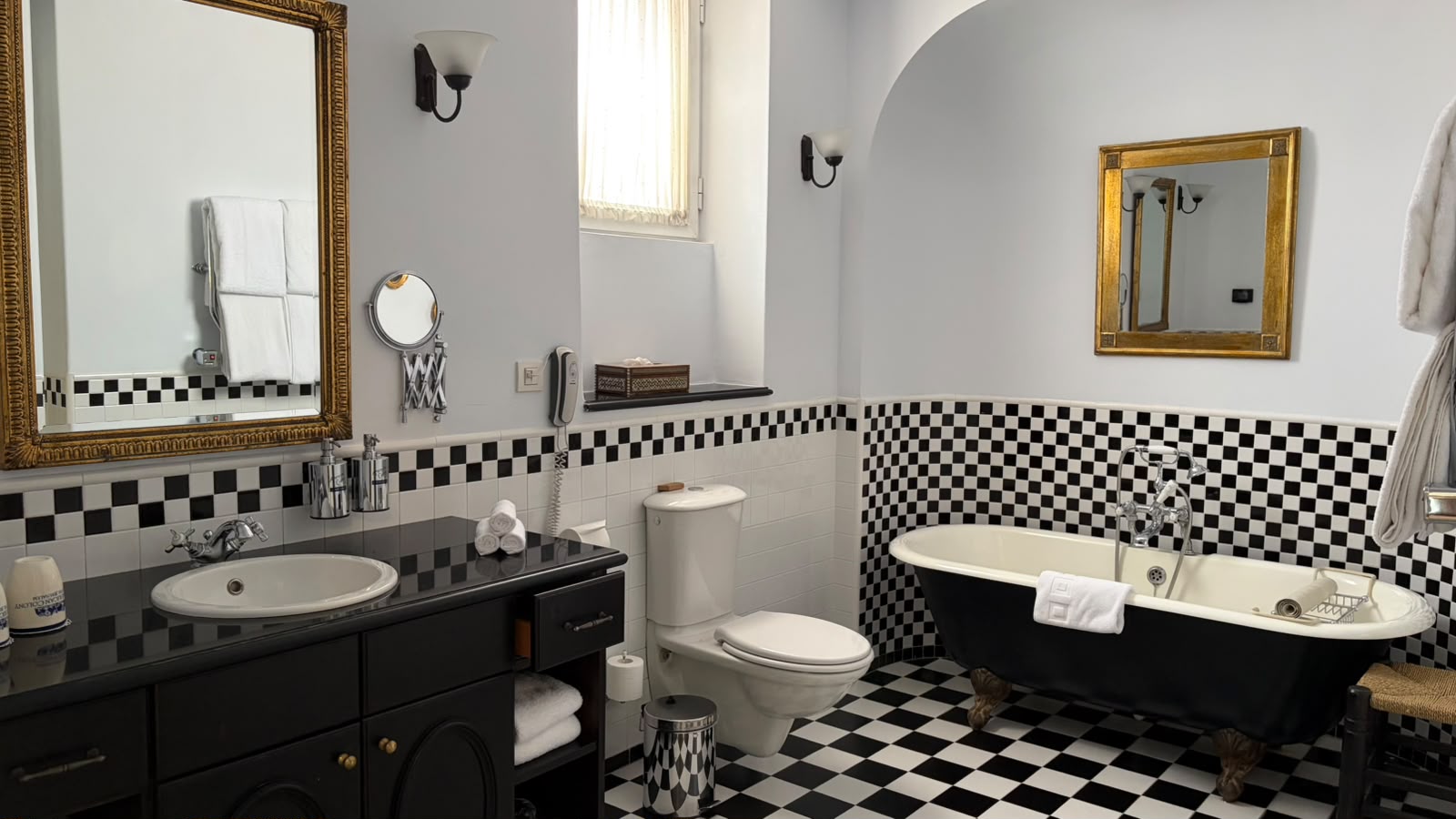 Suite number 6 at the American Colony Hotel in Jerusalem. Photo: Matan Hetzroni
Jerusalem from More Than a Century Ago
One of the things I especially loved about the suite and the hotel are the historical photographs. At American Colony, they are not just black-and-white photos someone bought to create an atmosphere.
The American colonists became important photographers who documented Jerusalem and the Land of Israel from the late 19th century and during the first decades of the 20th century. A large collection of their work is now preserved in the Library of Congress in Washington. Some of the historical photographs are displayed in the hotel and connect visitors directly to the world the community lived in.
To me, it completely changes the way you look at the images. These are not randomly chosen images of "old Jerusalem." They are part of the place's memory.
At night, when I returned to the suite and looked at the photos again, there was a strange and beautiful sense of layers of time. Old Jerusalem on the walls, present-day Jerusalem outside the window, and me in the middle.
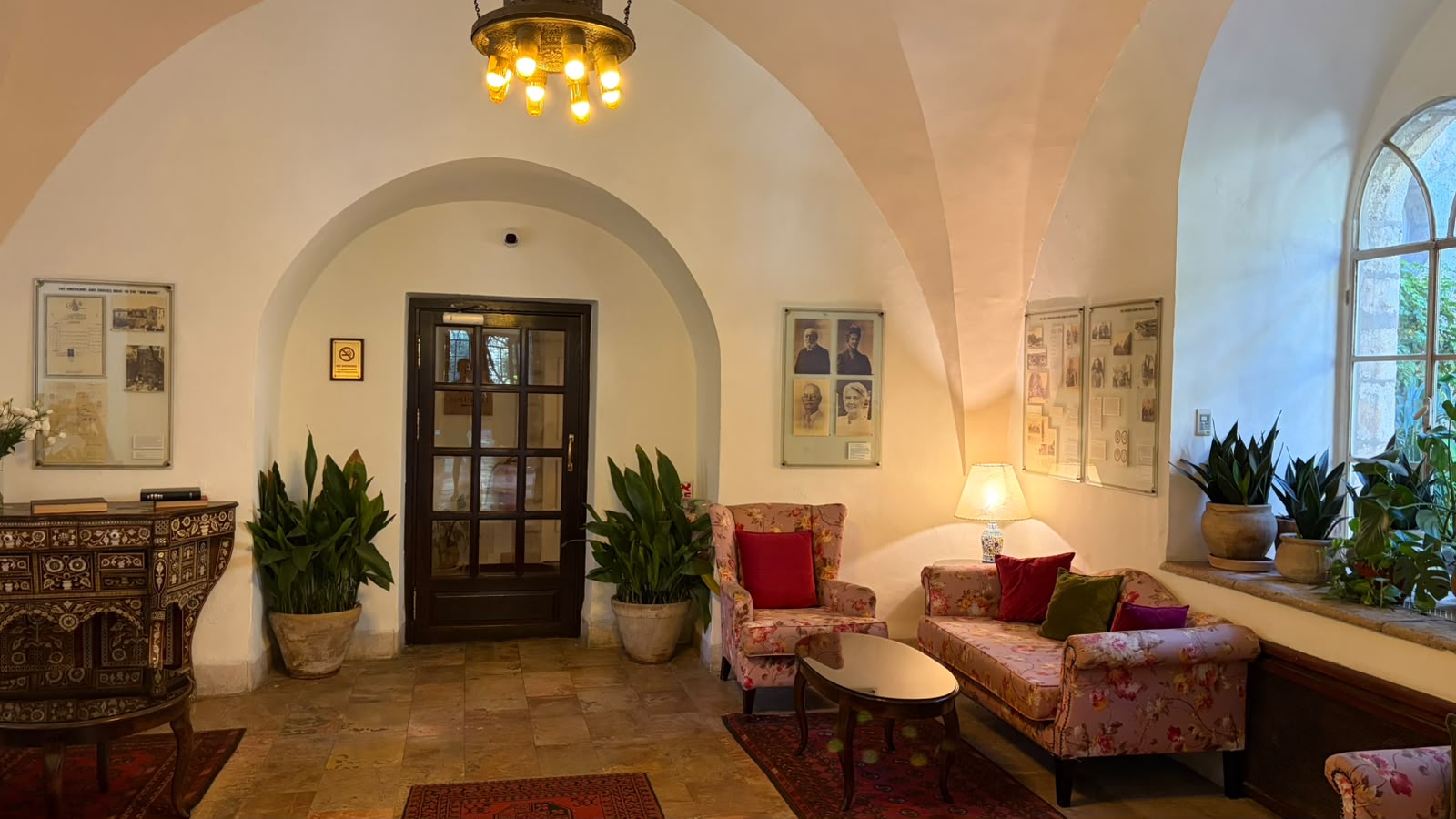 Historical photographs at the American Colony Hotel in Jerusalem. Photo: Matan Hetzroni
Dinner in the Garden and a Real Feeling of Being Abroad
We had dinner in the hotel's summer garden, which for me is an integral part of the American Colony experience. It's a special, winding garden, full of vegetation and seating areas, one that doesn't reveal itself all at once.
We ate well-made Arabic salads, fried halloumi with pistachios, which for me was one of the best dishes of the meal, and finally, an apple strudel that felt like it had made a stop in Vienna before arriving in Jerusalem.
But more than the dishes, I remember the atmosphere. There are quite a few luxury hotels in Israel, but few places that give such a strong sense of being abroad without trying too hard to create it. For a moment, you can think you're in the courtyard of an old hotel in Europe, in Istanbul or somewhere else in the eastern Mediterranean.
For me, this is one of the most special features of American Colony. It is very Jerusalemite and very international at the same time.
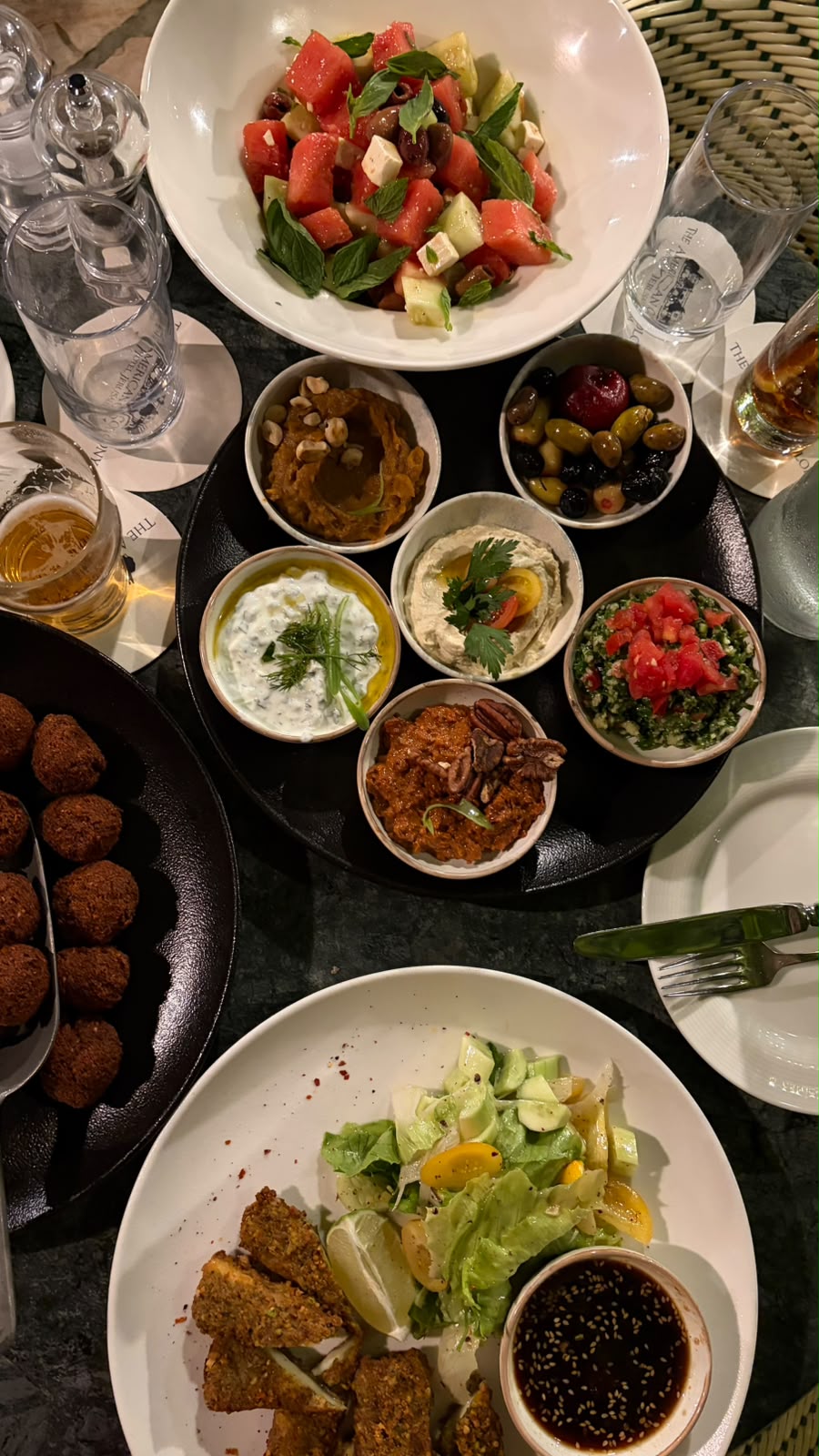 Dinner in the garden and a real feeling of sand. Photo: Matan Hetzroni
The Pool Where You Can Go Back a Hundred Years
The picturesque pool at the back of the hotel also doesn't try to compete with the giant pools of resort hotels. Its magic lies elsewhere. In the vegetation, in the buildings that surround it, in the stone and the silence.
I lay there and felt as if we were a hundred years back. Obviously, this is a feeling and not a fact, but American Colony is one of the only places in Jerusalem where this imagination comes almost by itself. You put your phone aside, look around, and for a few minutes the world outside simply disappears.
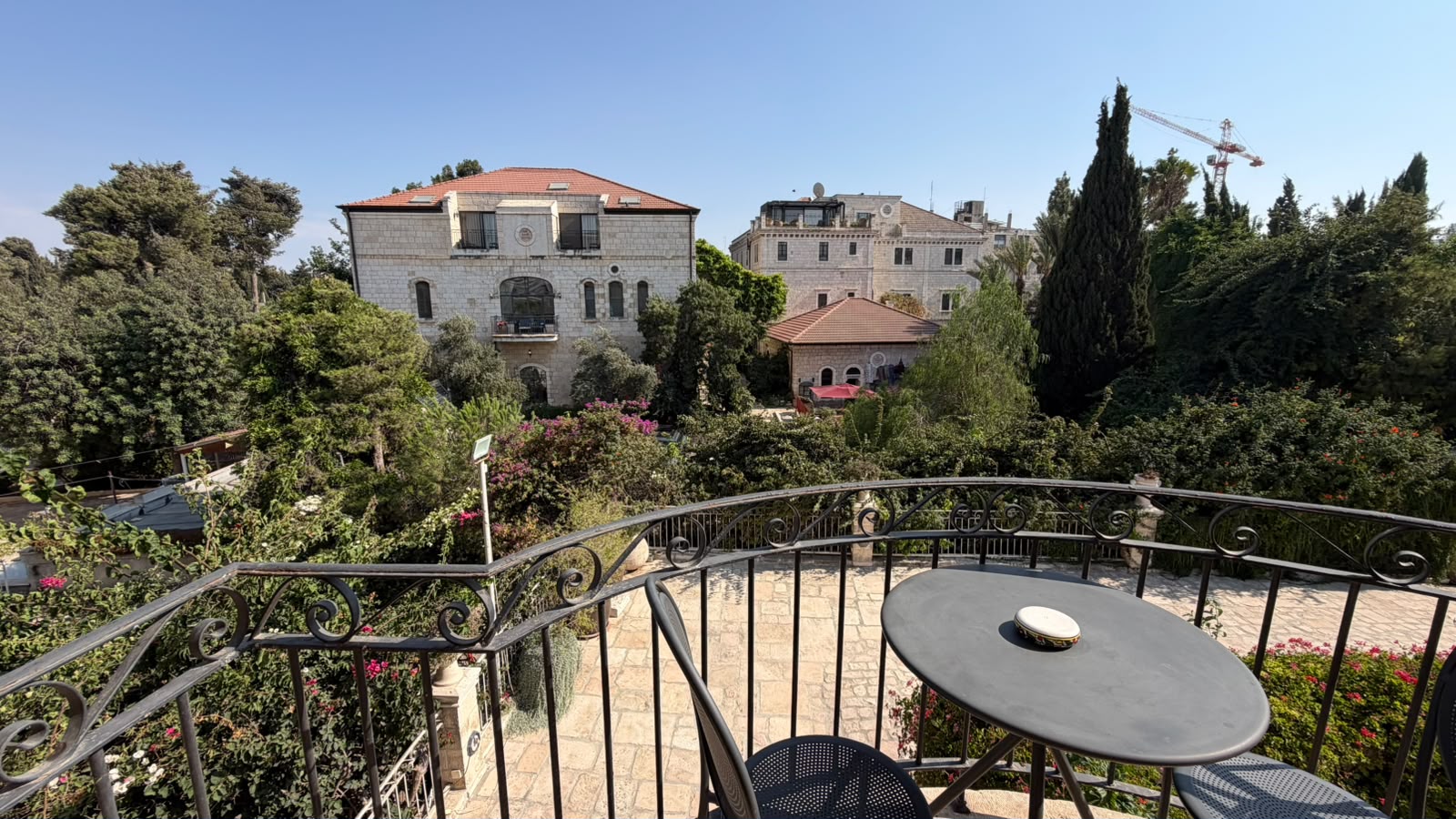 American Colony Hotel in Jerusalem. Photo: Matan Hetzroni
The Story Hidden within Armenian Ceramics
The highlight for me is the inner courtyard. The tables decorated with ceramics, the vegetation and the Jerusalem stone together create one of the most beautiful corners in the hotel. You can also see impressive Armenian ceramics in the hotel's interior spaces.
Jerusalem Armenian ceramics are much more than a design element. Its local tradition developed in the early 20th century, after Armenian artists arrived in Jerusalem from the Kutaisi region of the Ottoman Empire. Among the names most closely associated with its development are the Balian and Karkashian families, who continued the tradition in Jerusalem for generations.
Neshan Balian and Magardich Karkashian established a workshop on Nablus Road, not far from the American Colony, in 1922. The blue and turquoise colors, birds, flowers, and plant patterns have become an integral part of Jerusalem's visual language over the years.
The Balian family also has a connection to the work done for American Colony, and the family studio presents the hotel among the projects in which its work was incorporated. So when you sit in the courtyard and look at the tables and tiles, the ceramics are not just a beautiful setting. They are another layer in the cultural story of the hotel and Jerusalem.
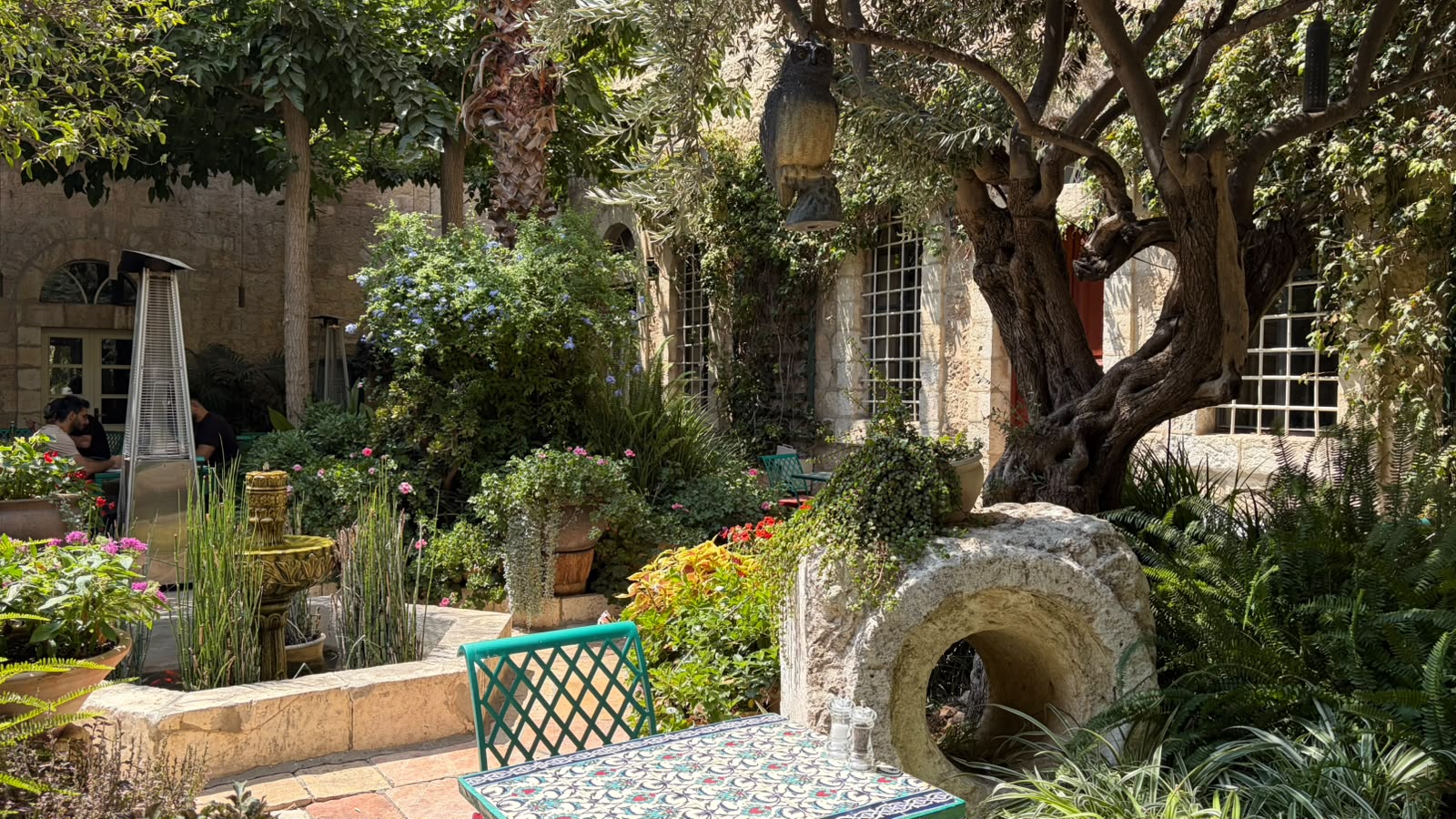 American Colony Hotel in Jerusalem. Photo: Matan Hetzroni
A Hotel That Doesn't Pretend to be Historic
Many hotels today try to tell a story. They take an old building, renovate it, leave an exposed stone wall, add antique furniture and black-and-white photos, and declare it a historic hotel.
American Colony doesn't have to do that.
The building was here before the hotel. The community lived here. Photographers worked here. Guests from all over the world passed through these corridors. More than a century of hospitality has left layers that you can't order from an interior designer's catalog.
I felt this especially in suite number 6. In the four-poster bed, the decorated ceiling, the wood carvings above the window, the stairs, the two levels, the balcony, the furniture and the historical photographs.
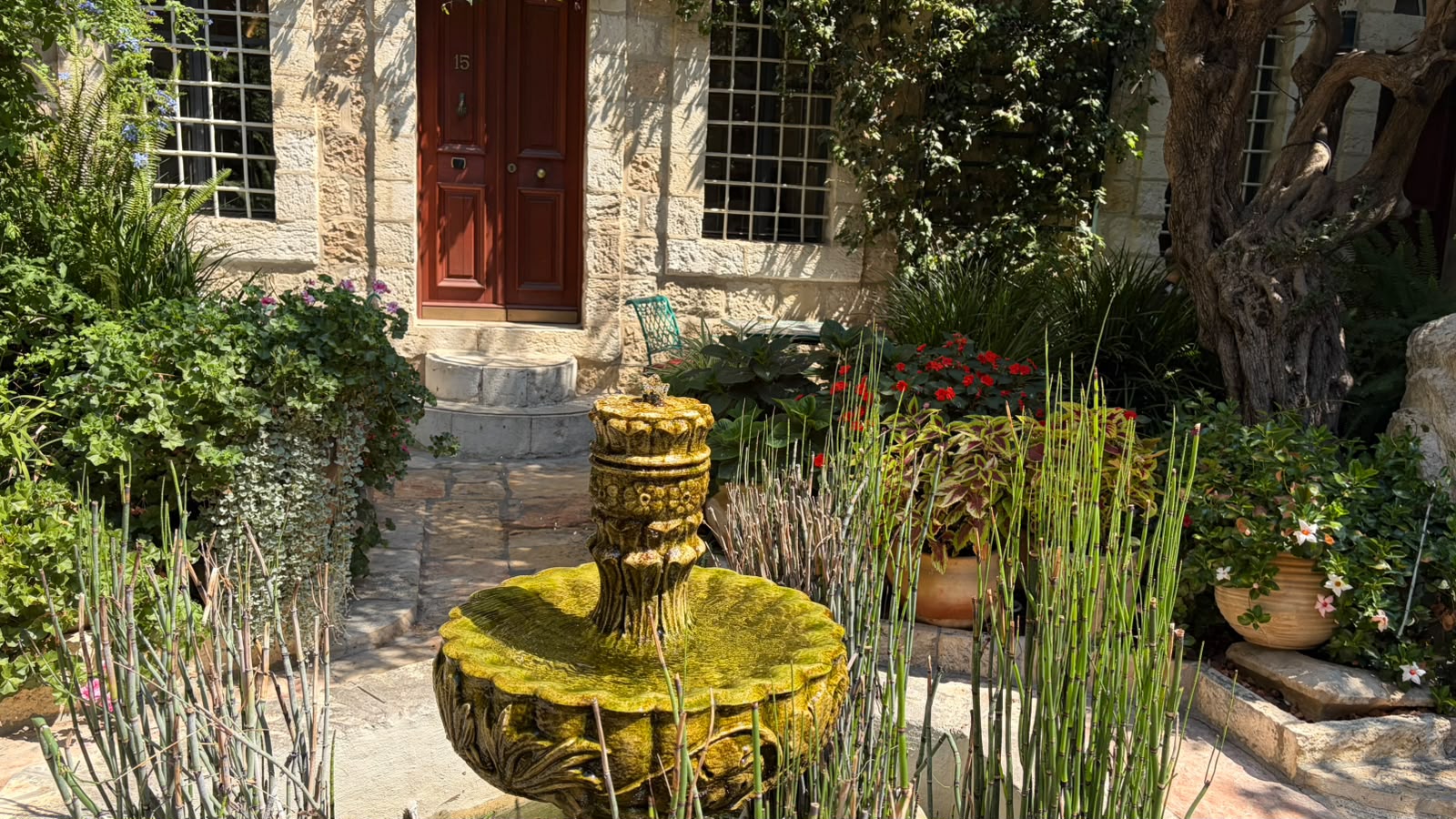 American Colony Hotel in Jerusalem. Photo: Matan Hetzroni
Despite spending just one night there, vivid images stayed with me, like the view from the four-poster bed to the ceiling, the ancient wood carvings, the descent down the stairs, the balcony, the bathtub I didn't want to get out of, dinner in the garden, the quiet pool, and the ceramic-decorated tables in the inner courtyard.
And yes, the names stick in your head too. Churchill, Bob Dylan, Richard Gere, De Niro and all the others who stayed in the suite and the hotel over the years. But when you close the door to Suite No. 6 at night, the famous names become less important.
The writer was a guest at the American Colony Hotel in Jerusalem.
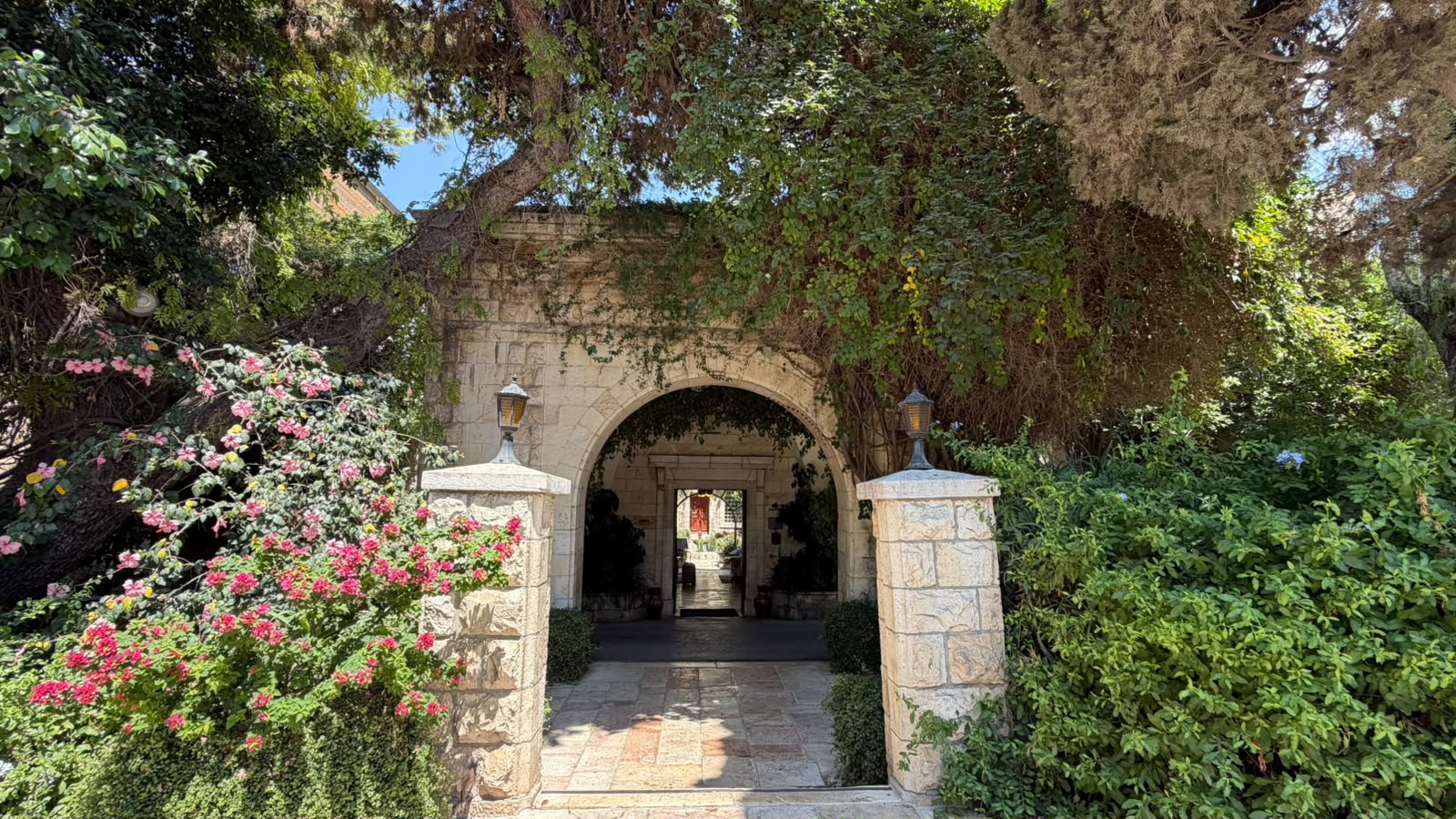 American Colony Hotel in Jerusalem. Photo: Matan Hetzroni