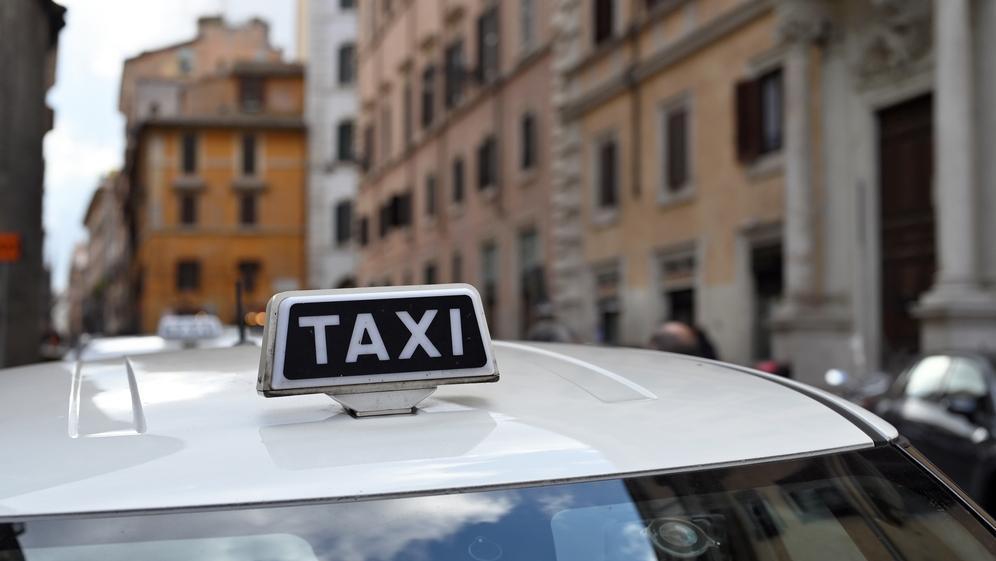
Rome is promoting an ambitious new plan to upgrade the taxi system in the Italian capital.
The goal is to shorten travel and waiting times, improve connections to airports, train stations, hospitals, event centers, and tourist sites, and introduce more technology into the service that residents and tourists use every day.
The plan, called Roma Taxi 2030, was born from the initiative of Legacoop Lazio, the regional organization of the cooperative movement in the Lazio region, and is promoted together with the Municipality of Rome
and Roma Servizi per la Mobilità, the municipal company responsible for planning and managing transport in the city, alongside taxi drivers' organizations and professional unions.
The first Roma Taxi 2030 report, published in early August, summarizes a work process that took place between March and July 2026 and presents a series of proposals for the short, medium and long term.
Less Time in Traffic Jams, Better Connection to Central Hubs
One of the program's main goals is to integrate taxis more efficiently into Rome's transportation system and reduce the time they waste in traffic jams.
Among the proposals being examined are improving the connection between train stations, airports, hospitals, major event centers, and the city's main sites, along with creating a taxi access network along strategic routes.
The plan also addresses improving taxi ranks, using preferred routes more efficiently, and tackling problem spots where taxi drivers are delayed by traffic congestion.
According to the transport portfolio holder in the municipality of Rome, Eugenio Patané, the proposals that emerged during the discussions are not just on paper. They have been technically examined, and many proposals from the municipality, labor organizations, and industry representatives are expected to be included in the implementation phase.
More Than 2 Million Euros Have Already Been Invested in Technology
The planned change is not limited to roads and taxi ranks. The Municipality of Rome has already invested more than €2 million in upgrading Taxiweb and Chiama Taxi 060609, Rome's municipal taxi ordering service, through which you can order a taxi in the city. As part of the effort to make the taxi service more digital and efficient.
Three areas are currently at the center of the work: improving taxi ranks, preferred routes, and problem spots on the roads, promoting digital innovation, and better integrating taxis with other modes of transportation in the city.
The issue of accessibility is also gaining significant importance. According to data from the municipal transport authority, in the first half of 2026, almost 146,000 trips were made for people with disabilities, partly due to new licenses introduced by the municipality of Rome in favor of accessible mobility.
What Does This Mean for Tourists?
One of the points of particular interest for visitors to Rome is the desire to create a more efficient and faster connection between taxis and places where demand is particularly high, including airports, train stations, tourist sites and large event complexes.
The goal is for the taxi system to be able to respond better to major events in the city, where demand surges in a short time, and to reduce waiting and travel times as much as possible.
However, it is important to emphasize that Roma Taxi 2030 is not yet a binding reform that has already entered into force. It is a strategic and operational plan that is in the process of development. Legacoop Lazio also emphasizes that the plan is not a regulatory or legislative tool that imposes new obligations on taxi drivers.
Work on the plan continues, additional topics are expected to be added to it in the coming months, and some of the proposals have already undergone feasibility tests in preparation for moving forward.
If the moves are indeed ripe for widespread implementation, the change may also be very noticeable for tourists: a taxi service that is fast, accessible, and more connected to the transportation system of one of the most touristed cities in the world.