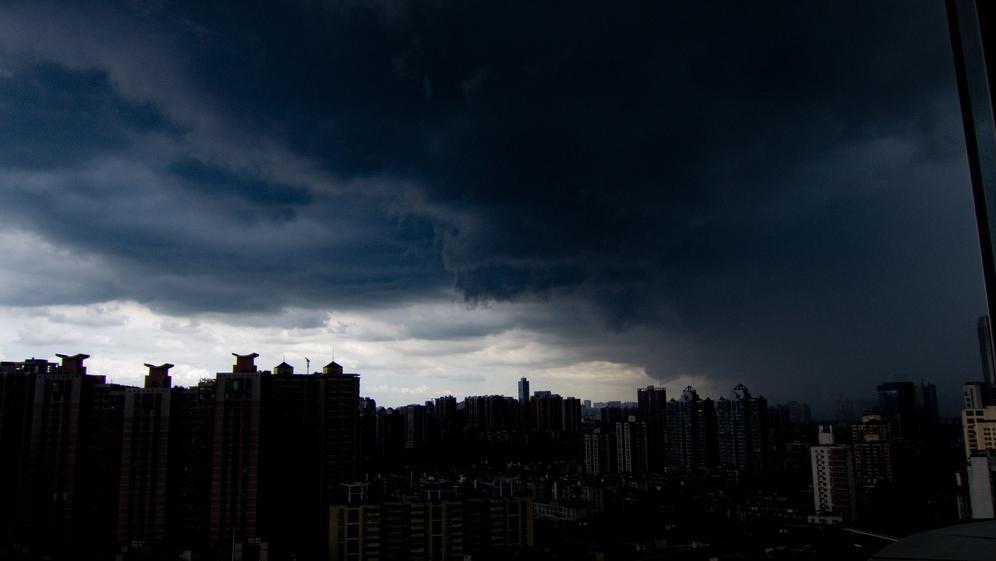
Typhoon Saudel hit the coast of eastern China twice this morning (August 28), causing significant disruption to aviation and raising the risk of flooding and landslides in Zhejiang province.
According to the China National Meteorological Center, the first impact occurred at around 08:05 local time in Yuhuan County, Taizhou, Zhejiang Province. At the time of impact, winds near the center of the storm were measured at 35 meters per second, about 126 kilometers per hour.
About an hour later, at 09:10, the China Meteorological Center announced that Saudel had hit the coast again, this time in the Longwan area of Wenzhou city. At the time of the second impact, winds of 33 meters per second, about 119 kilometers per hour, were measured.
The impact on Wenzhou's aviation sector is significant. According to an official update from the Wenzhou municipality, 197 flights scheduled for August 28 were canceled at Wenzhou Longwan Airport: 111 outbound and 86 inbound. Authorities urged passengers to check flight status with the airport and airlines before arriving.
After making landfall, Saudel began to weaken. The China Meteorological Center's update at 12:22 said the storm's center was already in the Pingyang region of Zhejiang Province and that it was a Severe Tropical Storm, with maximum winds of about 28 meters per second (about 101 kilometers per hour).
However, the main risk is now shifting from winds to heavy rain. The China Meteorological Center warns that heavy rain is expected in Zhejiang, Fujian and other areas until August 29, with southern Zhejiang, central and northern Fujian and other parts potentially recording 250-280 mm of rain locally.
At the same time, authorities in Zhejiang issued a red warning for the risk of landslides and geological disasters in parts of Wenzhou, Taizhou and Lishwei. The warning is in effect until the morning of August 29, and authorities are asking the public to continue to monitor the alerts and avoid areas at risk.
Despite the typhoon weakening after hitting the coast, its effects on transportation and aviation in the region are expected to continue, especially in Wenzhou and areas where unusual precipitation is expected.