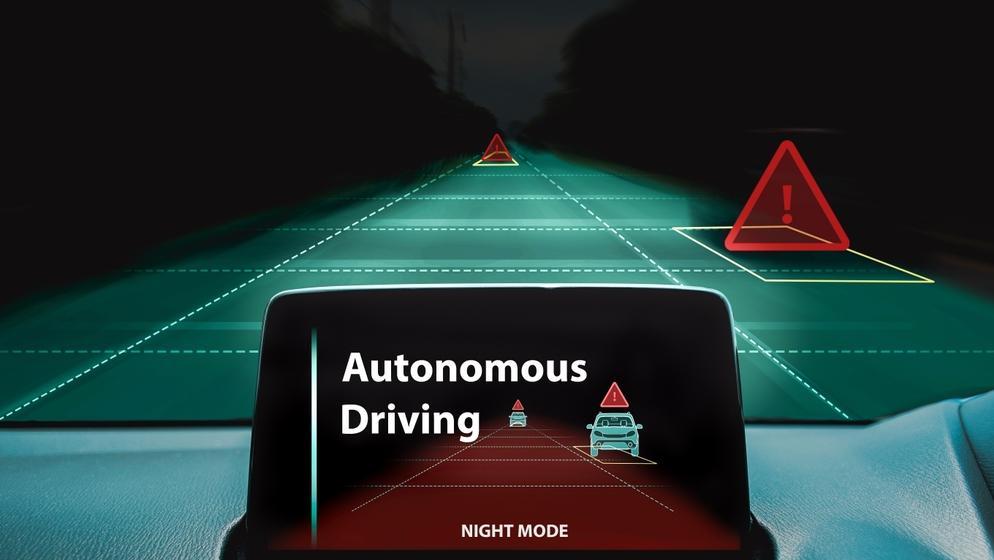
Dubai is gearing up for the era of autonomous transportation. The emirate has inaugurated Dubai Mobility Labs at Dubai Silicon Oasis, a new complex designed to test, validate and certify autonomous vehicles and transportation technologies under controlled conditions and on public roads.
The complex is designed to make Dubai not only a market where new transportation technologies are deployed, but also a place where they are tested and approved before hitting the road.
The new test suite includes 248 different scenarios in controlled environments and on public roads.
The complex's multi-purpose area supports 195 test scenarios: 143 in the original design and 52 added during the upgrade.
The scenarios simulate situations in which autonomous vehicles may encounter an urban environment and allow testing of, among other things, sensing and decision-making systems, interaction with road users, and responses to changes in traffic and the environment.
The complex combines dedicated test tracks with a controlled area that simulates a wide range of traffic situations, while also allowing for real-world testing on public roads, on a track that extends from Dubai Silicon Oasis to the Al Qudra area.
Tesla Is Already In
One of the most notable details of the launch is that the complex is no longer just future infrastructure on paper.
Tesla, WeRide, and Pony.ai have already experimented with autonomous technologies and vehicles there.
The trials were designed to test the systems' readiness under various conditions and to speed up testing and verification toward safe operation on Dubai's road network.
The presence of three prominent companies in the field underscores Dubaiis direction: to transform the complex into an international hub where automakers, technology companies, startups, and research institutions can develop, test, and qualify next-generation transportation systems.
On the Way to 25% Autonomous Travel
The project is part of the Dubai Smart Self-Driving Transport Strategy, within the framework of which the emirate has set an ambitious goal: by 2030, 25% of all transport trips in Dubai will be autonomous.
Beyond the test tracks themselves, the complex includes support and operations facilities, light industrial units, and three 60-kilowatt electric vehicle charging stations.
DEKRA has been appointed to operate Dubai Mobility Labs for the first three years and will manage day-to-day operations, organize testing, supervise the facilities, and comply with international safety standards.
The broader goal is to shorten the path between technology development and actual commercial operation: allowing companies to start in a controlled environment, later move to testing on public roads, and finally reach broader operation.
For Dubai, this is another move in the attempt to establish itself as one of the world's most prominent urban laboratories for smart and autonomous transportation.