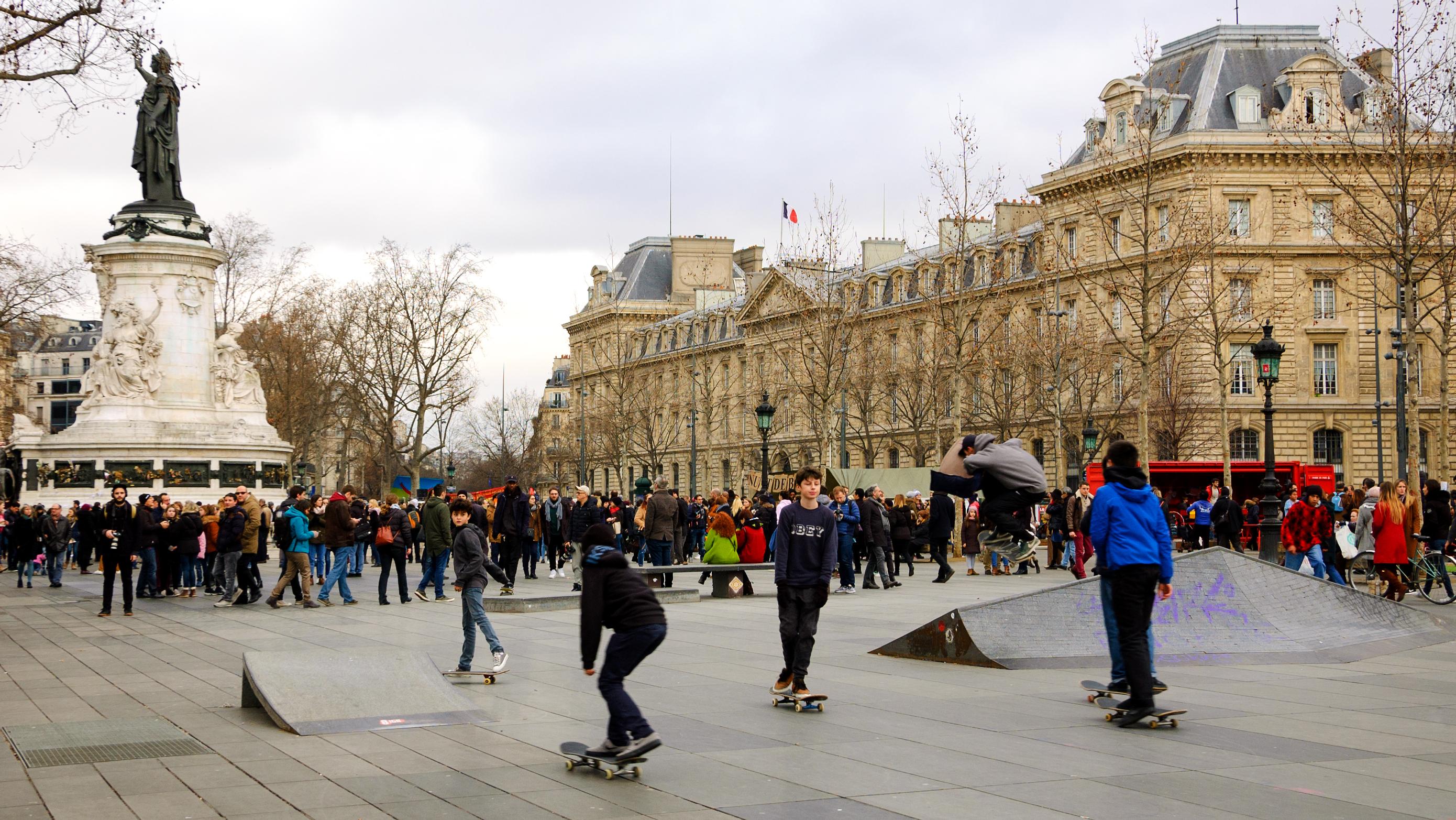
Police in Paris have introduced overnight restrictions on gatherings and demonstrations in parts of the French capital, alongside a curfew covering both adults and minors in the Place de la République and Les Halles areas.
The Paris Police Prefecture announced the measures following reports of violence and looting in recent days. The restrictions were issued in accordance with instructions from Prime Minister Sébastien Lecornu and Interior Minister Laurent Nuñez.
The first set of measures prohibited gatherings and demonstrations in designated areas of Paris from 8 p.m. on October 19 until 6 a.m. on October 20. Authorities said the aim is to protect people and property from further violence and looting allegedly involving groups of young people.
In a separate announcement, the police prefecture confirmed a curfew prohibiting both adults and minors from being present in the areas around Place de la République and in the Les Halles district. This restriction runs from 11 p.m. on October 9 until 6 a.m. the following morning (October 20).
PARIS UPDATE
Authorities have decided to exted the curfew for Paris
"Last night, following the curfew put in place in certain sectors of the capital by order of the police, public peace was restored. The measure continues today (October 20) and for as long as it proves necessary. There will never be any conditional clause in the measures that ensure the protection of property and people."
Partial curfews restricting the movement of young people and gatherings were also previously announced for Marseille, Bordeaux, Nice and Lyon in the south and Lille and other towns in the north.
LYON UPDATE
"After once again meeting with the Mayor of Lyon and consulting this morning with representatives of retailers and artisans, as well as professionals in the restaurant and hotel sectors who collectively expressed their satisfaction, the Prefect of the Rhône, Etienne GUYOT, has decided to renew the curfew as well as the ban on gatherings, by extending the measures taken yesterday," announced the regional prefect of Auvergne-Rhône-Alpes, prefect of the Rhône.
Authorities in the city are, therefore, renewing security restrictions in the Presqu'île area. The Commissioner of the Rhône region, Étienne Guyot, announced the extension of restrictions in the central area of the city, in order to maintain security and public order.
According to the published guidelines, on Tuesday, October 20, 2026, two major restrictions will apply in the Preskill area:
A. Prohibition of gatherings and demonstrations: Between 4:00 PM and 9:00 PM, demonstrations, processions, and protest gatherings in public spaces will be prohibited. This is an expansion of the previous bans that were imposed and were lighter.
B. Nighttime curfew: Starting from 9:00 PM on Tuesday until 6:00 AM on Wednesday, October 21, the movement of people and their presence in public spaces will be prohibited, subject to the established exceptions.
Despite the restrictions, commercial and cultural life in the area will continue. Bars, restaurants, cinemas and concert halls will remain open, and public transport and private vehicles will continue to operate as usual, in accordance with guidelines.
Who Will Be Able to Move During the Curfew?
The authorities have set a series of exceptions that will allow movement even during curfew hours. Among other things, leaving and returning to one's place of residence will be permitted, including to and from hotels, as well as travel for medical needs and emergencies. Additional exceptions will apply to urgent family circumstances, assistance to dependent people, and child care.
In addition, the movement of public employees, security and rescue forces, health system personnel, journalists and elected officials will be permitted within the scope of their duties. Continuous passage of vehicles on the main roads crossing the area will also be permitted.
Security forces are expected to increase their presence in the area and carry out inspections to enforce the guidelines. The restricted area is demarcated by main streets and the banks of the Rhône and Seine rivers, with the bridges crossing the rivers exempted from the restriction
The protests began last month with students calling for better school conditions but have since expanded to include wider grievances. Trade unions and various protest groups joined demonstrations over the weekend, increasing turnout.