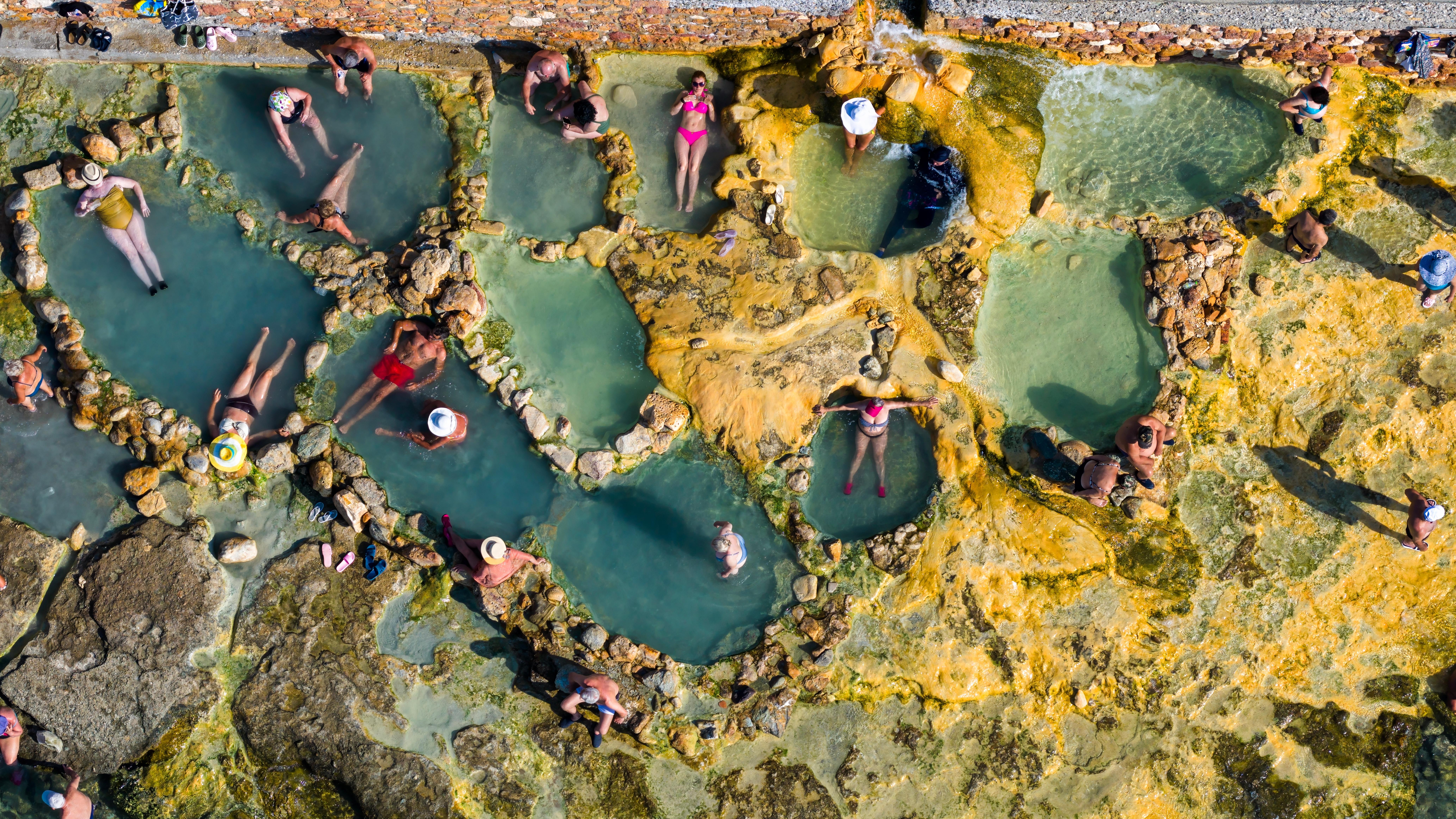
When winter arrives in much of Europe, swimming in the sea becomes a distant summer memory. But in Greece, there are places where the water stays warm even as temperatures drop, thanks to natural thermal springs that flow from the earth into the coastline.
Two destinations stand out for travelers looking to combine seaside scenery with a little warmth during the colder months: Edipsos, on the island of Evia, and Loutra, on the Kassandra Peninsula in Halkidiki. Both have thermal waters, coastal views and a slower pace of life, but each offers a different experience.
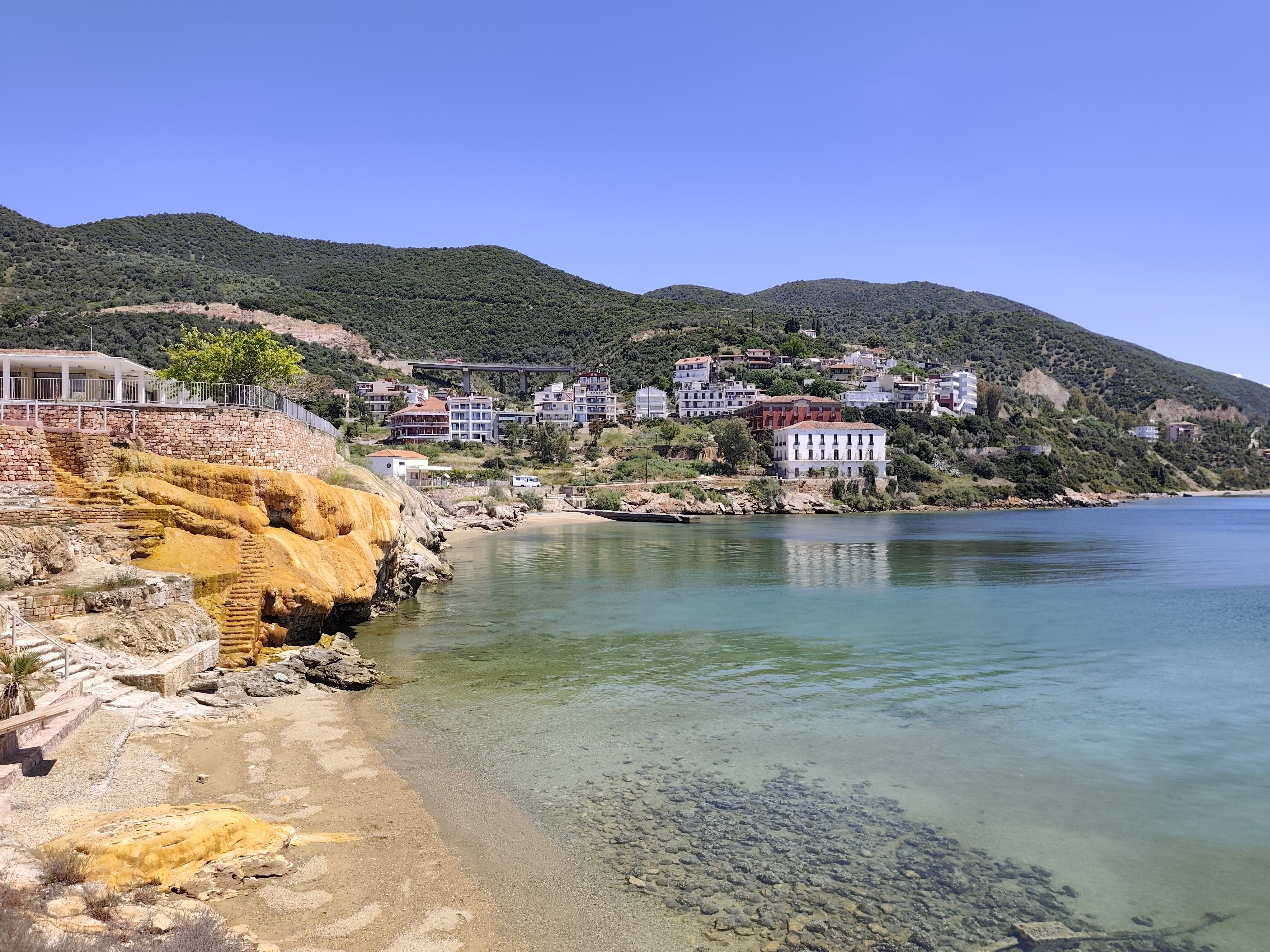 Edipsos. Photo: Shutterstock
Edipsos: Where Hot Springs Meet the Sea
On the northwest coast of Evia, Greece's second-largest island, Edipsos has built its reputation around one remarkable natural feature: geothermal water that emerges from the ground and reaches the shoreline.
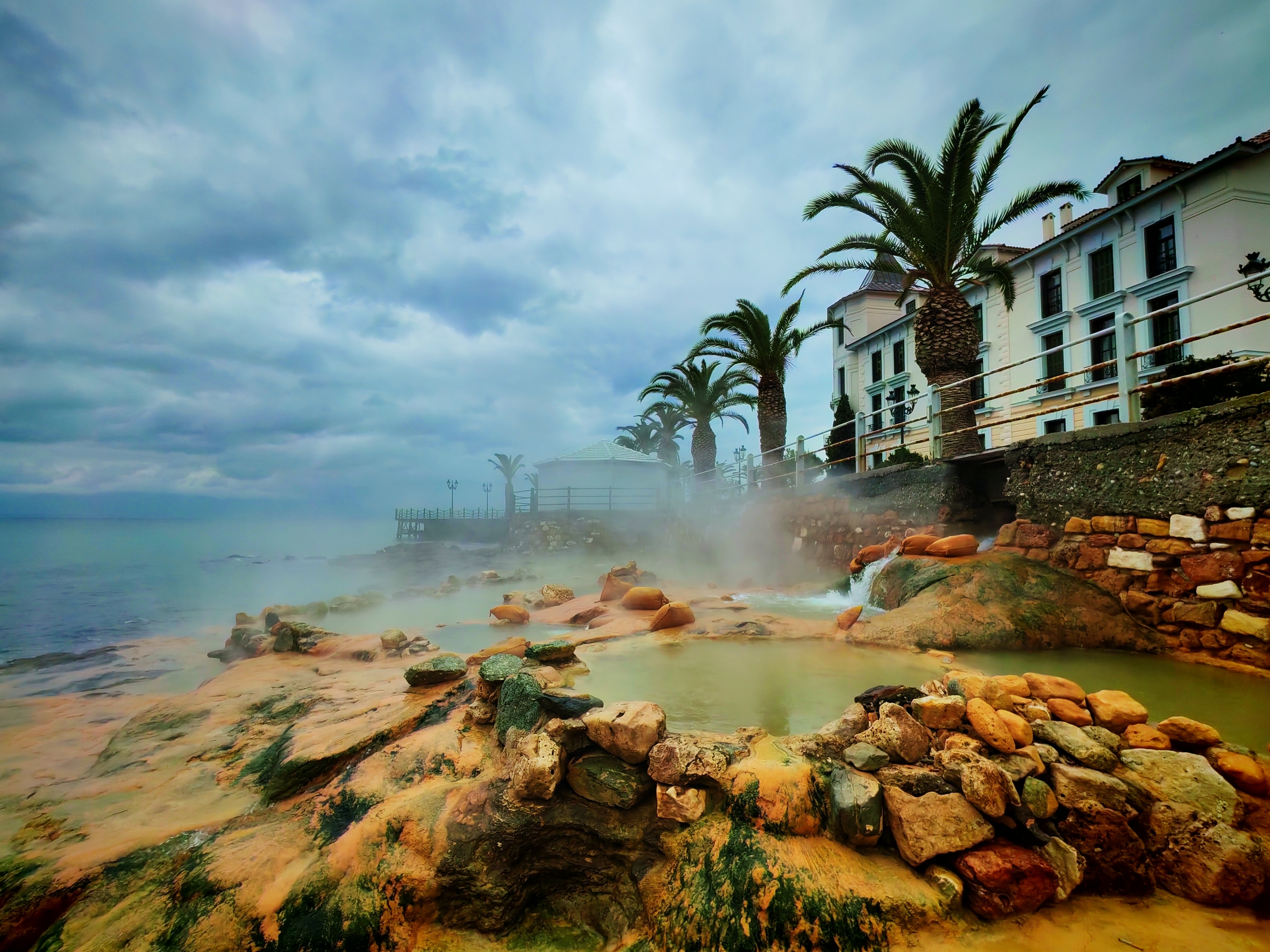
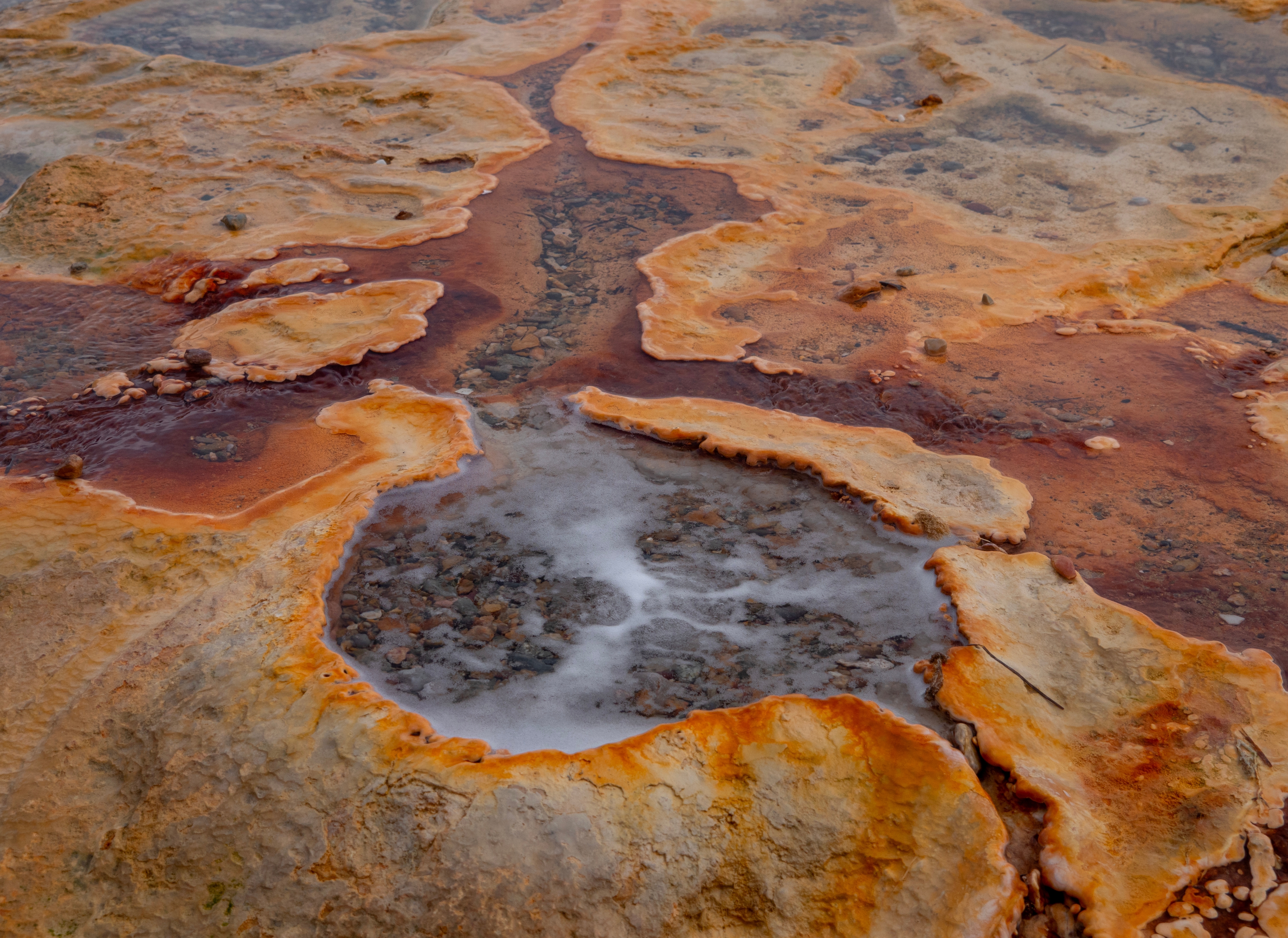
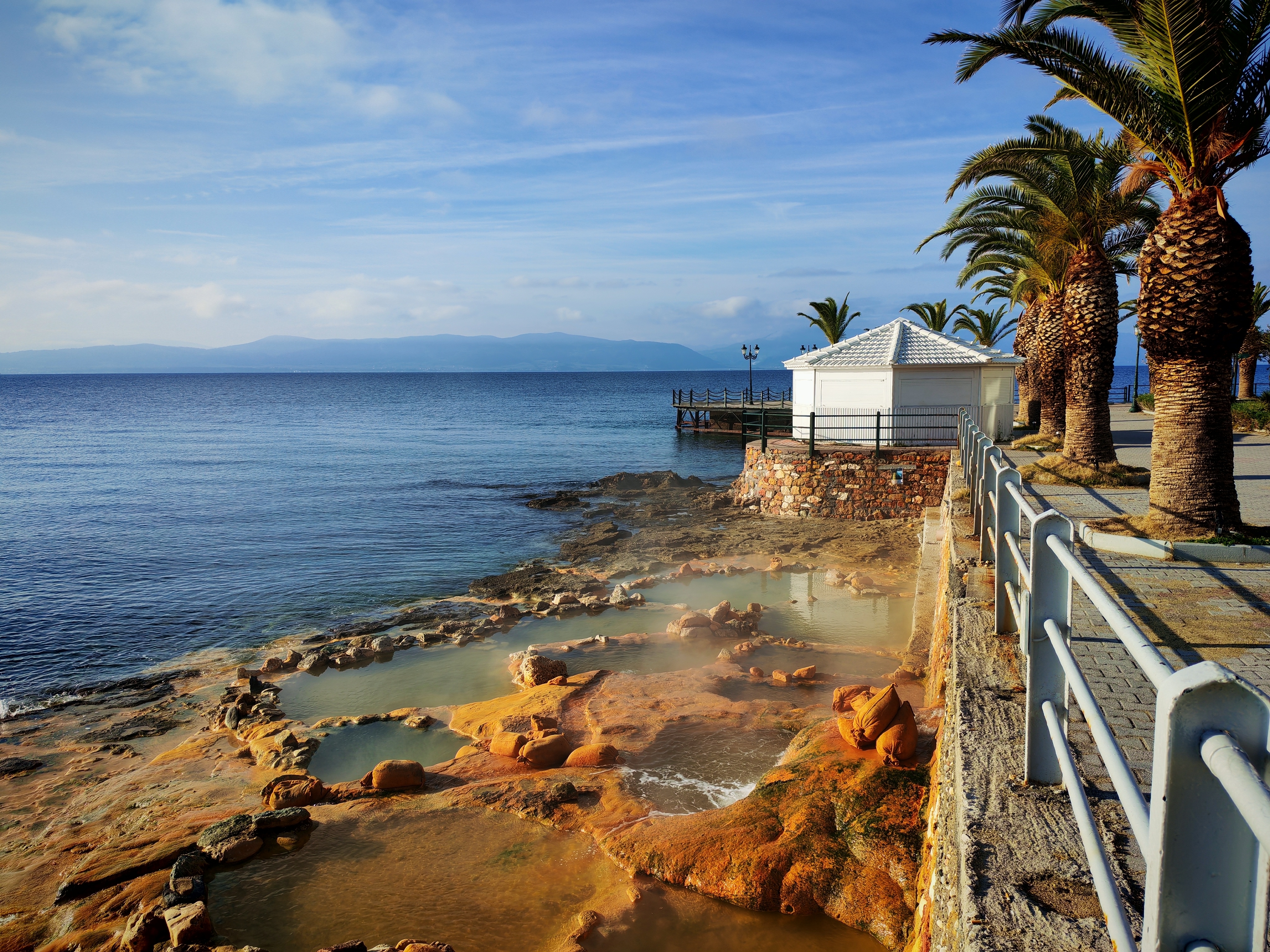
More than 80 thermal springs are associated with the area, with water temperatures varying considerably depending on the source. Some springs release extremely hot water, which cools as it flows over the rocks and mixes with seawater.
The result is an unusual winter bathing experience. Rather than plunging into the cold open sea, look for naturally warmed pools formed along the rocky coast. Many are accessible without paying for a spa facility, although conditions, temperatures and access can vary.
Be sure to always check the water before entering, as the hottest outlets can cause serious burns!
On a chilly morning, the contrast between the warm water and the cold air can produce clouds of steam that drift over the shoreline. It is a memorable sight, particularly when the gulf is quiet and the surrounding landscape feels far removed from the summer crowds.
The experience is not quite the same as swimming in a turquoise tropical sea. The water's appearance depends on the weather, light and local conditions. But the opportunity to sit in naturally heated water beside the Mediterranean is a compelling reason to consider Edipsos outside the traditional holiday season.
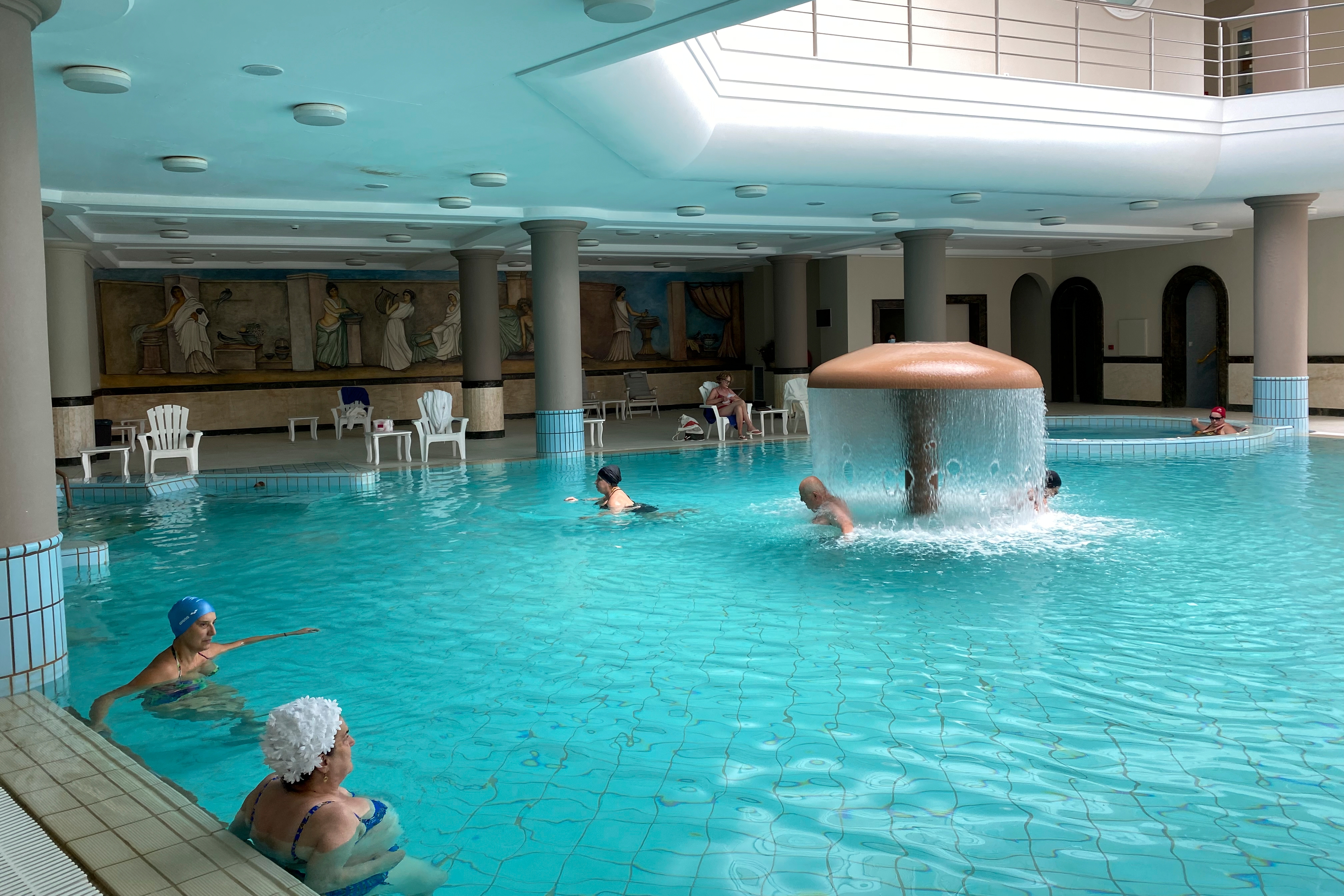 Edipsos. Photo: Alexandros Michailidis / Shutterstock.com
For visitors who prefer a more controlled setting, the Edipsos Springs Hydrotherapy Center and the historic Thermae Sylla Spa & Wellness offer alternatives to the open-air pools. Indoor facilities can be particularly appealing when winter winds make the beach less inviting.
What Else to Do in Edipsos?
The town is a fashionable spa destination, drawing wealthy visitors and prominent cultural figures over the year. Its waterfront architecture and established wellness hotels still reflect that heritage.
To make the most of it, combine a morning in the thermal waters with a walk along the seafront, a leisurely Greek lunch or an afternoon in a spa.
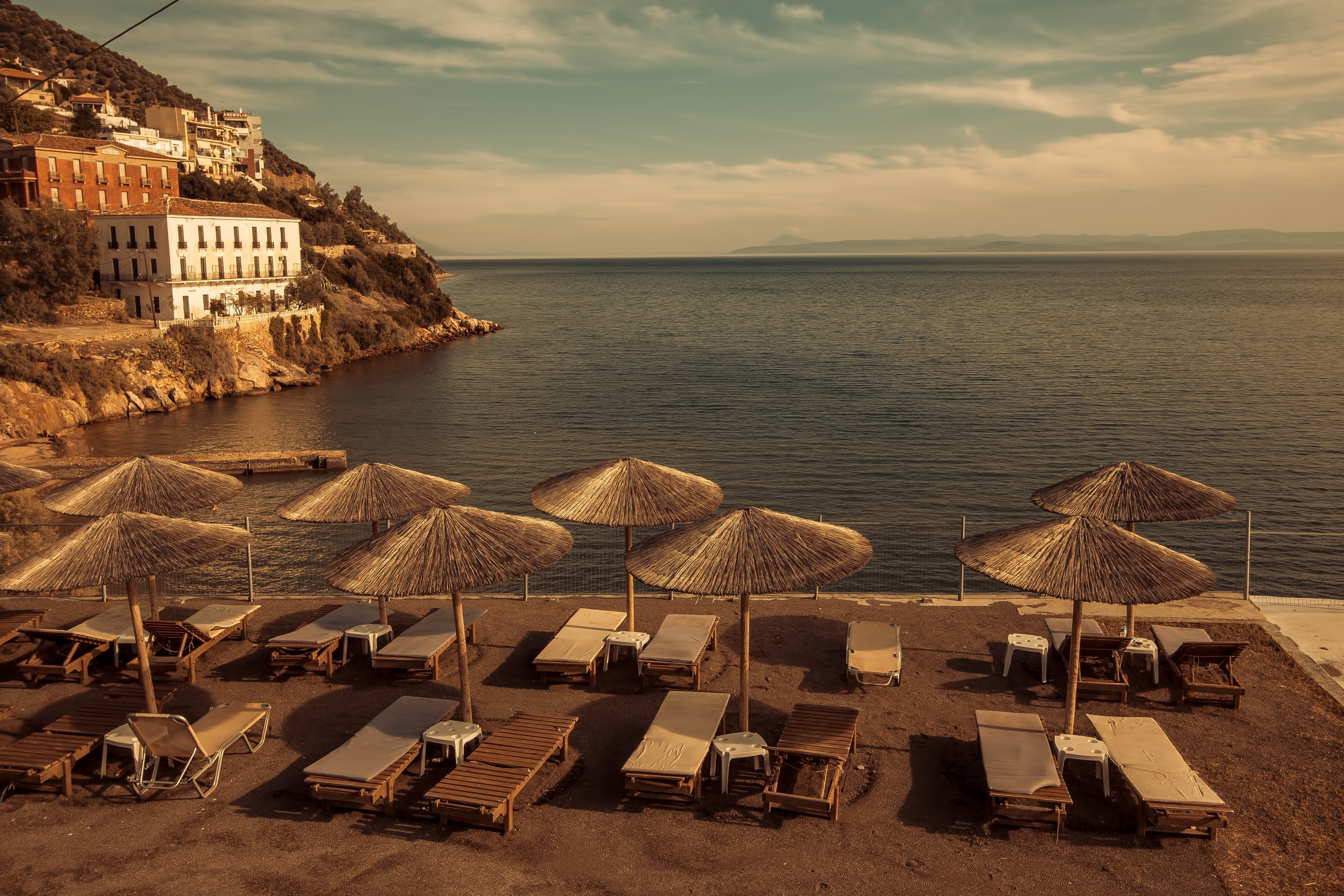 Edipsos at sunset. Photo: Shutterstock
The town's appeal is less about conventional beach activities and more about slowing down, particularly when the rest of Europe is dealing with cold weather.
Food is another reason to stay. Edipsos has excellent restaurants along the coast as well as traditional Greek establishments serving home-cooked dishes and grilled meat. Venti Restaurant & Lounge Bar is an option for a meal with sea views, while Kalyva is known for traditional Greek cooking. Just be sure to check opening hours if you plan on going outside the summer.
Accommodation ranges from conventional hotels and guesthouses to properties built around thermal wellness. For two adults and two children we found lovely accommodation with a superb sea view for 70 EURO a night at the start of November, when temperatures reach 18°C during the day and drop to around 10°C at night.
Evia is connected to mainland Greece by bridges in its southern part, but reaching Edipsos from Athens generally involves a longer drive and a ferry crossing.
Loutra: Thermal Waters, Pine Forests and Quiet Beaches
 Loutra, Greece. Photo: Shutterstock
On the Kassandra Peninsula in Halkidiki, Loutra offers a different take on Greek wellness. Around 120 kilometers southeast of Thessaloniki, the small coastal settlement sits near Agia Paraskevi, with pine-covered hills descending towards the Aegean.
The village takes its name from the Greek word for baths, a reference to its natural thermal springs. The Agia Paraskevi Thermal Spa is the main attraction, offering hydrotherapy facilities with views across the sea.
The center combines indoor and outdoor thermal pools with wellness facilities that may include saunas, hammams and massage treatments. It provides a convenient way to enjoy the mineral waters without relying on natural rock pools, making Loutra an appealing option for travelers interested in a dedicated spa break.
 Loutra. Photo: Shutterstock
Outside the spa, Loutra is defined by its rugged shoreline. The small local beach has rocky sections and pebbles rather than an uninterrupted stretch of soft sand. The water can be exceptionally clear, while nearby coves and underwater rock formations offer opportunities for snorkeling and exploring when conditions permit.
 Loutra. Photo: Shutterstock
Those looking for a more conventional beach day can drive along the coast towards larger sandy beaches in the direction of Chaniotis and Paliouri. In winter, however, swimming conditions depend on the weather, and the sea is not naturally heated in the way the thermal pools are.
A Different Kind of Halkidiki Holiday
 Loutra. Photo: Shutterstock
Unlike some of Halkidiki's busier summer resorts, Loutra retains the atmosphere of a small coastal settlement, with local taverns, fishing activity and a landscape shaped by olive groves and pine woodland.
At mealtimes, visitors can look for grilled fish, seafood, and Greek salads dressed with local olive oil. Menus and opening hours can become more limited during the off-season, so it is worth checking what is available before traveling.
A short trip inland leads to Agia Paraskevi, where traditional houses and a village square offer a glimpse of local life away from the coast.
The surrounding forests also provide opportunities for walking and cycling, with shaded trails and viewpoints over the Aegean. A rental car makes it easier to explore the wider Kassandra Peninsula, including the traditional settlement of Afytos and the beaches around Cape Paliouri.
Accommodation in Loutra tends towards apartments, guesthouses and smaller hotels rather than large resort complexes. Some properties have sea-view balconies, but winter services can be seasonal, so be sure to confirm heating, restaurant availability and spa access when booking.
For two adults and two children, we found a one-bedroom accommodation as low as 45 EURO at the start of November. In Loutra (Kassandra, Halkidiki), November brings a mild and crisp autumn climate, which is perfect for enjoying the thermal baths without the summer crowds. Daily high temperatures average around 15°C to 17°C, while evening lows drop to about 7°C to 11°C in November.
Thessaloniki Airport is the most convenient gateway. From there, the drive to Loutra takes roughly an hour and a half, depending on traffic and the exact route.