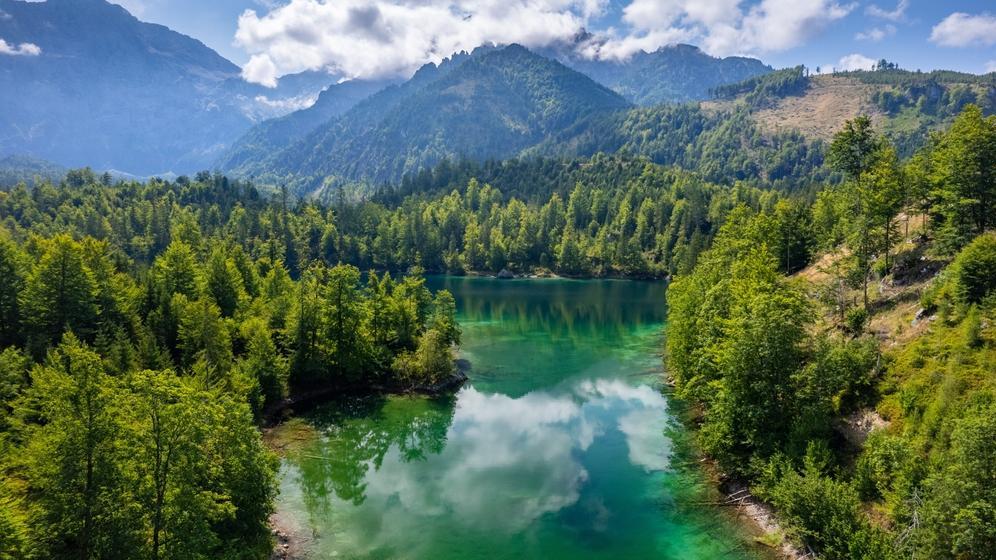
When thinking of Austria, the first images that usually come to mind are of elegant Vienna, imperial palaces, snowy Alpine peaks, and picturesque mountain towns.
But in the southeast of the country is a region that offers a slightly different experience. Less urban, less busy, and has a particularly interesting combination of nature, wine, food, hot springs, and small villages.
This is the Styria region, known as the "Green Heart of Austria", an area where the landscape changes from mountains and forests in the north to vineyards, orchards, and green hills in the south and east. It is in the autumn months that the region takes on a special character, when the harvest season begins, the fields change, and the local cuisine is filled with seasonal produce.
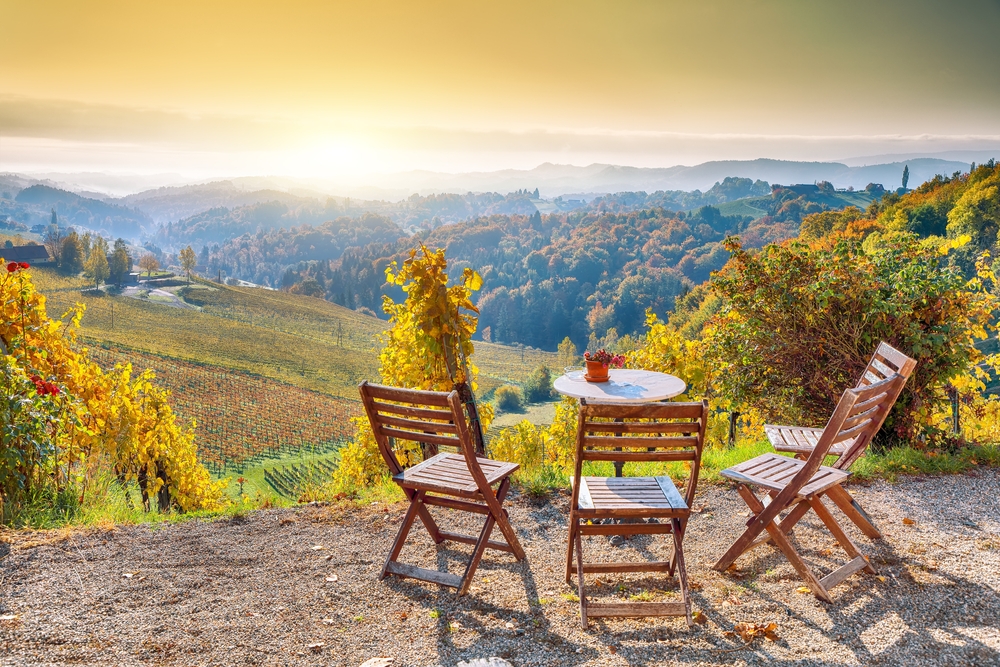 Vineyards near Gamlitz, Styria, Austria. Photo: Shutterstock
Autumn Is Part of the Experience
If there is a reason to choose Styria at this time of year, it is in the connection between the landscape and the food.
Autumn in Styria is the season of harvest and vintage. Farmhouses, cellars, and local wine taverns open throughout the region, and the cuisine is based on seasonal produce such as pumpkins, chestnuts, beans, horseradish, and pumpkin seed oil. A young drink called "Sturm", which is in the early stages of the process of turning the must into wine, also appears on local menus during this period.
Autumn colors add to the scenery: vineyards, forests, and orchards take on shades of green, yellow, and red, alongside cooler air that is ideal for hiking and cycling.
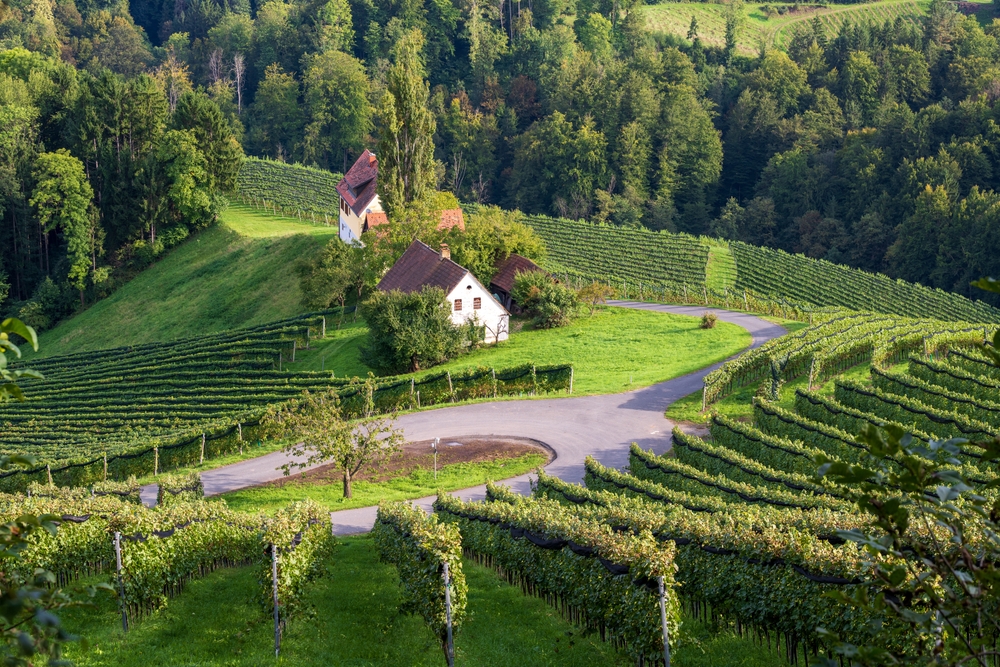 Styria, Austria. Photo: Shutterstock
The Best Way to Discover Southern Styria
One of the areas most associated with the region is Southern Styria, located about 40 kilometers south of Graz. It is a region of hills, vineyards, forests, orchards and fields, where the road itself becomes part of the trip.
At the center of the region is the South Styrian Wine Road, a 25-kilometer route that passes through vineyards and wineries, along areas near the border with Slovenia. Along the way are wineries, wine taverns, and viewpoints, and it suits both hiking and cycling.
The landscape here differs greatly from the classic image of the Alps. Instead of high peaks, gentle hills covered with vineyards are interspersed with forests and orchards. Three major wine routes pass through southern Styria: the South Styrian Wine Route, the Sauzel Wine Route, and the Schilcher Wine Route.
One destination worth including in the itinerary is Gamlitz, a wine town surrounded by vineyards, from which you can take excursions in the area. Kitzeck im Sausal and Leutschach are also in the heart of the wine region and allow you to combine scenery, tastings, and local food.
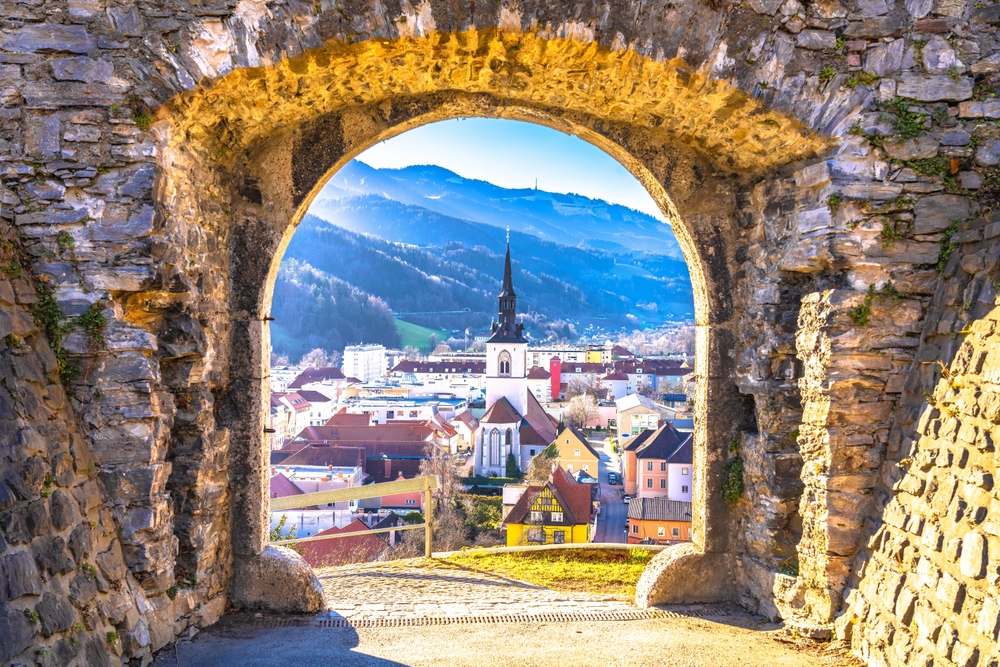 The town of Bruck an der Mur in Styria, Austria. Photo: Shutterstock
Not Just Wine: Austria's "Green Gold"
One of the products most identified with Styria is not wine but pumpkin seed oil.
Locals call the oil the "green gold of Styria," and it's made from pumpkin seeds grown in the region. In the fall, when pumpkins come into harvest season, you can see fields filled with colorful pumpkins, and at some oil mills you can even learn how the seeds are turned into oil.
The process itself is interesting: the seeds are ground, mixed with water and salt, heated, and then pressed, producing oil with a dark green color and a nutty flavor.
For those who want to turn the trip into a culinary experience, there is also a pumpkin seed oil road in the area, along which there are presses, restaurants, and local producers.
The oil appears in many local dishes, including salads, chicken dishes, and bean-based dishes. It is also used in sweet dishes.
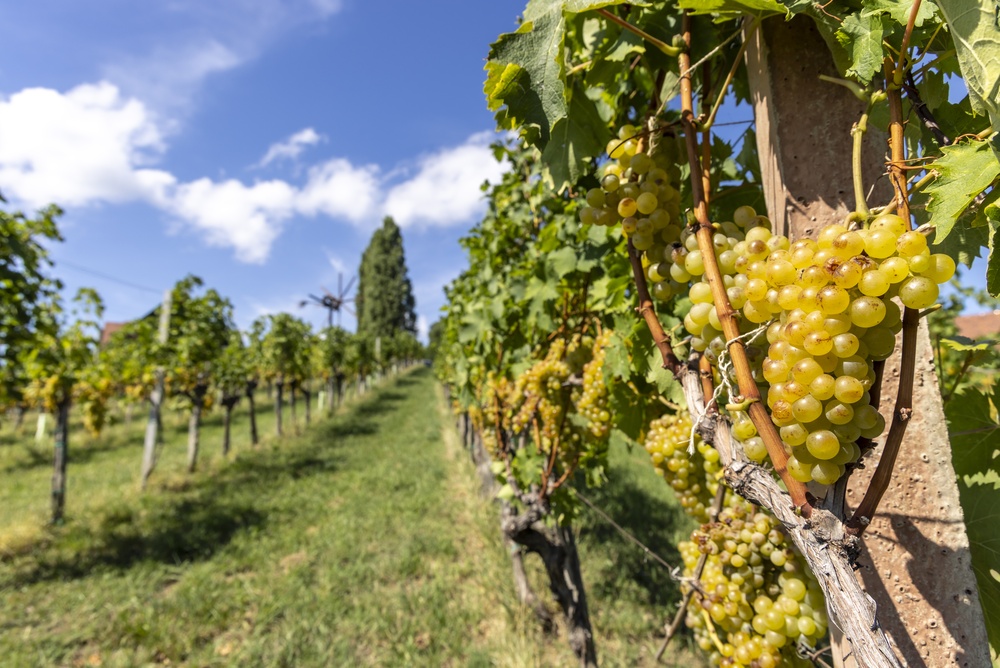 Styria is also a wine region. Photo: Shutterstock
And Then Comes the Wine
Styria is also a significant wine region, with eight wine routes across three growing areas. In southern Styria, the vineyards are planted on relatively steep hills, while in eastern Styria, a more moderate landscape can be found that combines vineyards with fields and orchards.
One wine associated with the region is Sauvignon Blanc, and on the South Styria Wine Road you can combine wine tastings, winery visits, meals at local taverns, and walks among the vineyards.
There is also an interesting local tradition here: along the vineyards you can see installations called Klapotetz, a kind of wooden windmill that was originally used to keep birds away from the grapes. Today, they have become one of the symbols associated with the Styrian wine regions.
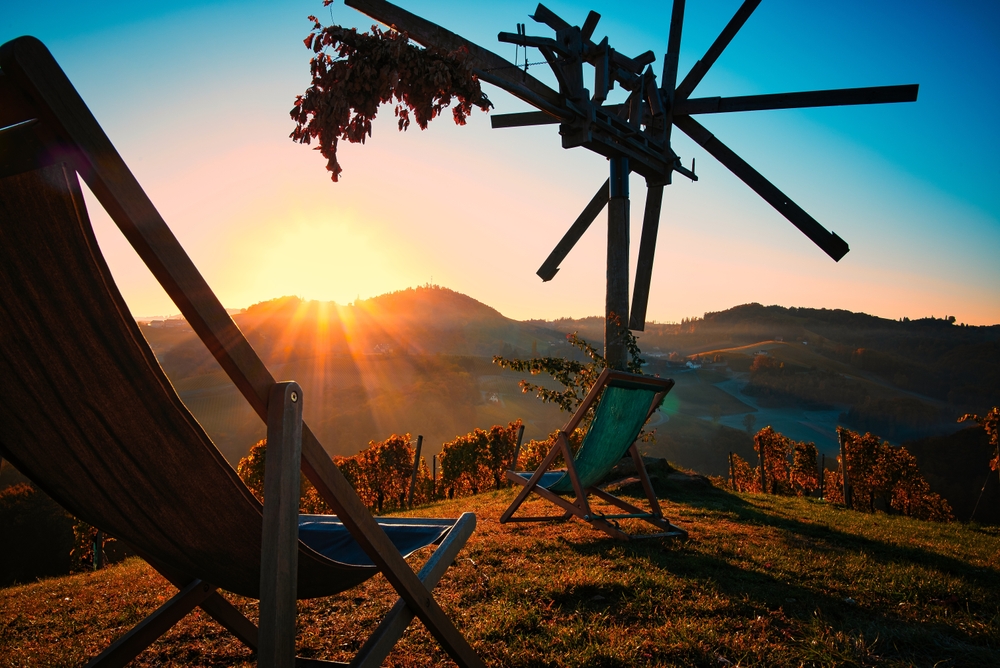 Klapotetz, a type of wooden windmill originally used to keep birds away from grapes. Photo: Shutterstock
And What Do You Eat Here?
Styrian cuisine is largely based on what is grown and produced in the region. Alongside pumpkin seed oil and wine, you can find dishes such as local bean salad, fish from mountain waters, apples, and a variety of farm products.
In eastern Styria, the apple road also passes through an area considered one of Austria's main apple-growing regions.
Those who prefer to get to know the food through the locals can stop at Buschenschank, traditional wine taverns where local dishes are served alongside wines from the region. Southern Styria has hundreds of taverns and wineries, so the culinary experience is an integral part of the trip.
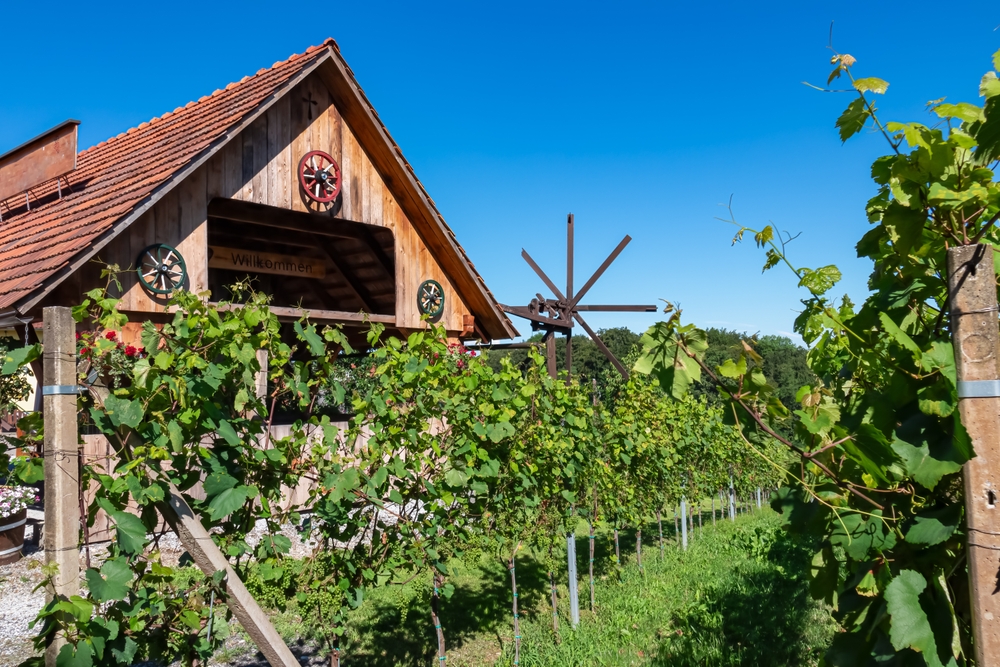 A vineyard in Styria, Austria, next to one of the famous wind farms. Photo: Shutterstock
Another City Also Worth Including in the Itinerary: Graz
Although we are talking about Styria today, it is difficult to ignore the regional capital, Graz.
Graz is Austria's second-largest city and offers a mix of a historic center, contemporary architecture, culture, and food. Its historic center and the Eggenberg Palace complex are UNESCO World Heritage Sites.
One of the city's most prominent sights is Schlossberg, the hill that rises above the historic center and offers city views. At the top of the hill is the clock tower, which is associated with Graz, and can be reached on foot, by the historic funicular that has been operating since 1894, or by the elevator that runs inside the rock.
Eggenberg Palace is also worth a visit. It is a 17th-century Baroque palace, part of a UNESCO World Heritage Site. The building was designed around a symbolic system of numbers, and includes 365 windows and 24 main guest rooms.
Graz itself can be a convenient starting point for a trip to the region, with Southern Styria only about 40 kilometers away.
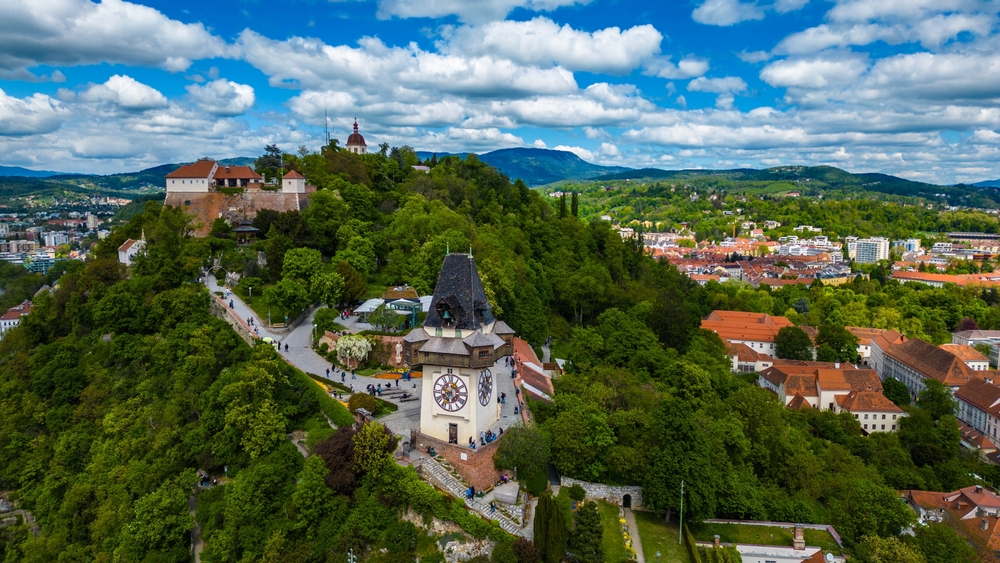 Graz, Austria. Photo: Shutterstock
From the Vineyards to the Warm Waters
One thing that distinguishes Styria from other natural destinations in Austria is its mix of rural landscapes and hot springs.
There are six thermal spa centers in southeastern Styria, and they allow you to end a day of hiking in the vineyards or forests with a few hours of warm water and relaxation.
One of the most notable is Rogner Bad Blumau, designed by artist and architect Friedensreich Hundertwasser. Its colorful, curved structure blends into the landscape, giving the place a very different look than a traditional spa. The site also has thermal springs, including the Vulkania spring.
Another option is Thermenresort Bad Loipersdorf, which offers different areas for adults, families and those looking for a spa day. The complex covers an area of about 60,000 square meters and includes thermal pools, sauna areas and relaxation areas.
Bad Gleichenberg and Bad Waltersdorf also offer thermal centers, so you can build a trip in the area that combines nature and wine during the day and bathing in the springs in the evening.
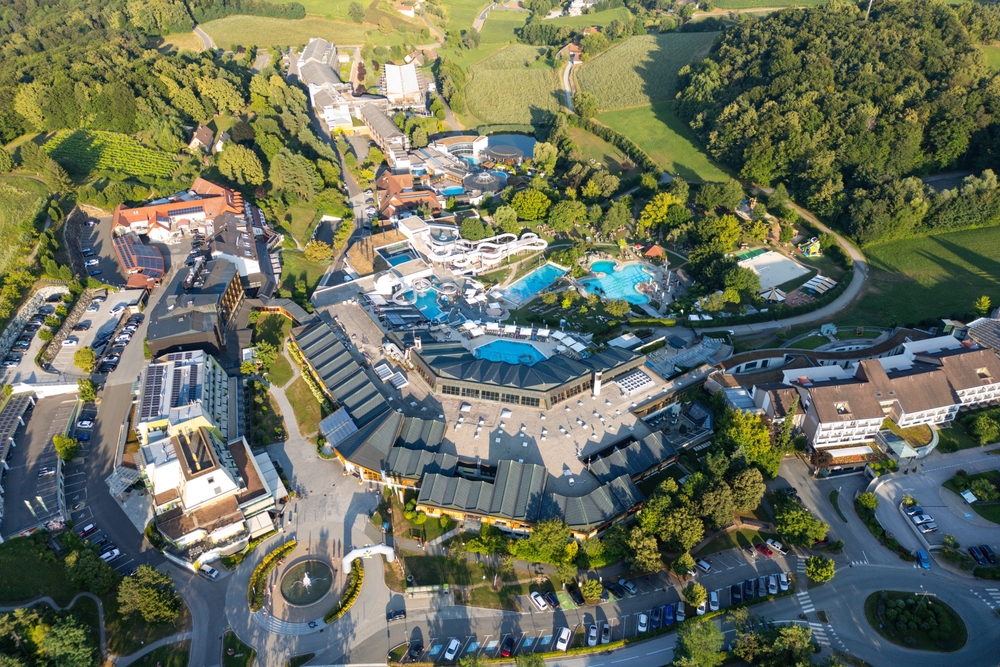 The thermal springs at Thermenresort Bad Loipersdorf. Photo: Photofex_AUT / Shutterstock
And If You Want to Go Out Into Nature?
Styria is not limited to vineyards. In the north, the landscape becomes more mountainous, with forests, peaks, and nature reserves, so you can plan a trip that combines the alpine region in the north with the wine regions in the south.
For those who prefer cycling, a circular route of over 400 kilometers through the Styrian wine regions offers eight stages. The route passes through vineyards, orchards, towns, and cultural sites, letting you get to know the region at a slower pace.
Even those who are not planning on riding hundreds of kilometers can choose shorter sections, especially around the wine roads in southern Styria.
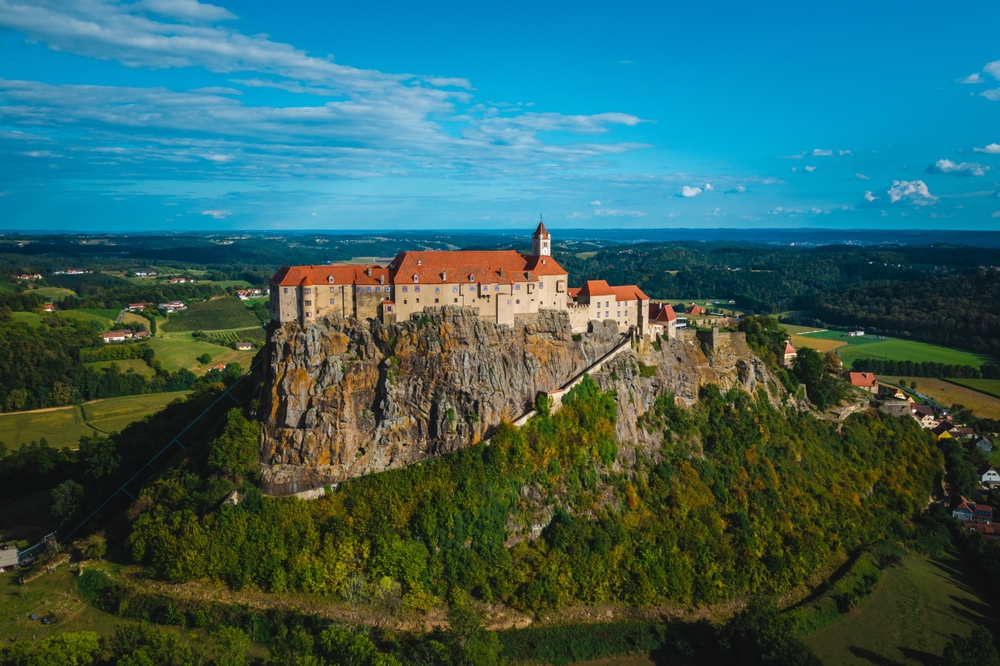 Riegersburg Castle, built on volcanic rock and overlooking the area. Photo: Shutterstock
The Castle That Looks Like It Was Built on a Volcano
One of the intriguing stops in Eastern Styria is Riegersburg Castle, built on volcanic rock and overlooking the area.
The castle fits into the wine region and springs routes, letting you add a little history and scenery to the trip. In the Thermenland Wine Route, for example, the vineyards are combined with pumpkin fields, orchards, castles and hot springs.
This results in a route where you can start the morning in a vineyard, continue to a castle or wine press, stop for a local meal, and end the day at a thermal spa.
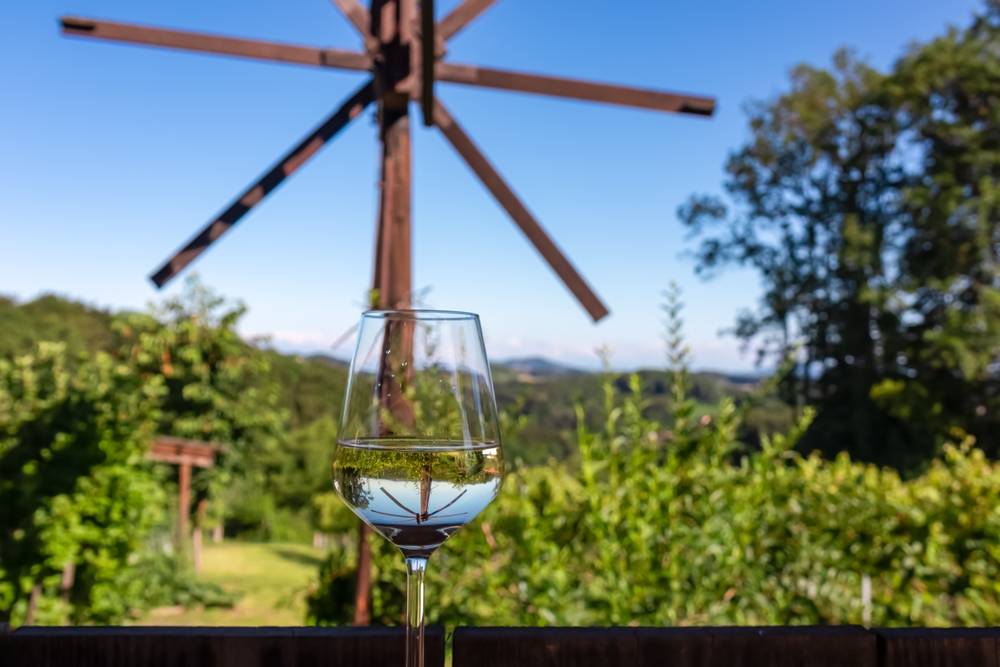 A glass of wine in Styria, Austria. Photo: Shutterstock
A Destination Suitable for Those Looking for a Different Pace
The advantage of Styria is that you don't have to choose between a nature vacation, a culinary vacation, or a spa vacation. The region allows you to combine all three styles in the same trip.
You can start the day by walking through the vineyards, stopping for a wine tasting or a visit to a wine press, continuing to Graz for lunch, strolling through the old town and Schlossberg, and from there continuing to one of the thermal spa centers.
In the fall, when harvest is at the center of local life, this connection becomes especially natural. The doors of local farms, cellars, and businesses open to visitors, and the entire region transitions into a season centered on local produce, wine, and harvest events.
Styria may not be the first destination that comes to mind when planning a vacation in Austria, but that's part of the point. Instead of chasing the list of famous sites, you can drive between small towns, stop at a vineyard with a view of the hills, taste freshly produced pumpkin seed oil, enter a hot spa at the end of the day and let autumn do its thing.
For those who have already seen Vienna or the classic Alpine sites and are looking to get to know another side of Austria, Tirol offers a combination that is hard to ignore: green scenery, local food, wine, hot springs, and a more relaxed pace of travel.
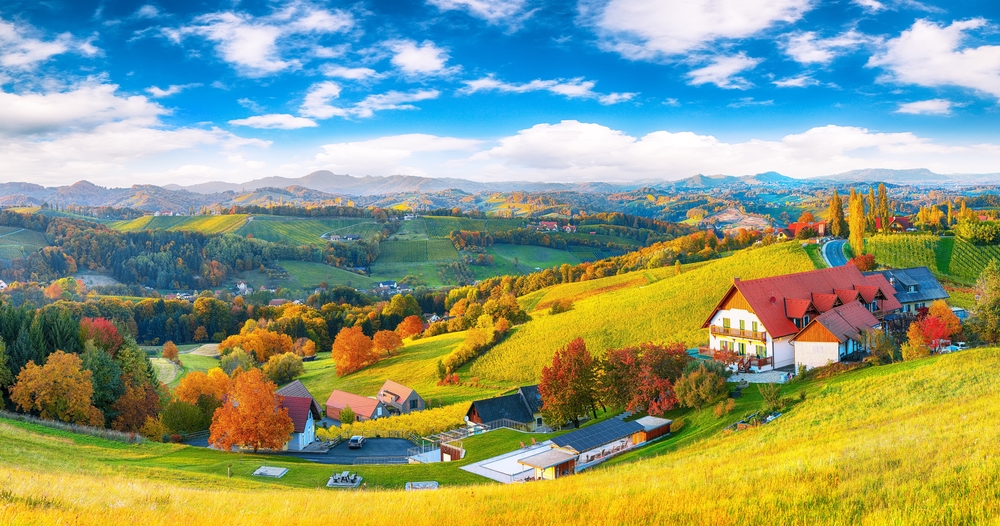 Vineyards near Gamlitz, Styria, Austria. Photo: Shutterstock