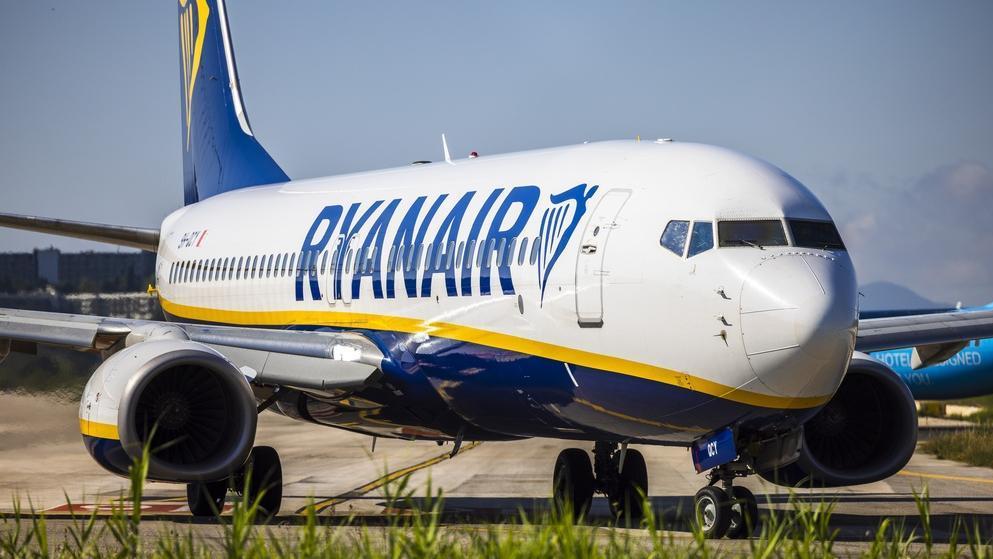
Ryanair is warning that airfares across Europe could rise significantly in 2027 as soaring fuel costs put pressure on the airline industry.
The warning comes as the Irish low-cost carrier reports a 15% decline in net profit for the first half of its financial year, despite carrying more passengers and increasing revenue.
The airline's financial results, published on Monday, November 2, 2026, highlight the growing challenges facing European aviation, with higher operating costs and uncertainty over fuel prices threatening profitability.
At the center of Ryanair's warning is the possibility that its fuel bill could increase by approximately €2 billion in the financial year ending March 2028 if forward fuel prices remain at their current levels.
The company expects higher fuel costs, combined with possible reductions in flight capacity by competing airlines, to put upward pressure on short-haul airfares across Europe during 2027.
The warning follows a sharp increase in European jet fuel prices. According to recently published EUROCONTROL figures, jet fuel prices in Europe surged by 114%, adding further pressure to airlines already dealing with rising operating expenses and disruption across the aviation network.
Ryanair said that the price of its unhedged fuel doubled during the reporting period, reaching approximately $130 per barrel.
Profit Falls Despite Passenger Growth
Ryanair's net profit for the first half of its financial year fell by 15% to €2.15 billion, compared with €2.54 billion during the same period last year.
The decline came despite a 6% increase in passenger numbers to 125.8 million.
Revenue rose 3% to €10.08 billion, but operating expenses rose faster, climbing 10% to €7.69 billion.
Average fares also fell 4% to €55.70. The figures show that although Ryanair continues to carry more passengers and generate higher revenue, rising expenses are pressuring its bottom line.
The airline's exposure to fuel prices could become even more significant next year as its existing hedging arrangements provide less protection against potential increases.
Route Cuts Reshape Ryanair's European Network
Alongside rising fuel prices, Ryanair continues to adjust its European network amid disputes with governments and airports over aviation taxes and operating charges.
In Belgium, the airline recently announced the cancellation of 20 routes, the removal of 1.1 million seats from its schedule and the relocation of six aircraft to other countries. The decision followed a dispute with the Belgian government over an increase in aviation taxes.
Austria has also faced significant reductions. Ryanair announced the cancellation of 12 routes and the removal of four aircraft from its Vienna base, citing high operating costs.
However, these cuts are primarily linked to disagreements over taxation and airport charges and should not be attributed entirely to rising fuel prices.
Instead, they reflect Ryanair's strategy of shifting aircraft and capacity between markets according to operating costs and commercial opportunities.
While reducing its presence in some countries, the airline continues to invest in markets where it sees opportunities for growth.
In Hungary, Ryanair recently announced an expansion in Budapest, adding eight new routes and increasing its local fleet to 12 aircraft. The investment in the Hungarian operation is estimated at $1.2 billion.
The expanded operation will include 54 routes, with the airline targeting approximately six million passengers annually.
The contrasting moves in Belgium, Austria and Hungary highlight Ryanair's approach: reducing capacity in markets it considers too expensive while directing aircraft and investment toward countries offering more favorable operating conditions.
Fuel Hedging Raises Concerns for 2027
The biggest concern emerging from Ryanair's financial results relates to its next financial year, which begins in April 2027.
For the current financial year, the airline has hedged approximately 80% of its fuel requirements at around $67 per barrel, providing substantial protection against recent price increases.
However, its fuel requirements for the following financial year are much less protected. Ryanair has so far hedged only around 25% of its expected fuel needs, at approximately $95 per barrel.
If fuel prices remain elevated, the airline could face a substantial increase in operating costs.
Ryanair CEO Michael O'Leary believes that higher fuel expenses will also affect competing airlines, particularly those without comparable fuel-hedging arrangements.
The resulting pressure across the industry could lead to reduced capacity and higher ticket prices, particularly on short-haul European routes.
Despite the challenges, the airline continues to expand its network, with 126 new routes available for booking and a new base planned in Rimini, Italy.
The combination of rising fuel costs, lower profitability and changes to its European network suggests that 2027 could bring a more expensive environment for both airlines and passengers.