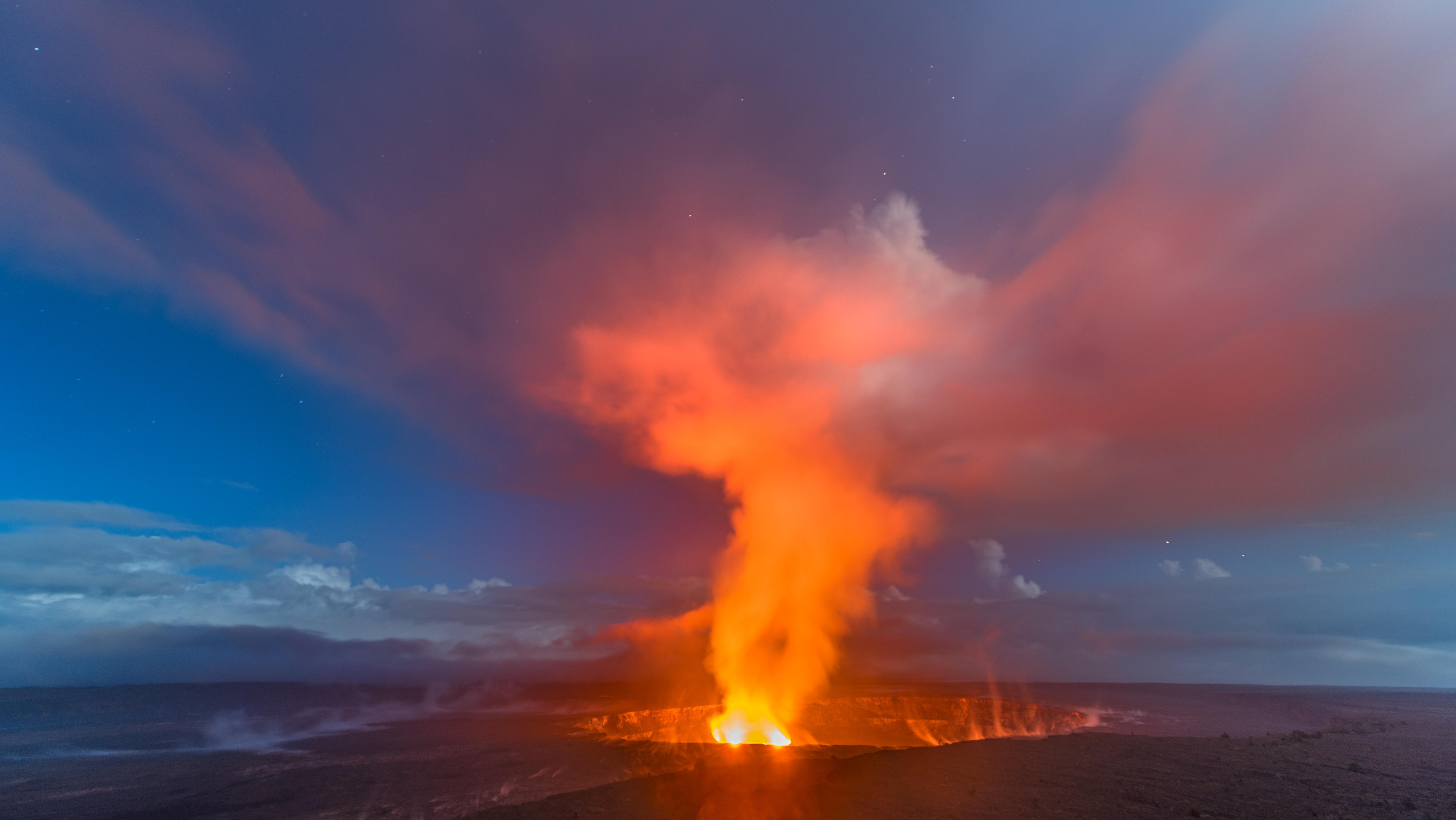
Hawaii's Kīlauea volcano has entered a new phase of increased activity, with fresh lava flows emerging from its summit and US authorities raising the aviation alert level from YELLOW to ORANGE. Scientists are forecasting the start of a more powerful lava fountain episode between November 2 and 7, 2026.
According to the US Geological Survey (USGS) and the Hawaii Emergency Management Agency (Hawaii EMA), low-level eruptive activity began at approximately 11:43 a.m. Hawaii time on Monday, November 2, at the volcano's summit.
Following the development, the USGS Hawaiian Volcano Observatory (HVO) raised the volcano alert level from ADVISORY to WATCH and the aviation color code from YELLOW to ORANGE.
The renewed activity marks an important development ahead of Kīlauea's anticipated 56th lava fountain episode. The previous episode ended on October 17.
Lava Flows Emerge from the Summit Crater
The initial activity involved lava emerging from the northern vent in the Halemaʻumaʻu crater at the summit of Kīlauea. Subsequent observations recorded additional lava overflows and low-level splattering as molten rock spread across the crater floor.
By around 12:30 p.m. on November 2, light lava spattering had begun, with activity becoming more pronounced over the following hours. Another overflow was observed shortly before 1 p.m.
Later monitoring updates reported the development of low lava fountains and repeated overflows from the northern vent. Lava domes in the vent area reportedly reached approximately six meters in height, while the sixth lava overflow began at 5:12 p.m. Hawaii time.
Although activity has intensified, scientists distinguish these preliminary developments from the more powerful lava fountain phase expected during the next eruptive episode.
Scientists forecast stronger lava fountains by November 7
The USGS has updated its forecast for the next major phase of activity, identifying November 2–7 as the expected window for the beginning of episode 56.
The previous forecast had pointed to November 4–7. However, the onset of renewed lava activity prompted scientists to move the expected window forward.
According to the Hawaiian Volcano Observatory, low-level eruptive activity can continue for several hours or even days before a more powerful lava fountain episode begins.
The timing remains a forecast rather than a confirmed start date, and scientists continue to monitor changes in volcanic activity.
What Does the Orange Aviation Alert Mean for Flights?
The change to ORANGE is significant for aviation authorities because it indicates increased volcanic activity that could potentially affect aircraft operations.
However, it does not automatically mean that flights must be suspended or that Hawaiian airspace will be closed.
According to the latest USGS updates provided, the observed activity has not produced a volcanic ash cloud. No official reports of flight cancellations at Hawaii's airports have been issued in connection with the renewed activity.
Airlines and aviation authorities will continue monitoring the situation, particularly if the eruption develops into the forecast lava fountain episode.
What Should Tourists Visiting Hawaii Know?
The renewed eruption is taking place at Halemaʻumaʻu crater, inside Hawaiʻi Volcanoes National Park on the Big Island. At this stage, lava flows have remained within the summit caldera.
Kīlauea is one of the world's most active volcanoes and a major natural attraction in Hawaii. Its eruptions regularly attract visitors hoping to witness volcanic activity, although access to viewing areas depends on safety conditions and park restrictions.
Even without an ash cloud, volcanic activity can create localized hazards, including volcanic gases, airborne volcanic particles and potential deterioration in air quality.
Visitors planning to explore the national park should check updates from the National Park Service and local authorities before traveling. Access restrictions may change as conditions develop.
Scientists are continuing to monitor Kīlauea using surveillance cameras, seismic monitoring systems and ground deformation measurements.
As of the latest official update described by the authorities, the volcano alert level remains at WATCH and the aviation color code at ORANGE. The coming days will be important in determining whether the current low-level activity develops into the anticipated 56th lava fountain episode.