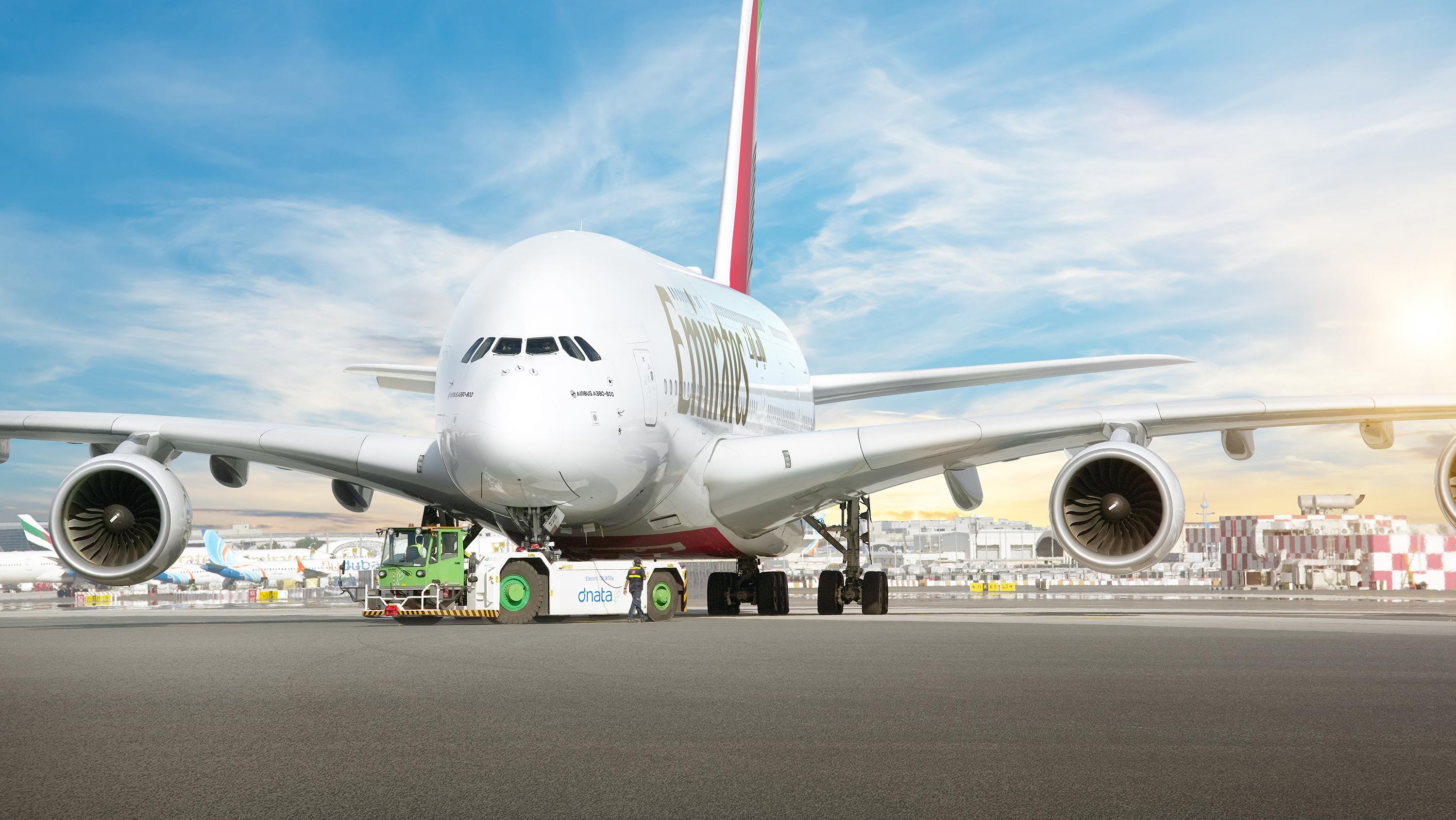
The Emirates Group reported a sharp decline in half-year earnings for 2026-27, with profit before tax falling 66% to AED 4.1 billion ($1.1 billion), as regional conflict, reduced flight operations and higher fuel prices weighed on its financial performance.
The results, announced on November 5, cover the six months ending September 30, 2026. Group revenue declined 12% to AED 66.2 billion ($18 billion), compared with AED 75.4 billion ($20.6 billion) in the same period last year.
After tax, the Group recorded a profit of AED 3.6 billion ($1 billion), also down 66% year-on-year. EBITDA reached AED 12.5 billion ($3.4 billion), compared with AED 21.1 billion ($5.7 billion) a year earlier.
The Group ended September with cash reserves of AED 54.1 billion ($14.7 billion), down from AED 59.6 billion ($16.2 billion) at the end of March.
 Sheikh Ahmed bin Saeed Al Maktoum. Photo: Emirates
Sheikh Ahmed bin Saeed Al Maktoum, Chairman and Chief Executive of Emirates Airline and Group, said the business had faced unprecedented regional challenges and high fuel prices, but that customer demand remained firm and cargo operations made a significant contribution.
He also credited the UAE government with coordinating the safe resumption of air transport following military activity across the Gulf region.
Emirates Profit Drops 68% as Passenger Numbers Decline
 Photo: Emirates
Emirates airline recorded a profit before tax of AED 3.7 billion ($1 billion), down 68% from AED 11.4 billion ($3.1 billion) in the same period last year. Revenue fell 13% to AED 56.9 billion ($15.5 billion).
The airline carried 21.8 million passengers between April and September, a 22% decline year-on-year. Passenger traffic, measured in revenue passenger kilometers, fell 25%, while the average passenger seat factor dropped from 79.5% to 72%.
Overall capacity decreased by 10%, reflecting a reduced flying schedule and intermittent airspace restrictions and closures across the region.
By September 30, Emirates had restored operations to 91% of its pre-disruption network, serving 150 airports in 78 countries and territories.
Higher fuel prices were a major factor behind the decline in profitability. Although Emirates reduced fuel consumption as operations contracted, fuel costs before hedging gains increased 60%. The airline's fuel price risk management strategy generated AED 7.1 billion in gains, limiting the net increase in fuel costs to 13%.
Fuel accounted for 34% of Emirates' operating costs during the period.
Cargo Business Provides Support as Fuel Costs Rise
While passenger operations contracted, Emirates SkyCargo delivered a stronger revenue performance. The division transported 1.2 million tonnes of cargo, almost unchanged from the previous year, but cargo revenue increased 52%.
The airline attributed the growth to reduced airfreight capacity caused by the regional conflict, alongside disruptions to maritime transportation that encouraged shippers to turn to air cargo.
Emirates also expanded its freighter operations, adding five new Boeing 777 freighters and introducing its first passenger-to-freighter converted aircraft. New freighter destinations included Almaty and Zhengzhou.
Despite the challenging operating environment, Emirates continued investing in its fleet and passenger experience. It received nine new Airbus A350 aircraft and completed cabin refurbishments on 12 aircraft, including nine A380s and three Boeing 777s.
 Starlink internet. Photo: Emirates
Its Starlink installation program also progressed, with 36 additional aircraft equipped during the first half of the financial year, bringing the total to 57 aircraft by September 30.
The airline's wider retrofit program represents an investment of more than $7 billion. It also began construction of a $5.1 billion engineering and maintenance facility at Al Maktoum International Airport, with completion expected in the mid-2030s.
dnata Profit Falls 51%
The Group's aviation services subsidiary, dnata, also reported weaker financial results. Its profit before tax fell 51% to AED 410 million ($112 million), while revenue declined 7% to AED 11 billion ($3 billion).
Dn ata's airport operations generated AED 5.4 billion ($1.5 billion) in revenue, down 3% year-on-year. The company handled 414,012 aircraft turns, an 8% decline, and processed 1.49 million tonnes of cargo, down 6%.
Its catering and retail division generated AED 4.2 billion ($1.1 billion), an increase of 1%, despite a 10% decline in the number of meals supplied to airlines, to 54 million.
The travel division recorded revenue of AED 1.4 billion ($373 million), down 31%, partly reflecting the withdrawal of its Travel Republic and Netflights businesses from new bookings in November 2025.
Despite the decline in earnings, dnata continued investing in its international operations, including a new cargo facility at Western Sydney International Airport and logistics developments in Dubai, Azerbaijan and Europe.
The Emirates Group employed 128,237 people at the end of September, a 2% decrease compared with March 31, 2026. Both Emirates and dnata said recruitment activities were continuing to support business requirements.