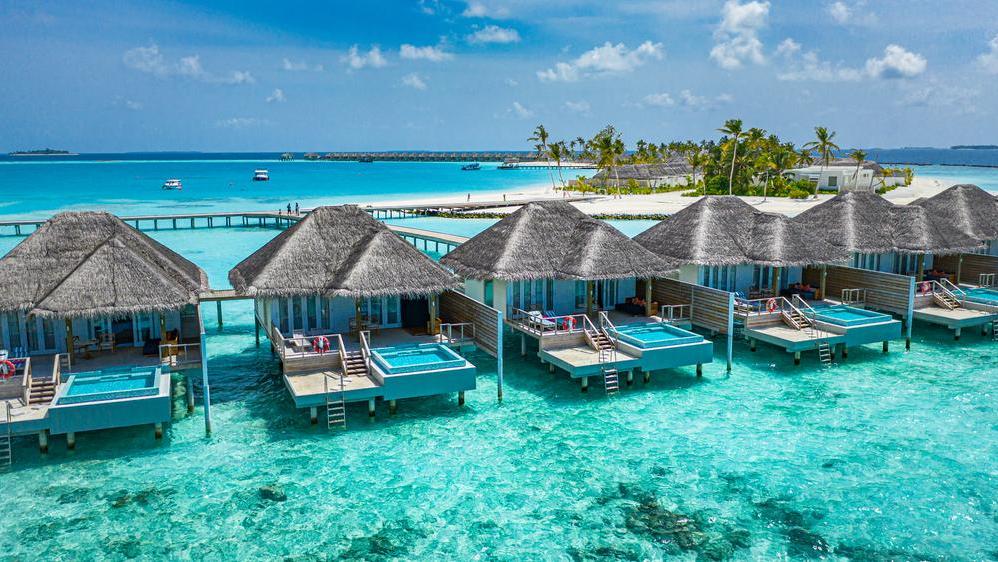
These images are burned into our subconscious: a wooden deck gleaming under the tropical sun, a hammock suspended over turquoise water so clear you can count the fish below, and wooden stairs leading straight from the bed into the ocean. For years, the Maldives have been synonymous with this fantasy, a dream destination for a honeymoon, a recovery vacation, or just an escape from the intense reality.
But wWhat is it about the simple act of sleeping above the waves that drives the human imagination crazy? Why is a luxurious hotel room on the beach no longer enough for us, and why are we willing to pay thousands of dollars a night just so that there is no soil under our floor?
The Science Behind Silence: The "Blue Brain" Effect
The answer begins deep within our neurology. Marine biologist Dr. Wallace J. Nichols coined the term “blue brain” in his book “Blue Mind” to describe the meditative state the human brain enters when it is near water. Studies show that looking at and listening to water instantly lowers cortisol levels (the stress hormone) and floods the brain with dopamine and oxytocin.
When we sleep over water, this effect is many times more extreme. In a standard hotel room with an “ocean view,” the ocean is merely a framed picture in a window; between you and it are separated by a lobby, pool, walkways, and sand. In a villa on stilts, this barrier disappears. The glass floor in the living room or the open balcony create a psychological illusion of ownership of nature, the sea becomes your private backyard.
Added to this is the acoustic effect: the sound of the waves gently crashing on the wooden posts under the bed produces "pink noise," a natural frequency that synchronizes brain waves and puts the body into deeper, more restful sleep cycles than any white noise machine you've installed at home.
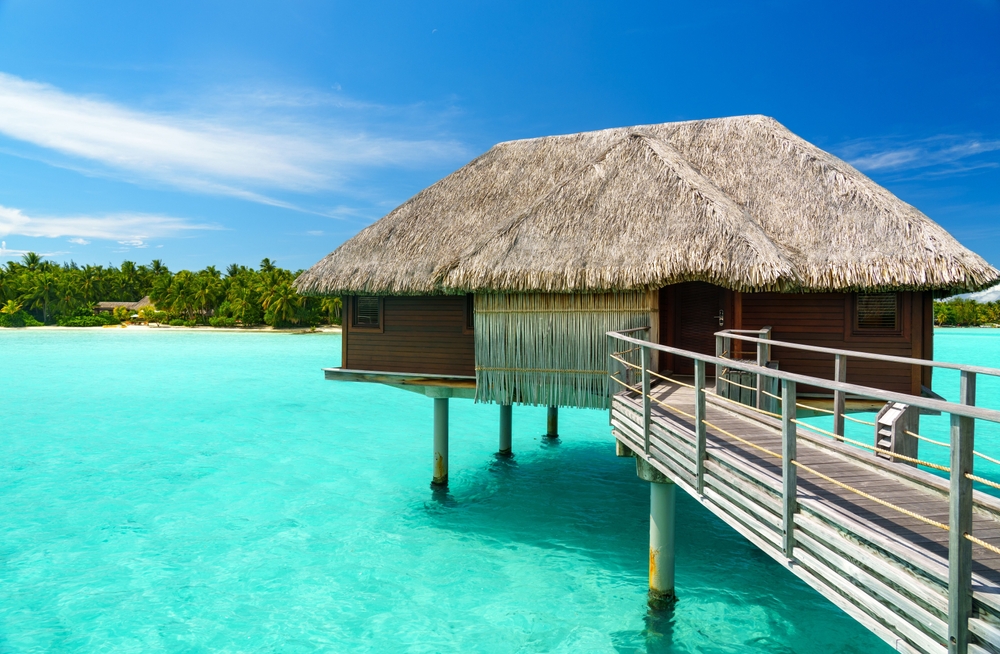 There is another island in the world with overwater cabins. Bora Bora. Photo by SHUTTERSTOCK
The Historical Mistake of "The Boys from Bali Hey"
The great irony of the world of tourism is that the most obvious symbol of luxury of the 21st century was born out of necessity and survival. Building on stilts over water (stilt houses) was for thousands of years a practical solution for tribes and fishermen in Southeast Asia and the Amazon, who sought to protect themselves from floods, snakes, predators and pests. None of them thought it was "romantic."
The turnaround happened by chance in 1967, in French Polynesia. Three American entrepreneurs from California, who ran a successful hotel on the island of Moorea and earned the nickname "The Bali Hai Boys", opened another hotel on the neighboring island of Raiatea, but discovered that it did not have a sandy beach.
Inspired by the local fishermen's huts, they decided to build three bungalows on stilts over the lagoon, and installed glass windows in the floor ("Tahitian TV") so that guests could watch the fish while having their morning coffee.
The success was immediate and dizzying. Within a decade, luxury hotels in Bora Bora adopted the idea, and from there it migrated to the Maldives, turning the concept into a billion-dollar empire.
The Paradox of the Instagram Age
The rush for floating villas is inseparable from social media culture. The overwater villa is the perfect setting for the paradox of the modern tourist: on the one hand, we crave complete privacy, to disconnect from the crowd and feel like we are alone in the world. On the other hand, we must let the whole world see that we have disconnected.
The villa's physical isolation at the end of the pier offers a sense of complete freedom, while the bridges' geometric aesthetic is more photogenic than any five-star hotel lobby.
Zanzibar and Mauritius also offer the true tropical lagoon experience. In both, you can find resorts with suites built on stilts above clear waters, in a wild, secluded atmosphere that rivals the Maldives.
Ultimately, the Maldives is just a dot on the map. Our need to disconnect from the land, leave the noise behind, and wake up with the blue horizon as the only thing visible from our bed is a universal human need.