More than 3,500 aircraft were flying across US airspace when a major disruption hit the country's air traffic control system, forcing authorities to halt departures and initiate emergency procedures. Within less than an hour, the number of aircraft in the air dropped to fewer than 400 as flights were brought down in a controlled manner.
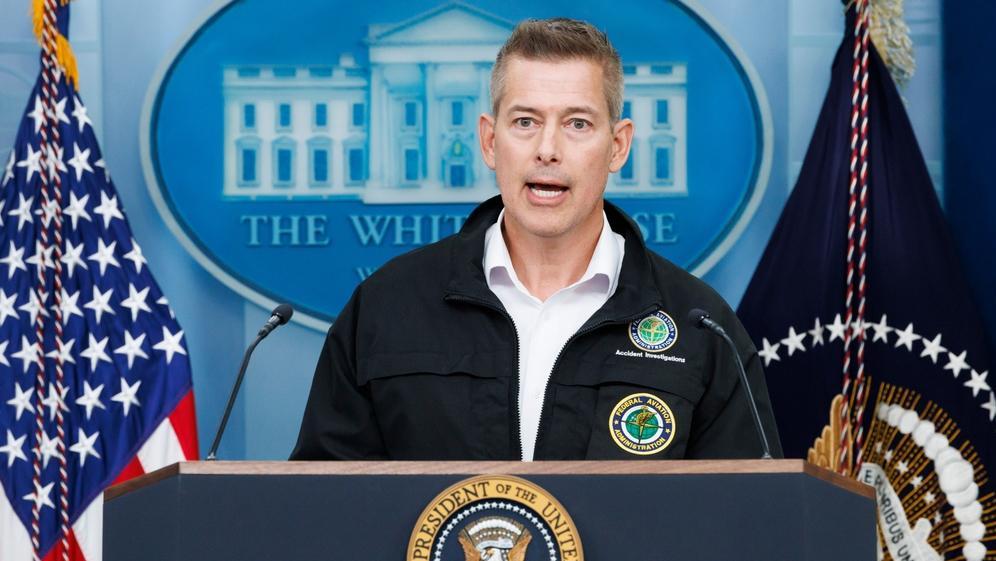
US Transportation Secretary Sean Duffy and Homeland Security Secretary Markwayne Mullin addressed the incident during a press conference, presenting the initial findings, the response by federal authorities and the measures being taken to restore normal aviation operations.
Duffy praised pilots and air traffic controllers for their handling of the situation, saying established safety procedures had allowed authorities to manage the disruption without putting passengers at risk.
Radar and communication problems triggered emergency measures
According to Duffy, the disruption began at 3:36 p.m. Eastern Time, when problems emerged in radar data and communications between aircraft and air traffic control centers, including Terminal Radar Approach Control (TRACON) facilities across the country.
The secretary stressed that the incident did not involve a complete shutdown of the air traffic control network. Instead, radar and communication systems experienced intermittent failures that prevented controllers from consistently receiving reliable radar information and maintaining immediate contact with every aircraft.
Although some systems remained operational, authorities could not guarantee continuous communication or a complete picture of aircraft movements. Duffy said this uncertainty created an unacceptable safety risk, prompting the nationwide suspension of departures and the activation of emergency procedures.
Certain essential flights were still permitted, including medical evacuations, transportation of life-saving medication and selected law enforcement operations.
Initial findings point to an outdated communications system
One of the most significant revelations during the briefing concerned the suspected technical source of the disruption.
Duffy said preliminary findings pointed to an older Time Division Multiplexing (TDM) communications system, based on legacy infrastructure, which had become overloaded with data and started experiencing instability.
He explained that parts of the US air traffic control network still depend on aging switches, routers and communications equipment that were not designed to meet the demands of modern aviation.
Facilities that had already transitioned to newer digital, IP-based technology did not experience the same problems, highlighting the differences between upgraded and outdated infrastructure.
Duffy also pointed to the age of some of the country's aviation technology, noting that radar equipment, software and communications networks still rely on systems developed during the 1970s, 1980s and 1990s.
He warned that the condition of older control towers and infrastructure across the country makes it increasingly difficult to maintain a reliable national aviation network through isolated repairs.
Transportation Secretary warns similar disruptions cannot be ruled out
Duffy was also asked whether passengers could be confident that another disruption of this scale would not happen in the coming weeks.
He acknowledged that although smaller technical problems had occurred previously, officials had not anticipated a failure of this magnitude. He declined to guarantee that another incident could not happen, particularly while parts of the network continue operating on outdated technology.
According to Duffy, emergency procedures allowed authorities to bring aircraft safely to the ground, identify the source of the problem, restart the affected system and restore operations.
He also referred to previous disruptions affecting the Newark and New York areas, including an incident that occurred while world leaders were attending the United Nations General Assembly in the city.
Duffy argued that the recurring problems require a comprehensive modernization program rather than temporary repairs.
$50 billion sought to modernize US air traffic control
The transportation secretary used the briefing to renew his call for Congress to approve additional funding for the modernization of America's air traffic control infrastructure.
The administration has already secured an initial $12.5 billion allocation, but Duffy said significantly more money would be required to complete the work.
He is seeking a total investment of $50 billion to replace outdated communications networks, hardware, software and other essential equipment.
Duffy urged lawmakers to approve additional funding through emergency legislation before the end of the year, describing the modernization of air traffic control as a national infrastructure priority with implications for the wider US economy.
He cautioned that replacing the systems would take time, but continuing to depend on aging equipment could leave the country vulnerable to further disruptions.
No evidence of cyberattack found so far, Homeland Security says
Another major question during the briefing concerned whether the incident could have resulted from a cyberattack or deliberate interference with the aviation network.
Homeland Security Secretary Markwayne Mullin said investigators had not identified evidence of a cyberattack at that stage. However, he stressed that the investigation was still underway and that it was too early to completely rule out external interference.
Federal agencies involved in the investigation include the Cybersecurity and Infrastructure Security Agency (CISA) and the National Security Agency (NSA).
Mullin said investigators had not found clear indications of a hostile intrusion or identified anyone claiming responsibility for the disruption.
The initial findings presented by the administration point toward a technical malfunction rather than a deliberate attack, although authorities have not yet reached a final conclusion.
US airspace reopens, but flight disruptions continue
Duffy announced that US airspace reopened at approximately 8:15 p.m. Eastern Time after the affected control systems were restored.
However, the reopening did not mean that airlines could immediately resume their regular schedules.
The suspension of departures had left aircraft at airports across the country, while flight crews and aircraft were no longer necessarily available at the locations where they were needed. Airlines therefore faced the additional challenge of reorganizing aircraft rotations, crew assignments and passenger schedules.
Authorities expected airlines to resume as many flights as possible overnight, depending on the availability of pilots, cabin crew and aircraft.
Duffy anticipated a substantial improvement in operations over the following 24 hours, although he did not provide a firm timeline for a complete return to normal.
Passengers were advised to check directly with their airlines for the latest information about departures and possible schedule changes.
Trump received regular updates during the incident
Duffy also confirmed that President Donald Trump was kept informed throughout the disruption.
The transportation secretary and Mullin held several conversations with the president as authorities monitored developments and coordinated their response.
Duffy said Trump was involved in the administration's broader plan to modernize the country's air traffic control infrastructure, which has become a major priority following repeated technical problems.
Although the immediate crisis ended with the restoration of air traffic control systems and the reopening of US airspace, the incident has renewed questions about the reliability of the country's aviation infrastructure.
The preliminary findings point to an overloaded legacy communications system, but the investigation remains open. Federal officials have yet to publish a final assessment of the malfunction or completely rule out external interference.