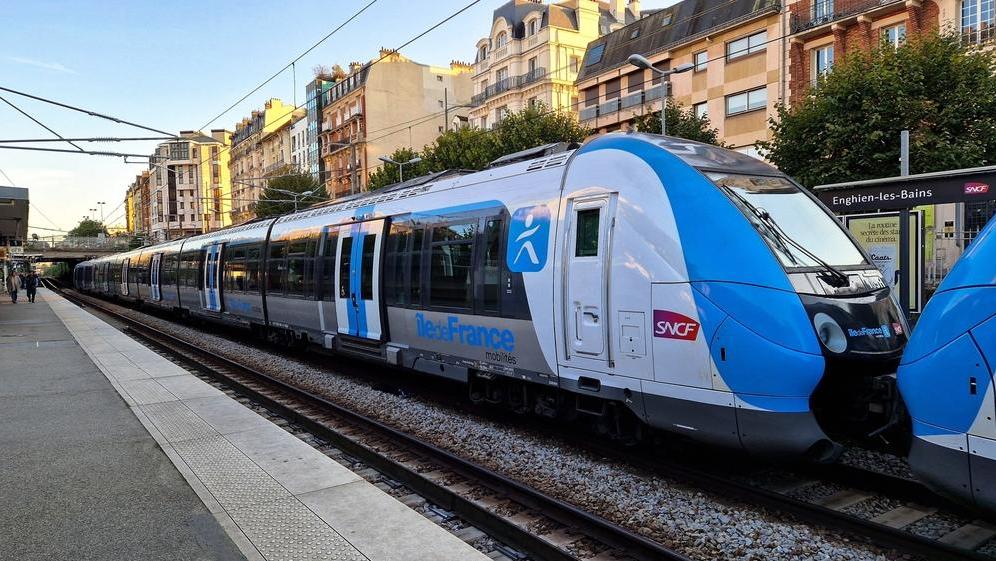
A complex day for travelers and tourists in Europe. Two of the continent's most tourist-heavy countries, Spain and France, are facing strikes and rail disruptions today (Tuesday, November 17, 2026), affecting travel between major cities, suburban transport, and some public services.
In Spain, a 24-hour nationwide strike is taking place at the Renfe railway group, affecting high-speed, intercity and suburban train services. In France, a strike is also underway as part of a nationwide inter-professional protest, causing disruptions on some regional and suburban train lines, while TGV INOUI high-speed train services are expected to operate as usual.
Alongside the strike in France, the Paris authorities also announced the closure of central metro stations for security reasons following demonstrations, a move that adds to the disruption to traffic in the city.
Spain: 24-Hour Nationwide Strike, High-Speed Trains Also Affected
The Spanish railway company Renfe announced that the strike is taking place throughout the country today, following protest measures by labor organizations and trade unions in the railway industry.
The Spanish Ministry of Transport has set mandatory minimum services in order to reduce the impact on passengers and ensure the continued operation of essential transportation lines.
According to the official announcement, 72% of scheduled services will be operated on high-speed trains and long-distance intercity lines, while an average minimum service of 65% has been set for medium-distance trains.
On suburban trains, which serve hundreds of thousands of passengers in major cities every day, a minimum service of 75% was set during rush hours and only 50% during the rest of the day.
The defined rush hours are 06:00-09:00, 13:30-15:30, and 18:30-20:30, mainland Spanish time.
Freight train traffic is also expected to be significantly affected, with the minimum services set at only 26% of planned activity.
The strike may affect passengers planning trips between major cities including Madrid, Barcelona, Valencia and Seville, as well as travel on suburban trains used by city residents and visitors.
France: National Strike and Disruptions on Regional Trains
In parallel with the strike in Spain, a national inter-professional protest is also taking place in France today, affecting some of the country's rail services.
The French railway company SNCF announced that the movement of TGV INOUI trains, which connect the country's main cities, is expected to proceed as usual.
On the other hand, regional TER train traffic, Transilien trains serving Paris and its surroundings, and some RER lines are expected to experience varying degrees of disruption, depending on the region and line.
According to the company, the extent of the impact is not uniform across the entire rail network. Some lines will operate normally, while others will see reduced train frequency.
On the RER D line, for example, limited traffic is expected on some sections, with two trains out of three on the lines between Juvisy and Malesherbes and between Corbeil-Essonnes and Melun via Ris-Orangis.
In contrast, RER lines A, B, C, and E are expected to operate as usual with regard to disruptions resulting from the strike.
Also in Paris: Central Metro Stations Are Closed on Police Orders
Alongside the disruptions to train traffic in France, passengers and tourists in Paris are expected to face additional restrictions on public transportation today.
Public transport operator RATP announced that following demonstrations and a request from the Paris police, starting at 11:00 French time, central metro stations in the city will be closed for security reasons.
Among the affected stations are Charles de Gaulle-Etoile, Concorde, Invalides, Franklin D. Roosevelt, Champs-Elysees-Clemenceau, Tuileries, George V and Gare d'Austerlitz, along with other stations.
On some lines, trains will continue to move but will not stop at the closed stations, and transfers between lines at those stations will not be possible.
In addition, traffic will be suspended on certain sections of the metro network, including between Charles de Gaulle-Étoile and Calais and between Gare d'Austerlitz and Jossier.
Some entrances to the central train stations Gare de Lyon and Gare d'Austerlitz will also be closed as part of the restrictions.
According to RATP, the reopening of stations will only take place in accordance with police approval.
Train companies in Spain and France recommend that passengers check their journey status before arriving at the station, even if they bought a ticket in advance.
In Spain, you can check the Renfe website and app for current trains, cancellations, and schedule changes. In France, it is recommended to check train status on SNCF Connect and metro station and line status in Paris on RATP.
Despite the disruption, this is not a complete shutdown of the rail systems in either country. Many services continue to operate, but some passengers are expected to face cancellations, reduced train frequencies, route changes and congestion on the lines that remain active.