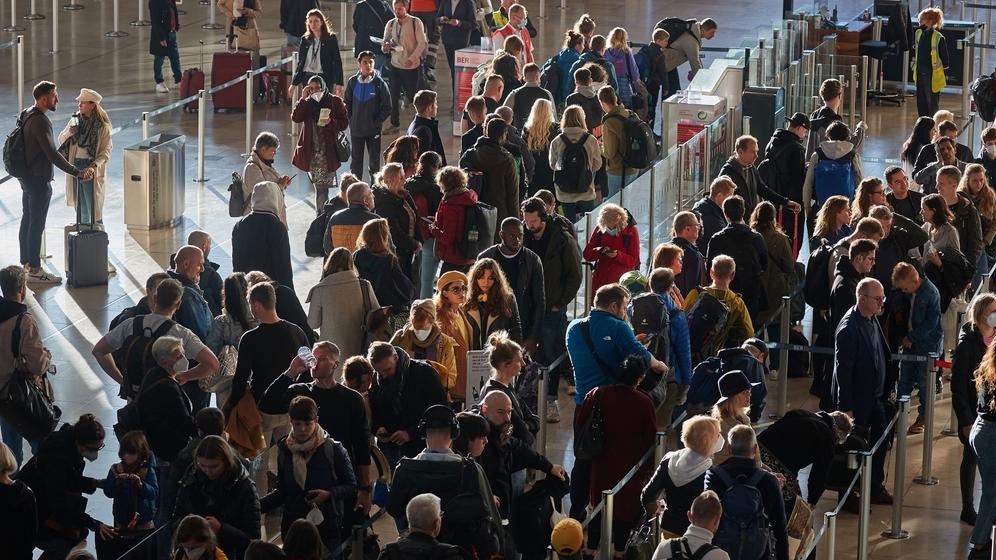
Europe's new biometric border control system is facing growing criticism from the travel industry, with more than 80 tourism organizations urging the European Union to act urgently to prevent further airport disruption.
The Tourism Manifesto coalition issued its appeal on Thursday, November 26, warning that the Entry/Exit System (EES), introduced to strengthen border security and modernize checks on non-EU travelers, is creating serious operational problems at several European airports.
In a statement released through ACI EUROPE, the coalition called on EU institutions to restore the option of temporarily suspending biometric data collection when the system experiences technical problems or airports face unusually heavy passenger traffic.
The organizations are not asking the EU to abandon EES. Instead, they want airports and border authorities to have greater flexibility to manage difficult situations without allowing queues to spiral out of control.
Passengers Missing Flights and Waiting on Aircraft
The problems are already affecting travelers at airports across Europe. According to information collected by the coalition, the end of the temporary flexibility that allowed biometric checks to be suspended has been followed by longer waiting times at both arrival and departure border controls.
In some cases, passengers have missed connecting flights because they could not complete passport control in time. Other travelers have reportedly been kept on board aircraft after landing because there was insufficient space in the terminal to accommodate them.
The disruption also extends beyond the passenger experience. Delays at border control can affect airport operations, airline schedules and wider air traffic management.
The coalition points to several reasons for the difficulties, including staff shortages, inadequate infrastructure, insufficient equipment and problems with the reliability of the technology. A pre-registration application intended to speed up the process is also available in only two EU member states, according to the organizations.
January 2027 Could Bring More Pressure
The industry is particularly concerned about January 2027, when stricter enforcement of biometric registration requirements is expected to begin following the initial period of operational flexibility.
Airports that have not completed preparations could face even longer queues once the stricter requirements take effect. The coalition questions whether all member states will have enough time to recruit additional staff, install the necessary equipment and expand border control facilities.
The timing is also a concern, with the winter holiday season approaching and passenger numbers expected to increase.
€45.4 Billion in Tourism Spending at Risk
The potential economic consequences could extend well beyond airports. Citing previous research by the World Travel & Tourism Council (WTTC), the coalition warns that persistent border delays could put up to 41 million international visitor arrivals and $45.4 billion in tourism spending at risk.
The research found that 63% of respondents would consider choosing destinations outside the Schengen Area if long border queues became commonplace.
Another finding was that 33% would be significantly less interested in visiting the region, or would avoid it altogether, if they expected waiting times of three hours or more.
Hotels, retailers and businesses could also feel the impact. Longer airport queues may affect duty-free sales, tax-free shopping, business travel and international conferences and events.
Smaller regional airports and island destinations are particularly vulnerable because they often have fewer staff and less infrastructure to cope with sudden increases in passenger numbers.
For travelers, the immediate advice is to allow additional time for border formalities, particularly when connecting flights are involved.
The Tourism Manifesto coalition says the EU must balance security requirements with the practical realities of running busy airports. Its request is to restore the temporary suspension mechanism until EES can operate reliably across the region.
For passengers entering Europe in the coming months, the outcome could make a considerable difference to how long they spend waiting at passport control.