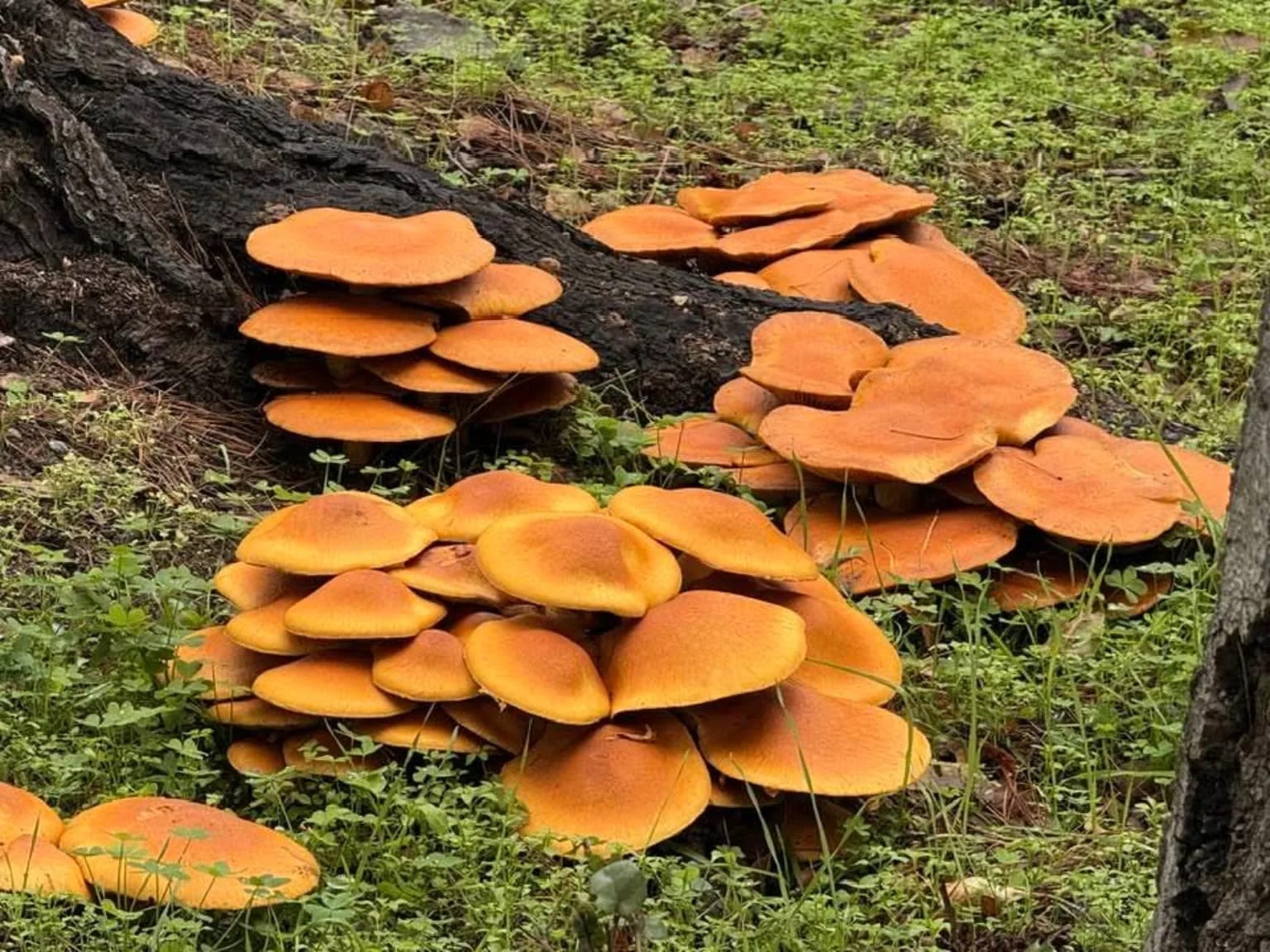
Monterey, located on the Pacific coast of California, is known for its impressive coastal views, nature reserves and rich marine life. But it is precisely among the trees that you can discover an equally colorful and surprising world. Between the roots of the trees and on the ground, clusters of orange mushrooms are discovered, which stand out especially against the background of green vegetation and dark tree trunks.
A World That Awakens After the Rain
While the Monterey area is relatively dry during the summer months, the fall and winter rains create conditions that encourage the emergence of many mushrooms. The moisture accumulated in the soil, between the leaves and on the tree trunks allows the mushrooms to develop and form impressive clusters, breaking up the brown and green tones of the natural landscape.
The variety of shapes is as fascinating as the colors. Some mushrooms have round, golden caps, while others grow in the shape of wide fans, arranged one above the other in a sort of natural tier. The bright colors come from natural pigments found in the mushrooms.
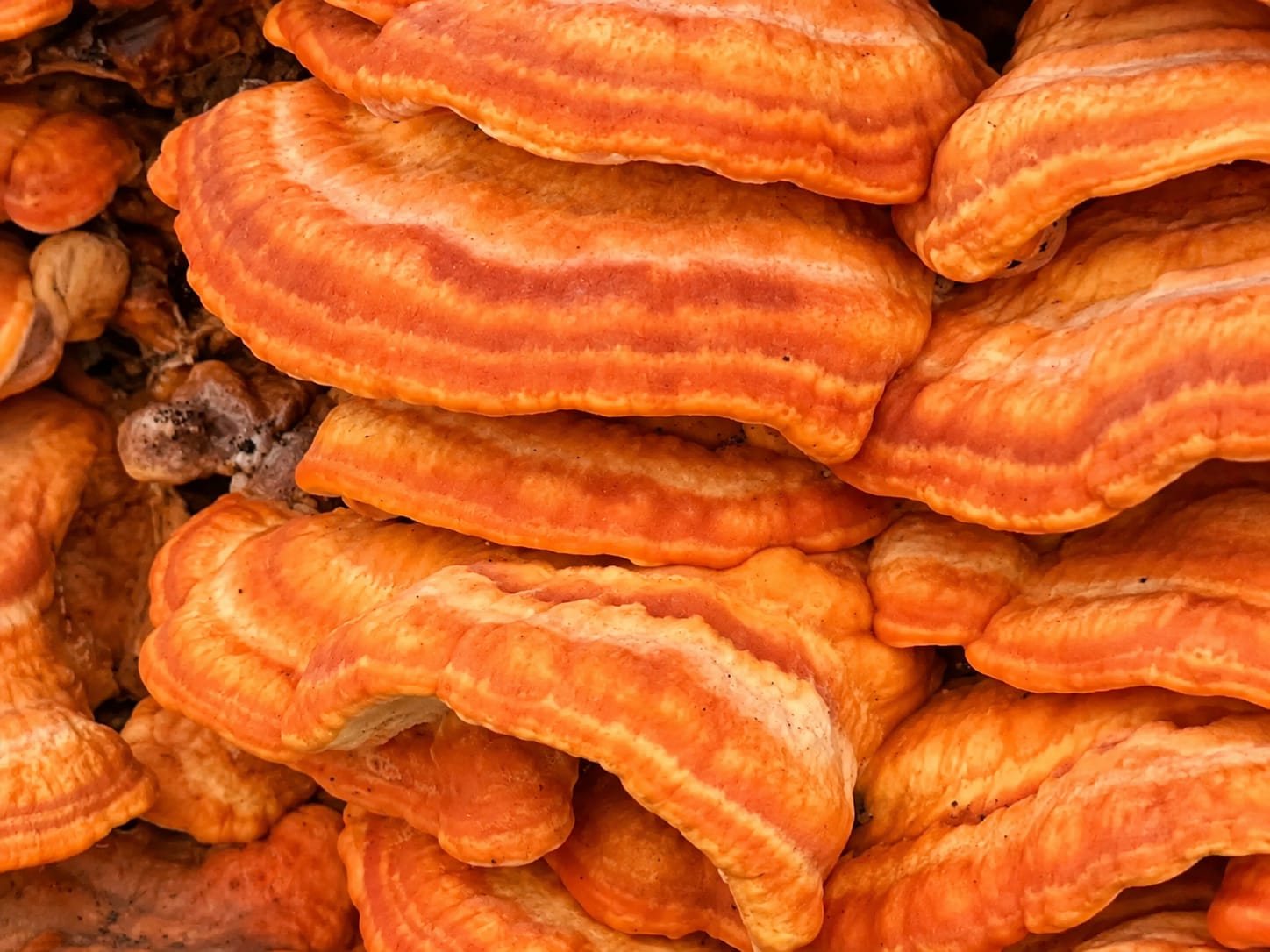 Close-up of orange mushrooms with wavy edges. Photo: Irit Perla
Nature's Forest Cleaners
Behind the spectacular appearance lies an important biological process. Many fungi help break down dead wood, fallen branches and leaves, and return nutrients to the soil. What is visible to the eye is actually the reproductive body of the fungus, while a fine web of webs, called mycelium, develops inside the tree or soil.
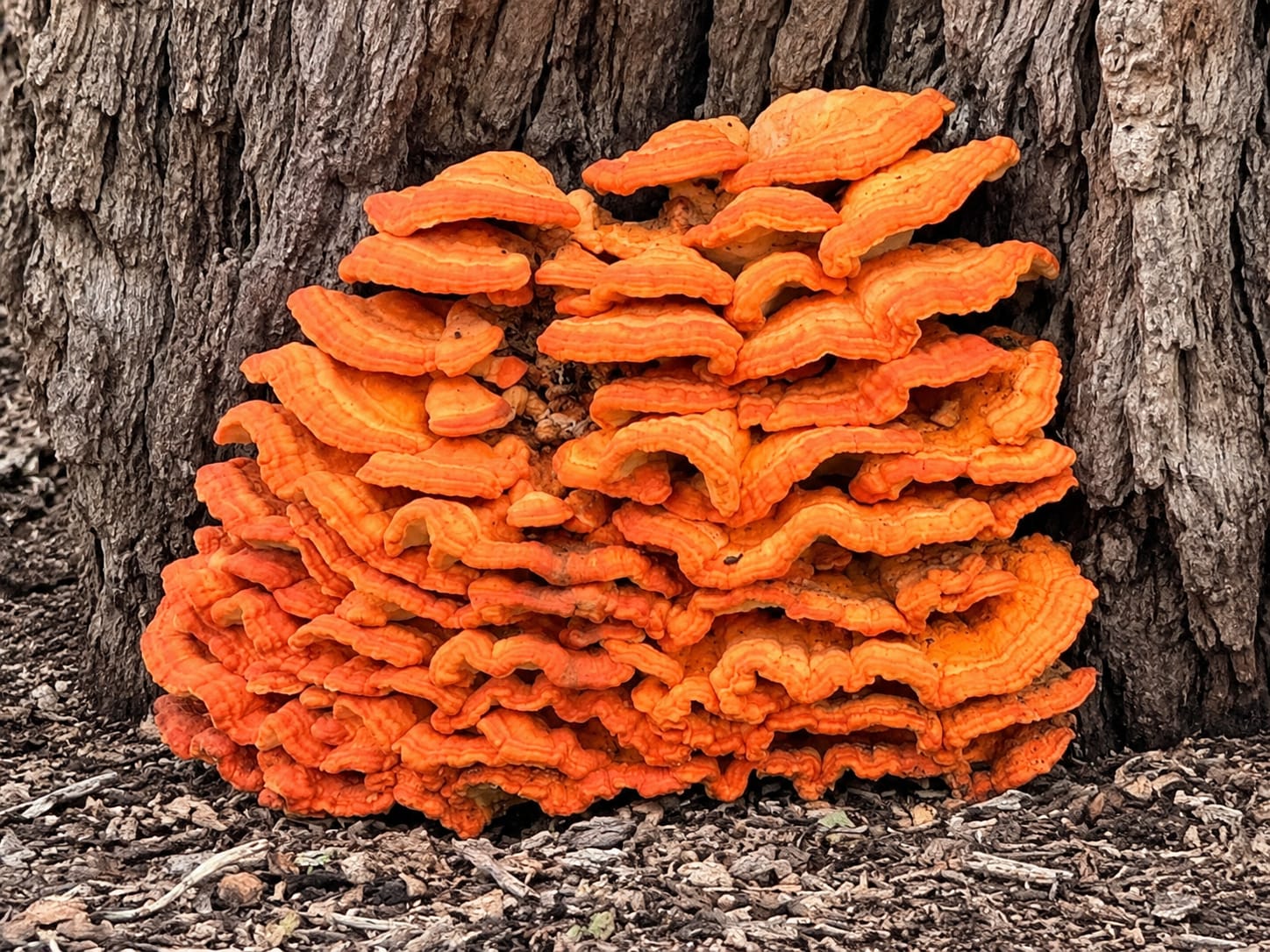 Orange mushrooms growing in dense layers on a tree trunk. Photo: Irit Perla
One interesting mushroom in California is known as the Chicken of the Woods, because its texture resembles chicken meat. It is characterized by shades of yellow and orange and grows in layers on tree trunks. Another interesting mushroom is the Western Jack-o'-Lantern , a poisonous mushroom with an orange hue, capable of emitting a faint greenish light in the dark.
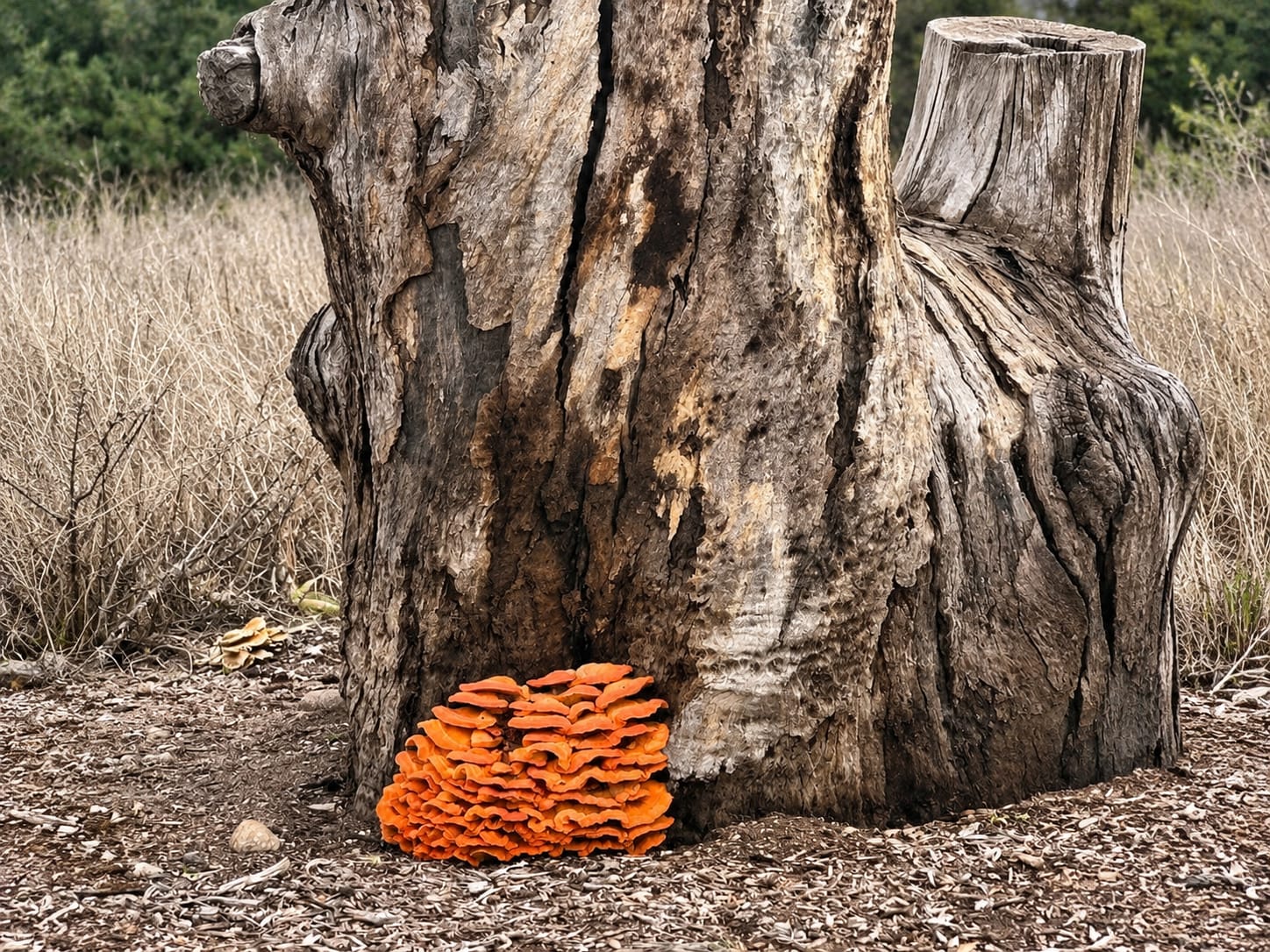 A cluster of orange mushrooms at the foot of an ancient tree trunk. Photo: Irit Perla
Beautiful to Look At, But Not Necessarily Edible
The tempting appearance can be deceiving. Some wild mushrooms are poisonous, and sometimes they resemble edible mushrooms very closely. Therefore, travelers are advised to be content with observing and photographing them, and to avoid eating mushrooms that have not been identified by an expert.
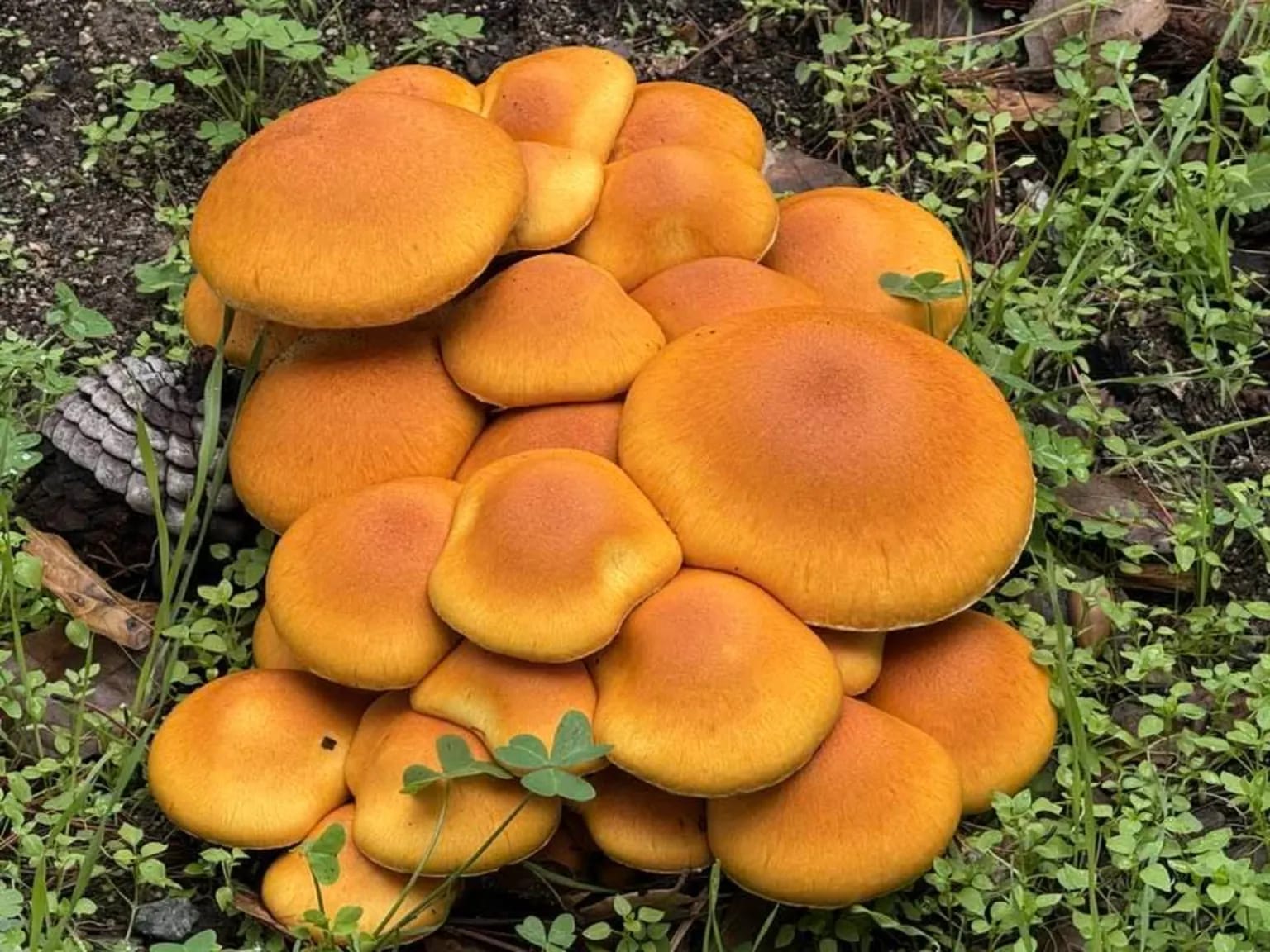 A dense cluster of mushrooms with golden orange caps. Photo: Irit Perla
Travelers to the Monterey area during the rainy season should look not only at the ocean and the open landscapes, but also down to the ground and the bases of the trees. Sometimes it is there, in the least expected places, that nature's most beautiful works of art are hidd