How Emergency Scenarios Are Practiced - Exclusive Behind-the-Scenes Visit to European Aviation Giant
How Emergency Scenarios Are Practiced - Exclusive Behind-the-Scenes Visit to European Aviation Giant
How Emergency Scenarios Are Practiced - Exclusive Behind-the-Scenes Visit to European Aviation Giant
Wizz Air's training center opened its doors for Passport Group's experiential day in Budapest. Here’s what we did there - and there's a riddle
At Wizz Air's training center (Photo: Courtesy of Wizz Air)
Not Every Day You Get to Enter Behind the Scenes of an Airline.
Alongside some of the world’s largest media outlets, the Passport Group was exclusively invited from Israel to participate in a special media day and experience the complete training center used by air crew members - pilots, flight attendants, and other staff.
Alongside Wizz Air's professional and ambitious announcements to become one of the leading companies in sustainability worldwide, revealed by senior company official Yvonne Moynihan, it was noted that media teams were allowed to take part in training activities not typically shown to the press.
Fly a Plane?Maybe
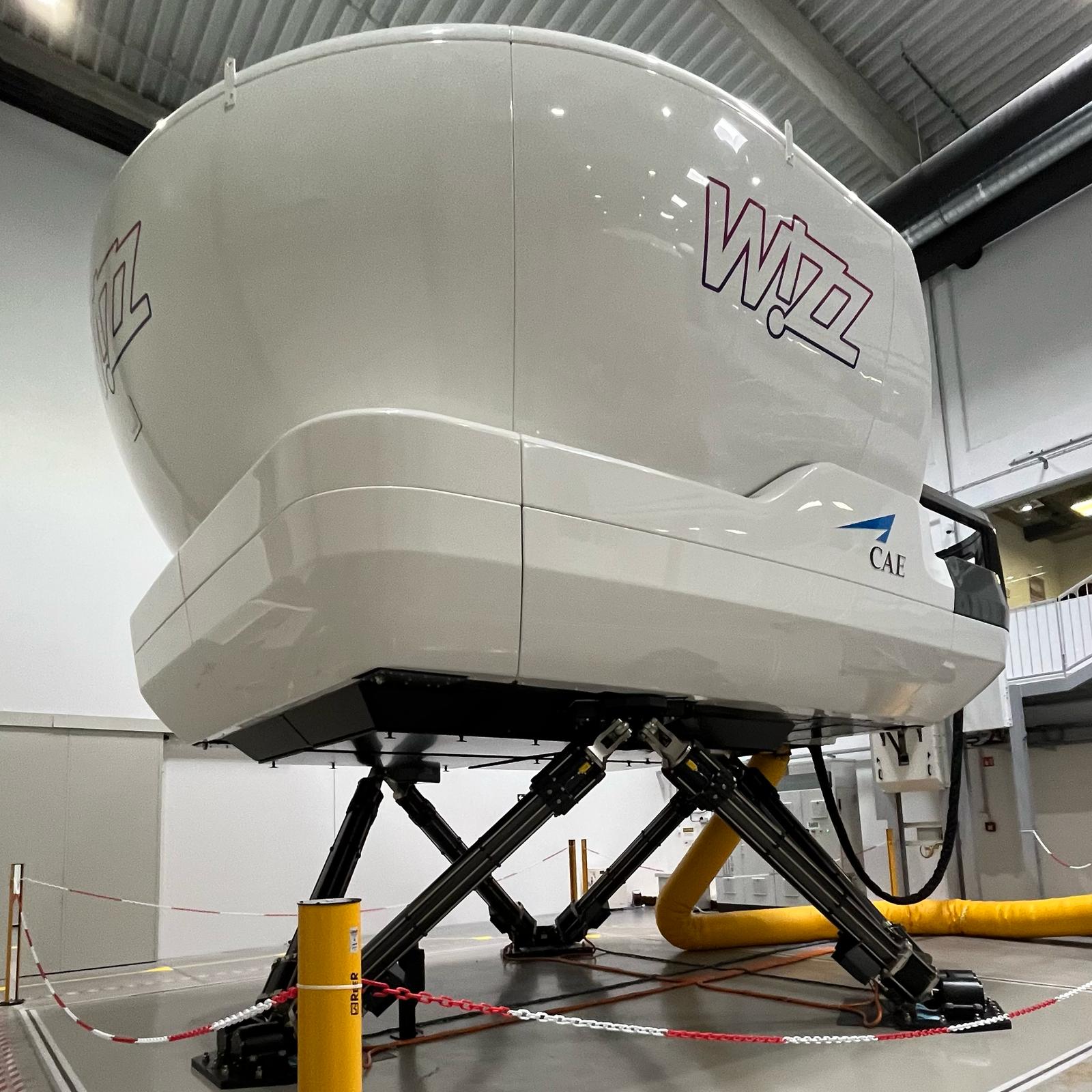
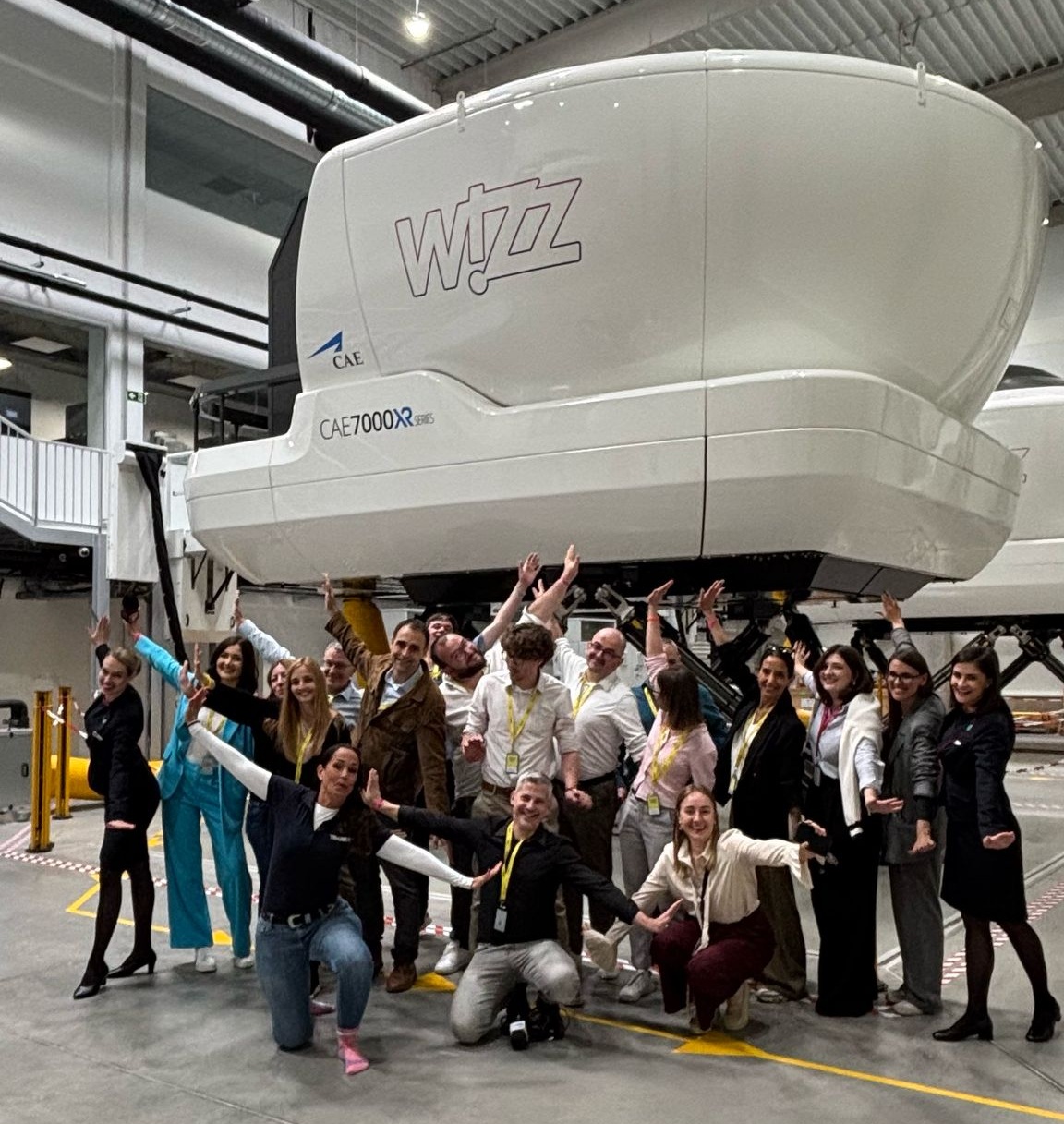
The Hungarian airline has three full-flight simulators from CAE, some of the most expensive equipment in the world simulating flight optimally, including sharp movements of the full cockpit within it. In addition, the company has a half-simulator in use. The company’s pilots must pass periodic examinations and refreshers in the simulator, under the watchful eye of flight examiners.
Photo: Amit Cotler
The simulator itself is a full cockpit. Real airplane seats, every button that could be above, below, and on the sides of the captain - the main pilot, and the first officer, also known as the co-pilot.
Our disastrous experience trying to fly the plane in the simulator ended even before takeoff on the grass next to the runway. If you will, we were disqualified. As noted on PassportNews' social media, it would probably be better for us to focus on writing about aviation rather than trying to fly planes.
A Window on You
Most of the rest of the day was spent with the media by Nikoletta Zima, the chief instructor at the airline and who was the first flight attendant ever at Wizz Air over 20 years ago.
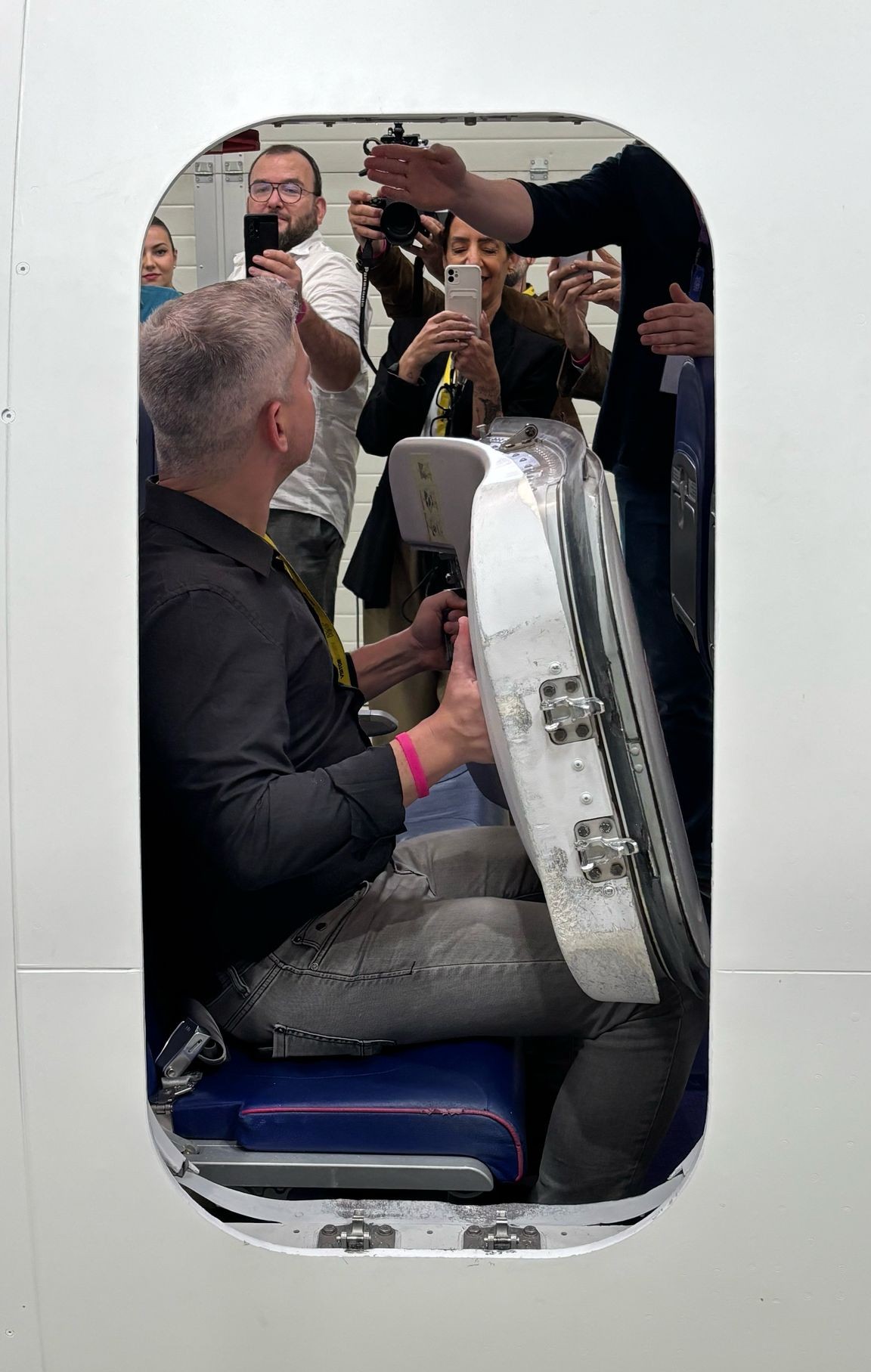
The next station was an experience opening the emergency doors of the A320 and A321 aircraft from Airbus that are in the company’s service. Two doors of different types, two different openings.
Photo: Amit Cotler
If you ever wondered how to do this, how to open the emergency door, we can tell you that on one hand, it’s quite a simple action involving a few handles to pull. Don’t try this yourself.
On the other hand, it’s a particularly heavy part that when you release it from its position (in the A320) you’ll discover it weighs 15 kilograms nowadays. In the past, by the way, they say at Wizz Air, the windows weighed over 30 kilos.
In the newer planes, there are the "Lamborghini" windows, as they are called by the crew because they automatically lift upwards (like the cargo door of the aircraft) and there’s no need for a physical release of the window from its position. This is what it looks like:
Removing the windows is done in the training facility to practice exiting through the emergency doors of the planes, doors that are located in various places along the cabin and are operated in emergencies by the passengers themselves. In case of an emergency, they say at the company, a passenger should shout "Follow Me" – Follow Me, to other passengers, who are supposed to hear and exit through the door, onto the wing of the aircraft.
It’s Just a Drill
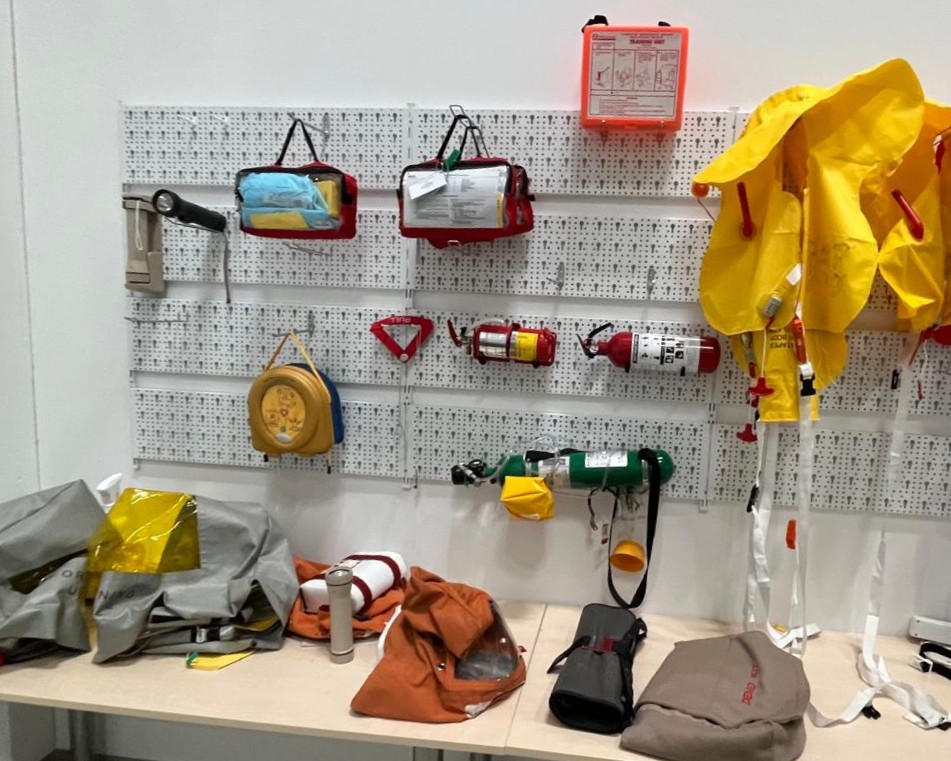
But the most intriguing and fascinating part is probably the "Mock Up", a full-scale practice model that is in the company’s service, which once was a real plane. Inside the model, you’ll find every item you can imagine in an airplane, all completely real. From seats to emergency equipment, from seatbelts and oxygen masks to the public address system (PA).
But the big surprise is the emergency scenarios that the cabin crews practice. Using a special tablet, they create every scenario you could imagine, or briefly - may we never know troubles.
Photo: Amit Cotler
Gear-down landings, water landings, smoke in the passenger cabin (yes, there is smoke), fires (no, there’s no actual fire) and more scenarios.
We were lucky enough to have the opportunity to inflate the life jacket - but then the real and stressful situation began.
Watch the life jacket inflation in slow motion:
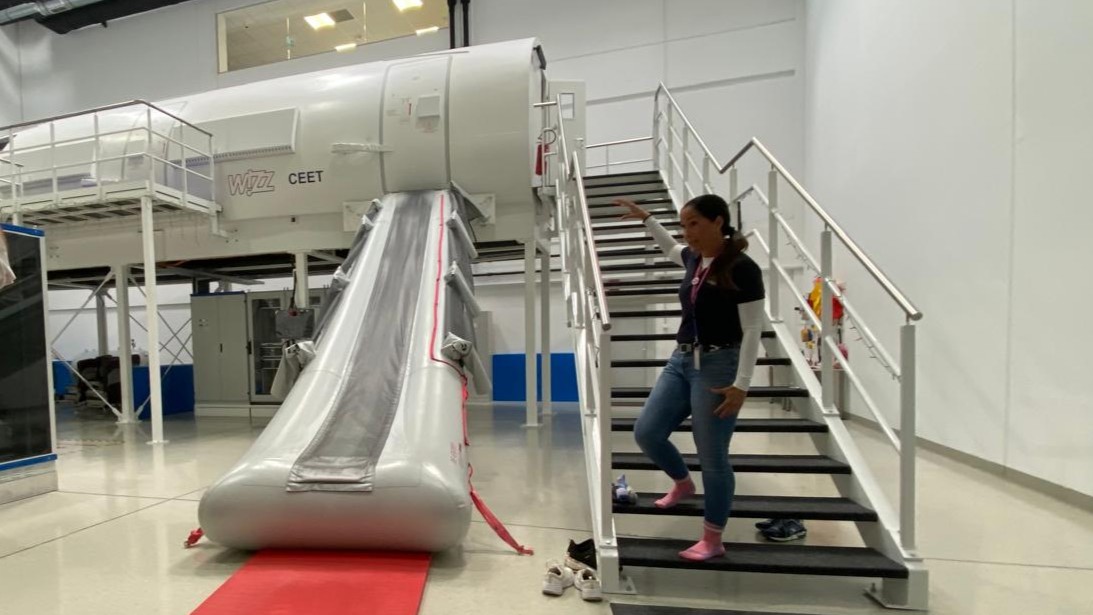
The Wizz Air crew put us in an emergency situation, with dramatic announcements and a call for passengers to evacuate the plane using the emergency slides - a highly stressful operation for every flight crew around the world, just 90 seconds to complete.
And indeed we jumped, not before hearing about the importance of safety instructions in flight and the safety instruction card, which, if we’re honest, most of us don’t really give importance to. So perhaps at least we, next time we board a plane, will listen a bit more to those instructions, and maybe even know how to handle emergency situations in the air with a bit more calm.
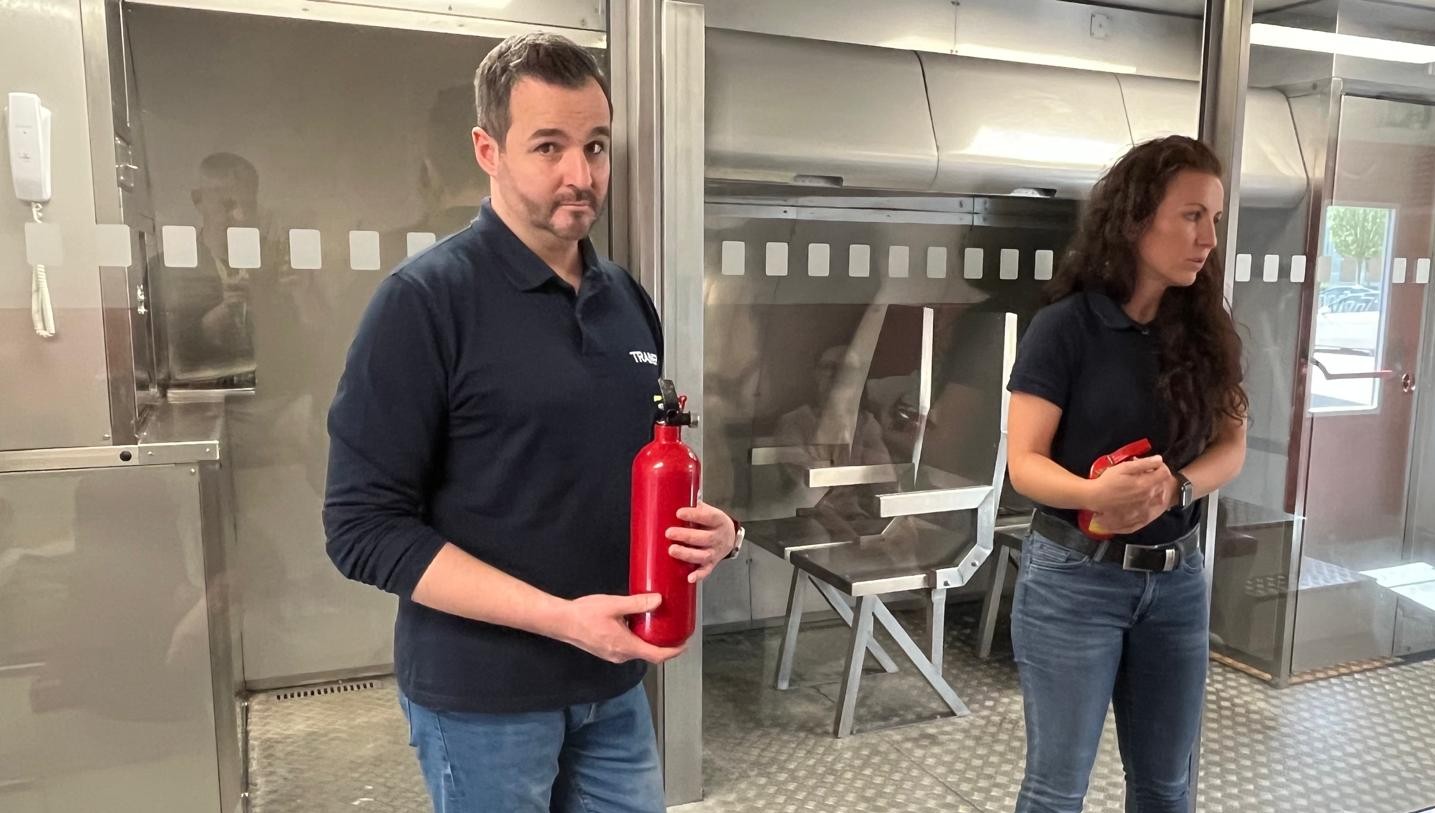
Fire Drill. Photo: Amit Cotler
Wizz Air’s training day also included a lesson on handling aircraft fires, an explanation about the innovative cooling bags for overheating batteries, one of the major troubles the industry has faced in recent years, and also a small riddle - what is the additional and safety use of the curtain dividing the kitchen at the front of the aircraft from the passengers? Know it? Feel free to write us in the comments.
We and our partners use cookies to enhance your website experience, learn how our site is used, offer personalised features, measure the effectiveness of our services, and tailor content and ads to your interests while you navigate on the web or interact with us across devices. By clicking "Continue" or continuing to browse our site you are agreeing to our and our partners use of cookies. For more information see