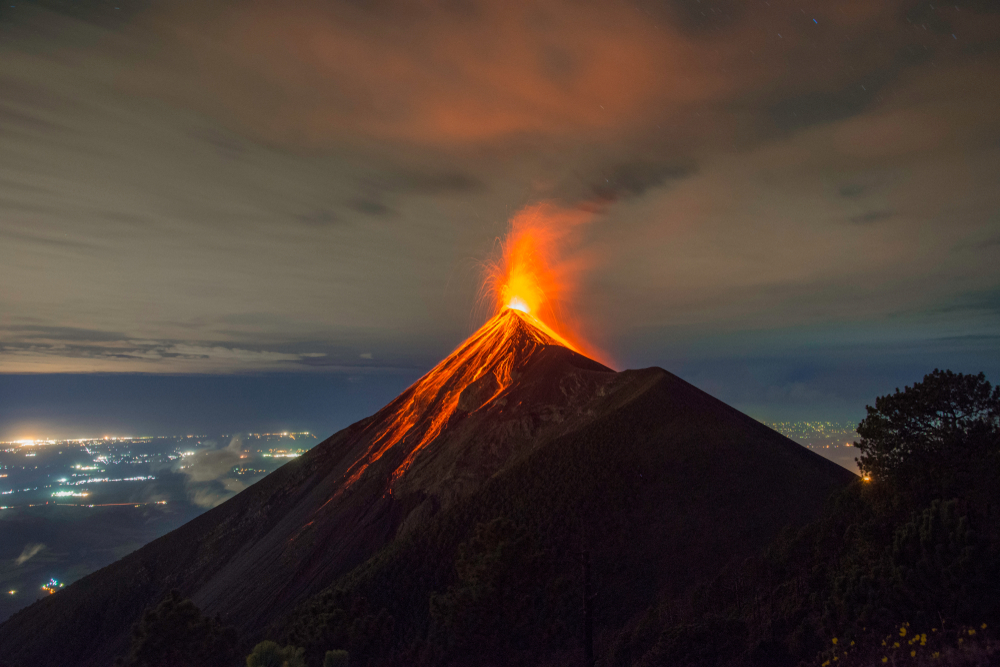
The Fuego Volcano in Guatemala has entered a state of increased eruption, as reported by the National Institute for Seismology, Volcanology, Meteorology, and Hydrology (INSIVUMEH).
The U.S. Department of State updates that since last Wednesday, there has been particularly intense activity at the volcano, including explosions accompanied by clouds of ash, rocks, and hot gases. Lava flows descend approximately 600 meters down the Santa Teresa riverbed.
Local authorities have begun evacuating residents from the villages of Panimache and El Porvenir, belonging to the municipality of San Pedro Yepocapa.
The evacuation of additional villages is under consideration, depending on developments. Ashfall is already noticeable in several areas: Acatenango, San Pedro Yepocapa, and Chimaltenango.
Airports and Transportation: No Disruptions but Warning Issued
As of now, La Aurora International Airport in Guatemala City operates normally, but the main highway RN-14 is closed to ensure safe passage for evacuating citizens. Tourists and travelers are advised to prepare for delays and check their flight status with airlines.
Recommendations for Travelers and Residents:
Local and U.S. authorities urge residents, especially children, the elderly, and people with respiratory issues, to take extra precautions:
Avoid affected areas and follow local guidelines.
Track official updates on CONRED, INSIVUMEH, and PROVIAL websites.
Limit ash exposure: stay indoors, close windows and doors, and use protective masks.
Prepare an emergency kit in a waterproof container - including water, medications, dry food, a radio, important documents (especially passports).
Keep documents valid and handy in case of rapid evacuation.
Do not rely solely on navigation apps, which may lead to blocked or unsafe roads.
Obtain travel insurance, including coverage for medical evacuation and emergency expenses.
The U.S. Department of Homeland Security reminds that in case evacuation from Guatemala is needed, efforts may be made in collaboration with commercial airlines - but evacuation costs fall on citizens under U.S. law.
For more information on emergency preparedness, the Department of Homeland Security recommends visiting the U.S. State Department website