The crash of an Air India Dreamliner shortly after takeoff this morning (Thursday) shocked the aviation world—not only because of the number of casualties but primarily because it is one of the safest and most advanced aircraft on the market.
Alon Parg, a former captain of EL AL's 787 Dreamliner fleet and now a flight phobia workshop facilitator with SIMPLIFLY, finds it hard to believe: "This is a very surprising accident—Dreamliner has a flawless safety record." In a conversation with Passport News, he tries to explain what might have gone wrong and why there's no need to fear your next flight.
How surprised were you to hear that a Dreamliner crashed today?
"Very surprised. It's a very safe aircraft with very reliable engines and a flawless safety history. The Dreamliner has been flying for a little over a decade since it entered service, and there has never been a crash, so it's surprising."
Can you guess what happened there?
"I don't know, but almost always in flight accidents, the cause is human error."
The plane crashed shortly after takeoff. At what stage in takeoff are pilots allowed to activate autopilot?
"It's the pilots' decision when to engage the autopilot. As a Dreamliner captain, I used to activate it a bit later, after takeoff. I'm almost sure that at the stage where Air India's plane crashed, the human pilot was already in control. Autopilot can be activated as low as 200 feet. According to reports, the plane that crashed today managed to climb to 600 feet. When there's a problem, you turn off the autopilot with the press of a button and take control of the aircraft. In this type of emergency, it makes sense that the human pilot immediately disconnected the autopilot."
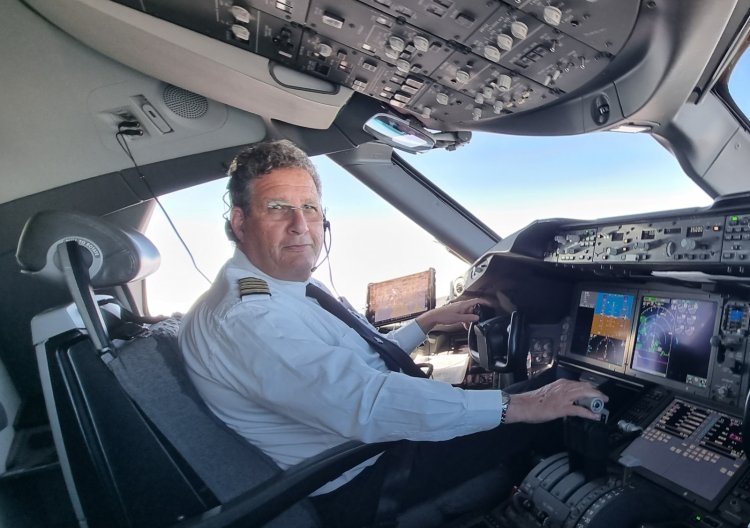 Captain Alon Parg. Photo: Courtesy of Parg
What procedures do pilots go through before a flight/takeoff?
"Both Boeing and Airbus manufacturers define takeoff as a critical part of the flight, so before any takeoff, pilots brief in the crew room. They review procedures and guidelines, both regular and emergency. For instance, what to do if an engine shuts off. Takeoff is treated with a lot of respect. They also run a checklist on the plane. They check everything to ensure everything is in order. Plus, the plane checks itself to see if doors are closed, flaps are okay, and so on. If something isn't right, the plane emits a very annoying and obvious beep that tells you not to take off. There are quite a few safety layers, which is why it's a great and very safe airplane. To bring a 200-something ton Dreamliner from zero to airborne is something to take very seriously. In today's crash, something definitely went very wrong."
What do you do in dangerous weather or if an engine suddenly shuts off?
"The plane knows how to handle turbulent weather. However, there are defined limits that are much stricter than the plane's capabilities. As for emergencies, a Dreamliner has two engines and is built to take off with one engine. Both engines, of course, operate. Pilots train on how to operate when one engine shuts off. In the case of the Indian plane, it doesn't seem to have been the case. Because if one engine shuts off, the plane veers to the side, and that's not what's seen in the published footage."
What about birds at that altitude?
"There are birds at the altitude the Indian plane climbed to, but passenger planes can handle birds up to the size of a stork. If birds were the issue here and one or two engines were hit, I think we would have first seen smoke coming from the engines, and that wasn't observed in the published material. I have no clues as to what happened there."
They say it's safest to sit in the tail area of the plane rather than the front. Is that true?
"Fortunately, there aren't enough crashes to examine this issue and build theories on it. But logically, a plane that flies forward and hits the ground—the passengers sitting in the back feel less of the front's absorption area, but it depends on so many things that you can't really know."
Can you imagine what pilots go through when they realize they are going to make an emergency landing?
"It's a terrible event, very difficult and sad. Aviation worldwide will learn from it and understand what happened. And every conclusion will become a procedure and law."
And after such a terrible accident, how do you—as a flight phobia workshop facilitator—calm people down?
"First of all, it's natural that such events increase and intensify the fear of flying. On the other hand, it's a very, very rare case. Planes like this fly by the thousands every day, and when one such fatal accident happens, you have to take it with perspective. We know how to train our brains to handle dangers. In civil aviation, about 5 billion passengers fly a year, and it's rare for anyone to die. Even when it happens, far more people die in road accidents in Israel."