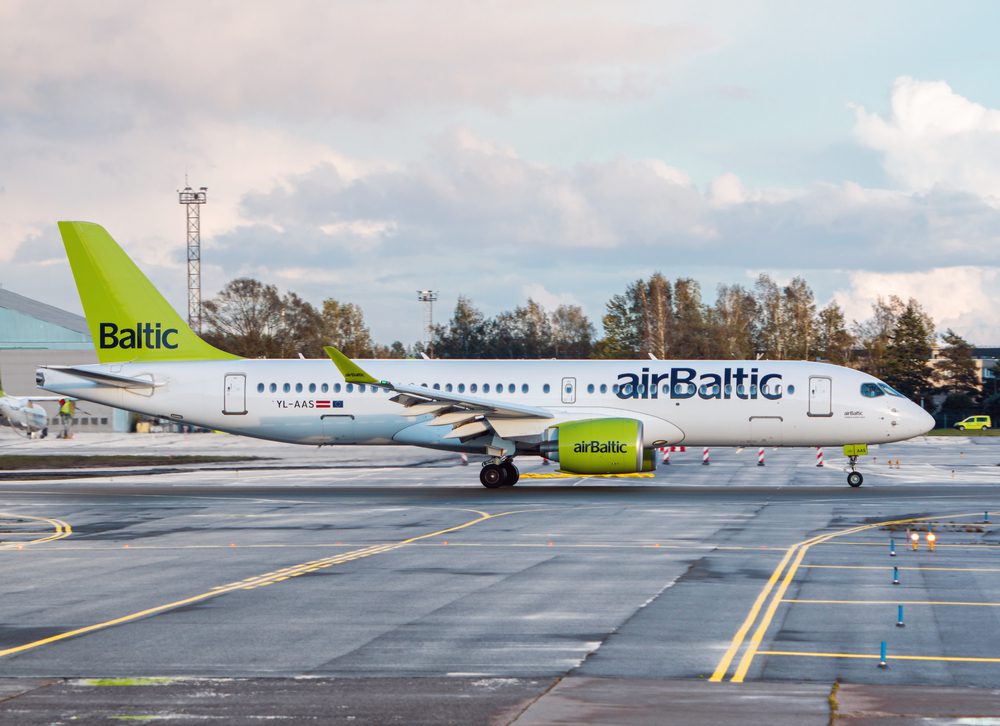
The national airline of Latvia, airBaltic, has released its financial and operational results for the first half of 2025, showcasing new records in revenues and passenger movement alongside a significant improvement in profitability.
The company's revenues in the first half of the year totaled 349.6 million Euros, a 3% increase compared to the same period in 2024, marking the highest half-year revenue in the company's history.
In the second quarter alone, revenues reached 216.9 million Euros, up by 4.8% year-over-year.
The net profit for the second quarter amounted to 27.6 million Euros, a 51.8 million Euro improvement compared to a 24.2 million Euro loss in the second quarter of 2024. For the entirety of the first half, the loss decreased to just 1.7 million Euros, compared to an 88.8 million Euro loss in the previous year.
During the first half, airBaltic flew with 3.9 million passengers, an increase of 8.7% compared to the previous year, including 2.5 million passengers in the second quarter (an increase of 8.3%). The load factor in the second quarter reached 80.2%, a 2.4 percentage point increase.
Last June, the company marked the month with almost half a million passengers and a load factor of 84.1%, the highest in its history for June.
In the ACMI flights sector (aircraft, crew, maintenance, and insurance services for other companies), there was a 12.4% increase in flights during the first half, with 13.5 thousand ACMI flights out of a total of 36.4 thousand flights, an overall activity increase of 6.6%.
Despite the positive results, the company notes that activities were affected by the continuing global engine shortage, which necessitated the use of wet-lease aircraft, leading to higher operational costs. However, these measures ensured schedules were maintained and service continued.
Pauls Calitis, interim CEO and Chief Operations Officer of airBaltic, stated: "Our first half results demonstrate the resilience of our operations and the continued demand for our services. Even facing challenges like engine availability and cost pressures, we maintained stability and continued to grow. We're focused on improving efficiency and operational performance while preparing for long-term opportunities – including a potential IPO."
The management estimates that by 2025, the airline will carry over 5.2 million passengers with annual revenues of 780-800 million Euros. The goals include approximately a 5% increase in seat capacity across the company's network and a 20% increase in ACMI capacity. The adjusted EBITDAR forecast for the year ranges from 160-175 million Euros.
With nearly 130 active routes and 24 code-share partnerships, airBaltic continues to position itself as a central air bridge between the Baltic countries and the rest of the world, with destinations in Europe, the Middle East, North Africa, and the Caucasus.
We should note that the German competition authority (Bundeskartellamt) gave the green light for Lufthansa to acquire 10% of airBaltic's shares, with a seat on the board, despite direct competition between the companies on several routes between Germany and the Baltic countries. The approval was granted since the market is considered economically insignificant under the de minimis clause in Germany's merger laws.