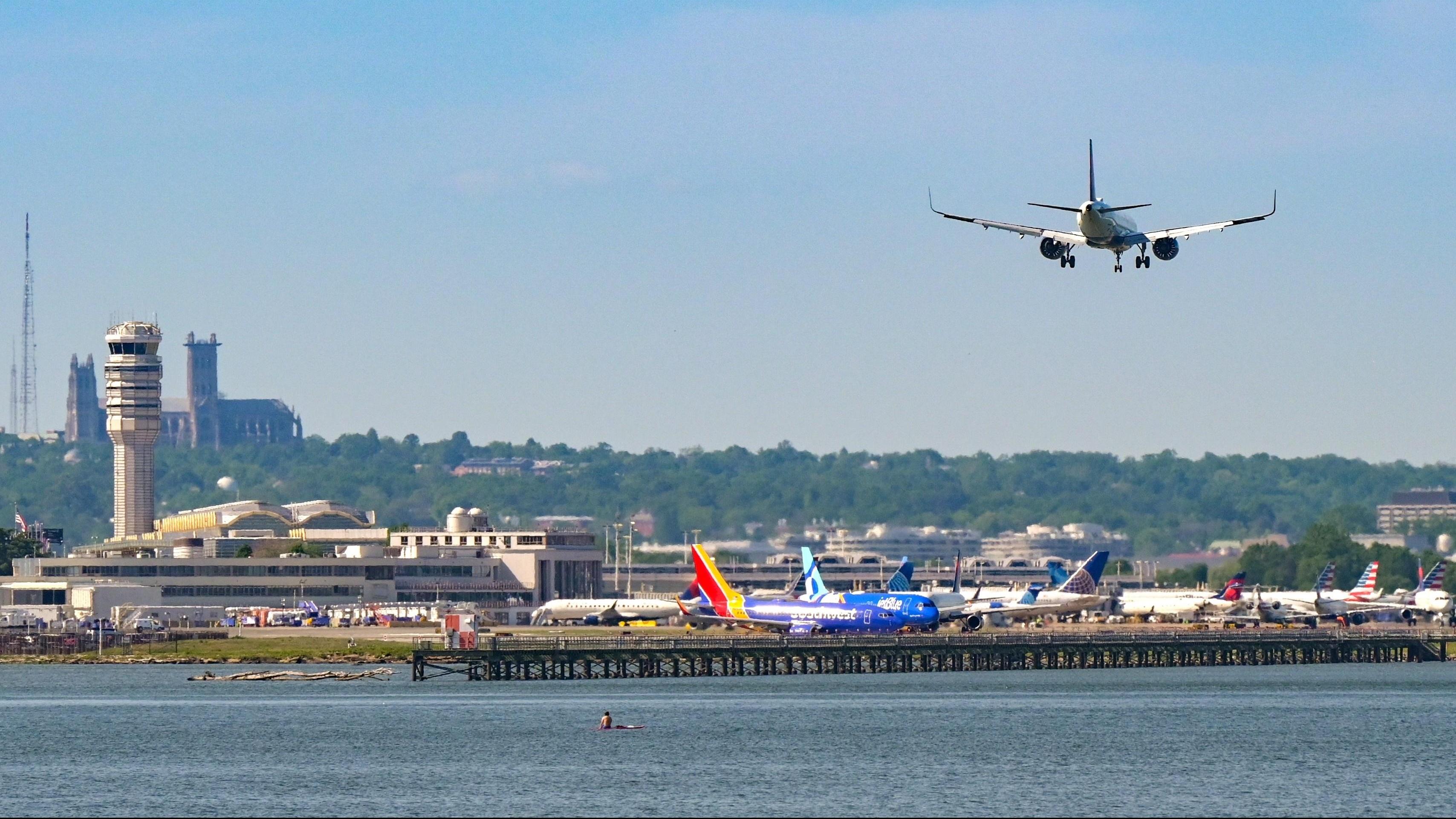
The United States Department of Transportation and the Federal Aviation Administration (FAA) have initiated a series of proactive steps to maintain safety in the national airspace, including a phased reduction of up to 10% in flight traffic at 40 busy airports across the United States.
The move comes amid a severe shortage of manpower, especially air traffic controllers, who have been working without pay since the government shutdown began. According to Transportation Secretary Sean Duffy, the increasing workload has caused fatigue and compromised aviation safety, which in turn led to the dramatic decision to reduce operations at 40 major airports.
At the same time, there has been an increase in the number of flight delays, with 2,740 delays reported at various airports over the weekend alone.
The reduction in activity will take effect in phases, starting on November 7, when activity will be reduced by 4%, continuing in the following days with the reduction reaching 6%, 8%, and finally 10% by November 14.
In addition, the FAA will prohibit visual flight rules (VFR) approaches at airports with staff shortages, limit space launches to off-peak hours, and prohibit activities such as parachuting or photo flights near these airports.
The announcement stated that airlines would be required to refund passengers for canceled flights but would not be responsible for any related expenses. The restrictions do not include international flights, and airlines will be able to choose which routes to cut.
The list of airports where the reduction will be implemented includes: Ted Stevens Airport in Anchorage (ANC), Hartsfield-Jackson Atlanta (ATL), Logan in Boston (BOS), Baltimore/Washington (BWI), Charlotte Douglas (CLT), Cincinnati/Northern Kentucky (CVG), Dallas Love Field (DAL), Ronald Reagan Washington (DCA), Denver (DEN), Dallas/Fort Worth (DFW), Detroit Metropolitan (DTW), Newark Liberty (EWR), Fort Lauderdale/Hollywood (FLL), Honolulu (HNL), William P. Hobby in Houston (HOU), Washington Dulles (IAD), George Bush Houston Intercontinental (IAH), Indianapolis (IND), John F. Kennedy in New York (JFK), McCarran in Las Vegas (LAS), Los Angeles (LAX), LaGuardia in New York (LGA), Orlando (MCO), Midway in Chicago (MDW), Memphis (MEM), Miami (MIA), Minneapolis-Saint Paul (MSP), Oakland (OAK), Ontario (ONT), O'Hare in Chicago (ORD), Portland (PDX), Philadelphia (PHL), Phoenix Sky Harbor (PHX), San Diego (SAN), Louisville (SDF), Seattle-Tacoma (SEA), San Francisco (SFO), Salt Lake City (SLC), Teterboro (TEB) and Tampa (TPA).
Secretary Duffy: "The U.S. has many responsibilities, but our number one job is safety. This isn’t about politics, it’s about assessing the data and alleviating building risk in the system as controllers continue working without pay. It’s safe to fly today, tomorrow, and the day after because of the proactive actions we are taking."
Federal Aviation Administration Administrator Bryan Bedford: "We are seeing signs of stress in the system, so we are proactively reducing the number of flights to make sure the American people continue to fly safely. The FAA will continue to closely monitor operations, and we will not hesitate to take further action to make sure air travel remains safe."