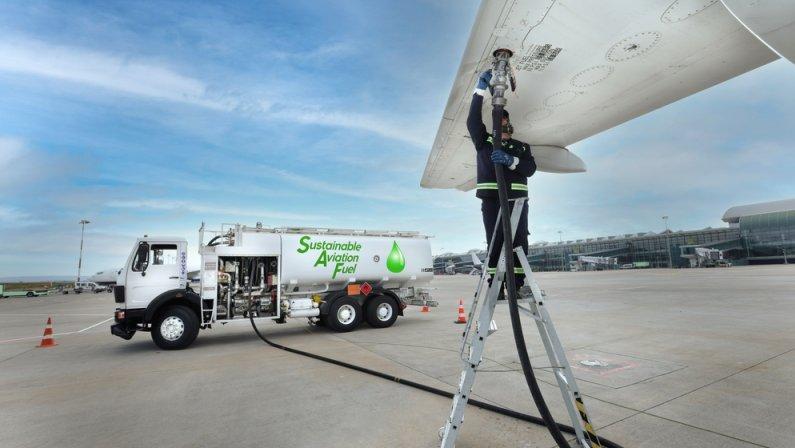
Sustainable aviation fuel, popularly known as SAF, is the aviation industry’s catch-all term that refers to jet fuel that does not come from traditional sources of fossil. This is the preferred wording by the International Air Transport Association (IATA), even though there are plenty of variations out there, including sustainable alternative fuel, renewable jet fuel, or biojet fuel. As a rule of thumb, they are all referring to the same thing: replacing conventional kerosene with something cleaner.
Another frequent term used in connection with SAF is “biofuel”. However, only some SAF is produced from biological materials like plants or animal fats, as modern technology now allows fuel to be made from non-biological sources. The latter includes waste gases and municipal waste. This, in short, is why the focus shifted to sustainability rather than biology alone.
In practice, SAF behaves almost exactly like conventional jet fuel, as its chemical and physical properties are very similar, which allows it to be blended with standard fuel, carried through existing pipelines, and used in today’s aircraft without the need to make any modifications. Fuels that feature these characteristics are known as “drop-in fuels”, meaning they can be introduced into current airport fueling systems without disruption.
To truly qualify as sustainable, SAF must meet a series of strict criteria. These include:
- measurable reductions in lifecycle carbon emissions
- limited use of fresh water
- no competition with food production
- no contribution to deforestation
In other words, sustainability in this context means something that can be produced repeatedly without draining natural resources or upsetting the environmental balance.
The Three Pillars of Sustainable Aviation
#1: SAF must be sustainable in economic, social, and environmental terms.
#2: SAF must be produced from alternative feedstocks (used cooking oil, plant oils, agricultural residues, waste gases, household waste) rather than crude oil.
#3: SAF must meet the same technical and certification standards required for jet fuel used in commercial aircraft.
When produced responsibly, sustainable aviation fuel has the potential to cut carbon dioxide emissions by as much as 80% compared with fossil fuels. It also contains fewer impurities, which helps reduce sulphur dioxide and particulate emissions. When SAF is made from waste, it not only replaces petroleum, but also stops waste from decomposing in landfills and releasing methane.
More Needs to Be Done
Beyond its excellent effects on emissions, SAF also offers a series of important practical advantages for today’s airlines, which are heavily exposed to oil price swings and supply disruptions, and along with them, the travel and tourism industries.
Because SAF can be produced in many regions using different feedstocks, it supports a more diversified fuel supply and improves energy security.
However, production and usage are still relatively low worldwide, which prompted the World Travel & Tourism Council (WTTC) to urge the travel industry to increase production and use of SAF in a new report titled "Increasing Sustainable Fuel Production". The report explained that SAF currently accounts for only 0.3% of global jet fuel consumption, with production at 1.25 billion liters. To meet net-zero emission targets by 2050, the WTTC report advised production to rise to more than 450 billion liters, which would include roughly 6,500 new sustainable fuel plants worldwide.
Julia Simpson, WTTC President & CEO: "Sustainable fuel is the single biggest game-changer for Travel & Tourism, but right now, supply falls dangerously short of demand. If we don’t act together, we risk rising costs, limited availability, and stalled climate progress."
Airlines Ahead of the Curve
Some airlines, like Israel's national carrier El Al, have already jumped on the bandwagon, expressing interest in embracing SAF and announcing their intention tojoin important initiatives, such as Boeing's and the Technion's Sustainable Aviation Fuel Initiative.
At the end of last August, Air France received its 46th Airbus A220-300 on a flight that was fueled by 50% sustainable aviation fuel. A month prior, United Airlines announced it would be the pioneering airline to use SAF at the Chicago airport, turning the airport into the fifth where the company had purchased SAF fuel for operational use. "It is time for companies to work together to support SAF growth", said the company.
Finally, SAF is not just a cleaner fuel. It is a broader shift in how aviation thinks about energy, resilience, and responsibility.