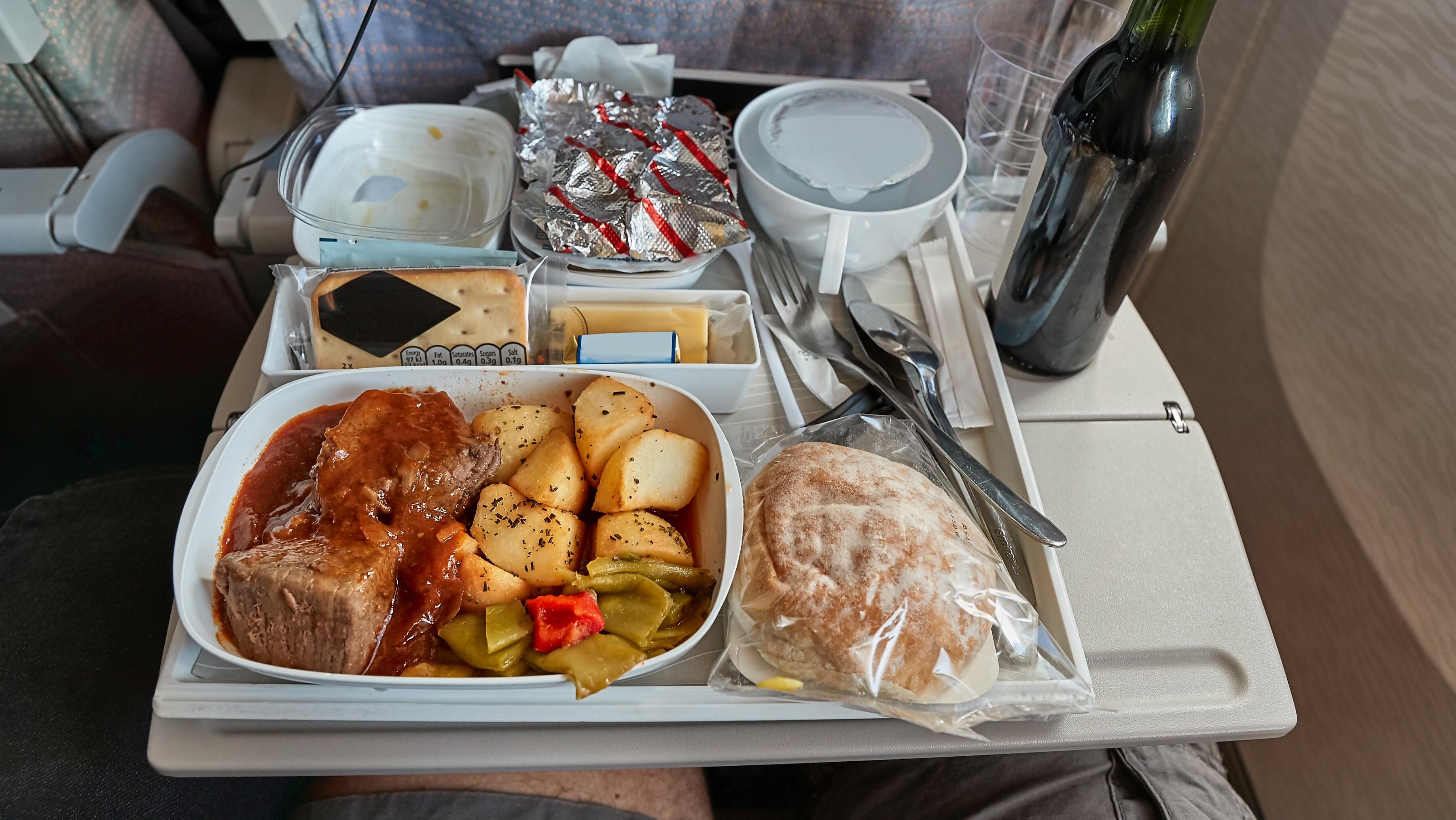
The global airline industry generates an estimated 3.6 million tonnes of cabin and catering waste each year, according to recent data from International Air Transport Association and the Aviation Sustainability Forum. This figure is expected to reach 4 million tonnes by the end of the current year, and, because of the constantly growing number of passengers, could even double by 2040 if no meaningful changes are made.
Around 18% to 20% of the waste comes from untouched food and beverages. International regulations require airlines to either incinerate or send it to landfills.
To tackle this issue, Airbus has been developing innovative solutions aligned with the UN 2030 Sustainable Development Goals. One such initiative is its “Smart Catering” concept, designed to reduce onboard waste using artificial intelligence and real-time data.
AI-Driven Catering Tested in Real Flights
In 2025, Airbus partnered with Virgin Atlantic to test Smart Catering in real operating conditions, using AI to automatically track passenger meal consumption and identify unused food and drinks, offering airlines a clearer picture of onboard demand.
Initial trials took place in a ground-based cabin simulator in the UK before being rolled out on live flights, including routes between London and New York, and London and Orlando, operated on Airbus A330 and A350 aircraft.
Smarter Tools for Cabin Crews
The system integrates directly into crew tablets and mobile devices, using camera-based recognition to scan meal trays and beverage usage in real time. This allows inventory to be updated instantly without adding extra workload for cabin crew.
Beyond tracking, the system provides live inventory visibility, product location within the aircraft, and detailed dietary and allergen information.
All collected data is then stored and carefully analyzed using a cloud-based system, allowing airlines to better match catering supply with actual passenger demand, significantly cutting unnecessary waste.
According to Airbus, the technology has the potential to deliver double-digit reductions in avoidable catering waste.
The Smart Catering solution is currently being showcased at the Aircraft Interiors Expo (AIX) 2026 in Hamburg, where airlines can explore the system firsthand.