Unusual announcement by Ryanair shakes up the aviation industry in Greece: Europe's largest low-cost carrier announced the closure of its aircraft base in Thessaloniki, a sharp cut in operations throughout the country, including in Athens, and the transfer of aircraft to other destinations in Europe.
But it doesn't end there. Ryanair has chosen to launch a public and direct attack on Greek airports, accusing them of not passing on government tax cuts to passengers and even raising costs.
The response was not long in coming: Fraport Greece categorically rejected the claims and claimed that this was solely a business decision by Ryanair.
According to a Ryanair announcement, the move will include:
- Closure of a base of 3 aircraft in Thessaloniki
- A cut of approximately 700,000 seats (approximately 45% compared to the previous winter)
- Cancellation of 12 international routes
-Suspension of operations at Chania and Heraklion airports during the winter season
Among the lines that will be affected: Berlin, Frankfurt, Stockholm, Venice, Zagreb and other destinations.
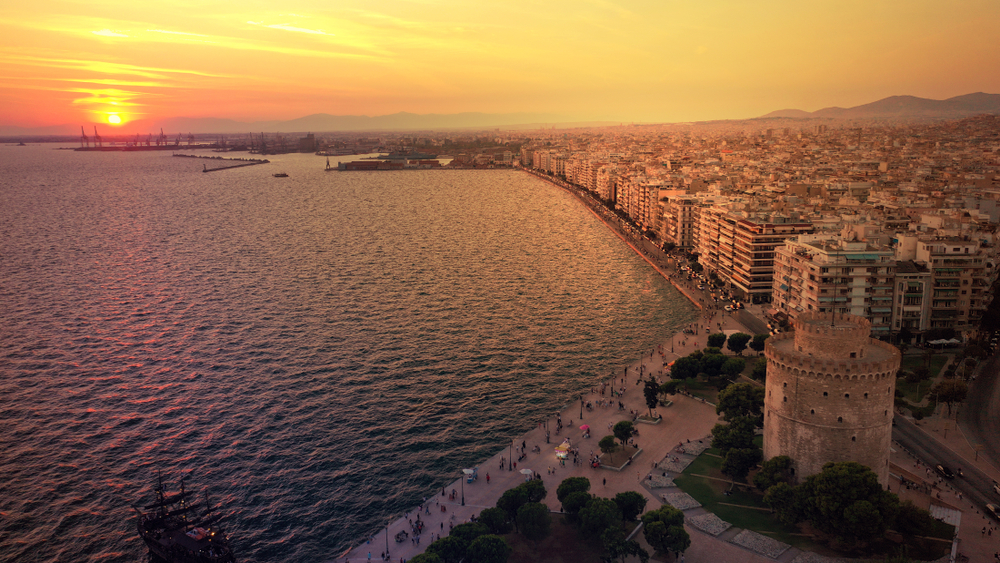 Thessaloniki. Photo: Shutterstock
Ryanair Attacks: “Costs Are Not Competitive”
Ryanair was not satisfied with an operational announcement and launched a direct attack on the airports in Greece.
According to the company, although the Greek government reduced the passenger development fee (ADF) by about 75%, the airports did not pass on the discount to passengers and even raised prices.
The company's chief commercial officer, Jason McGuinness, said: the cut was "avoidable", arguing that the increase in airport charges and the failure to pass on the reduction to passengers directly harms connectivity and winter tourism."
According to him, the move is expected to particularly affect Thessaloniki, where Ryanair provided a significant portion of international capacity last winter.
Ryanair announced that the aircraft departing from Greece will be transferred to “more competitive” destinations such as Albania, regional Italy and Sweden, where, according to the company, operating conditions are better.
Airport: “No Connection to Airport Fees”
Fraport Greece responded, rejecting the accusations outright.
An official statement stated that any claim linking the decision to airport fees or the development fee is unfounded. According to the company, Ryanair’s decision is a commercial decision that stems from the operating model and profitability considerations alone.
Despite the conflict, Fraport emphasizes that Ryanair remains an important partner in the airport's operations, alongside more than 40 airlines.
Thessaloniki Airport currently connects the region to more than 33 countries and approximately 93 destinations.
Fraport mentions that since they took over management of the airport, over 100 million euros have been invested in upgrading the infrastructure. According to the data, passenger traffic has increased by about 40% in nine years, reaching new highs.
The story in Thessaloniki goes far beyond cutting flights: it is a direct confrontation between a powerful low-cost company seeking low costs, and airports seeking to maintain a stable economic model.
Ryanair has a long and publicized history of clashes with airlines, airports, governments and aviation authorities across Europe, mainly over issues of airport charges, passenger taxes, subsidies and operating conditions. The company, led by CEO Michael O'Leary, is known for its particularly aggressive policy: when it believes that an airport or country is not offering profitable economic conditions, it threatens to cut routes, and sometimes even closes entire bases and airports.
Over the years, Ryanair has closed or reduced operations in several key European countries and destinations, including Italy, Spain, Germany, Belgium, Denmark and Austria. Among the main reasons: passenger tax increases, high airport fees, regulatory restrictions, airport strikes and lack of cooperation from local authorities.
For example, in Italy the company has threatened several times to reduce flights following the increase in passenger taxes, and in Germany it has strongly attacked the high airport fees policy and the country's aviation taxation. In Belgium and Spain bases were closed following financial and operational disputes, while in Denmark and Portugal the company has clashed with labor unions and local regulations.
Ryanair often uses its power as Europe's largest low-cost carrier to exert public and economic pressure on governments and airports, arguing that lowering taxes and fees will lead to increased tourism, job creation and passenger numbers. On the other hand, its critics claim that this is a coercive pressure tactic designed to obtain preferential terms.
