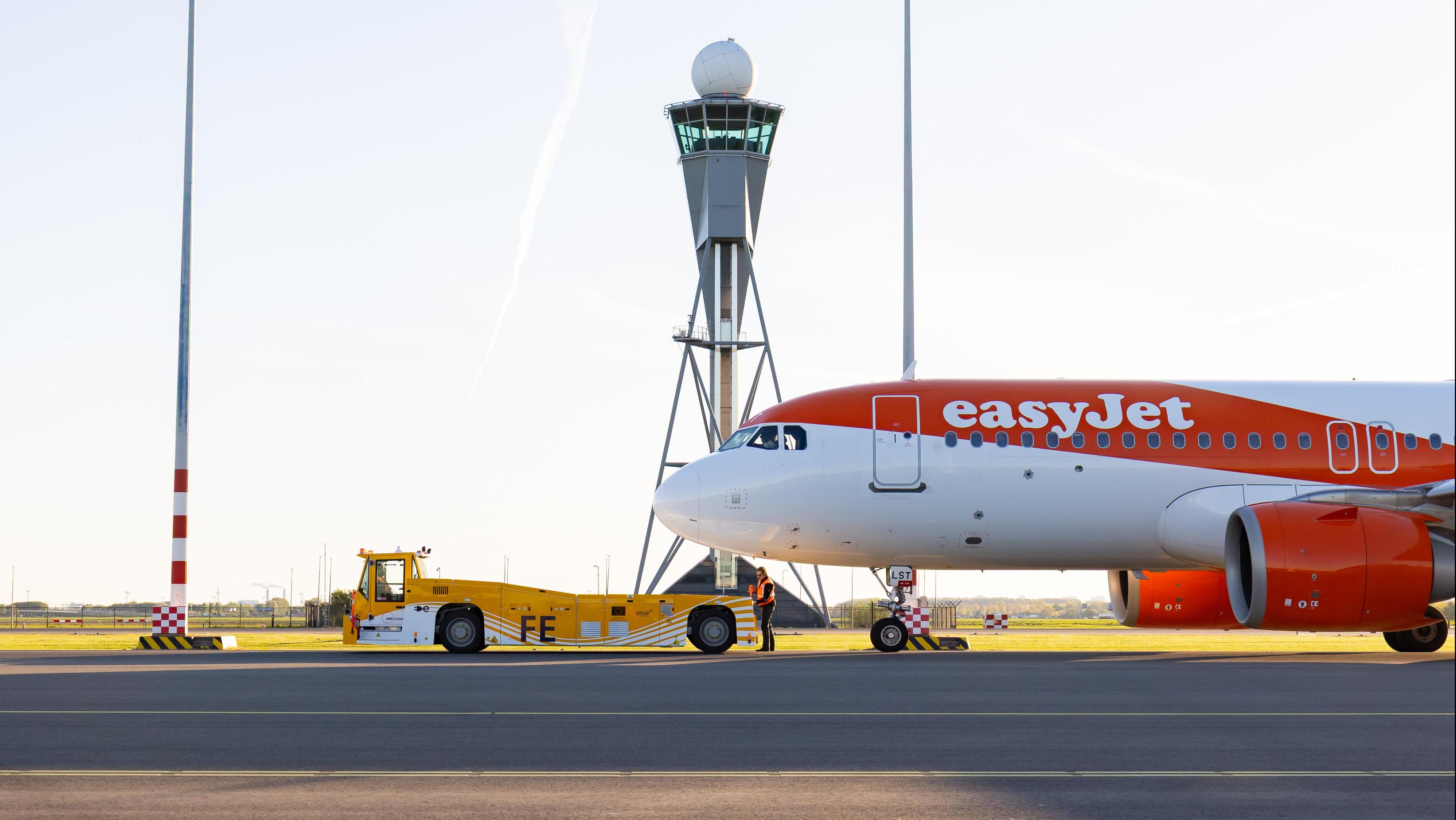
In another significant step towards a zero-emissions policy in the aviation industry, easyJet and Amsterdam Airport Schiphol have announced the expansion of the TaxiBot system, an innovative electric technology that allows aircraft to move between the terminal gate and the runway without running the aircraft's engines.
The system, which was successfully tested earlier this year, first operated on an easyJet passenger flight on April 30. Now, four of the company's Airbus A320neo aircraft are permanently equipped with the system, as part of a collaboration with Schiphol, Airbus and other companies taking part in the project.
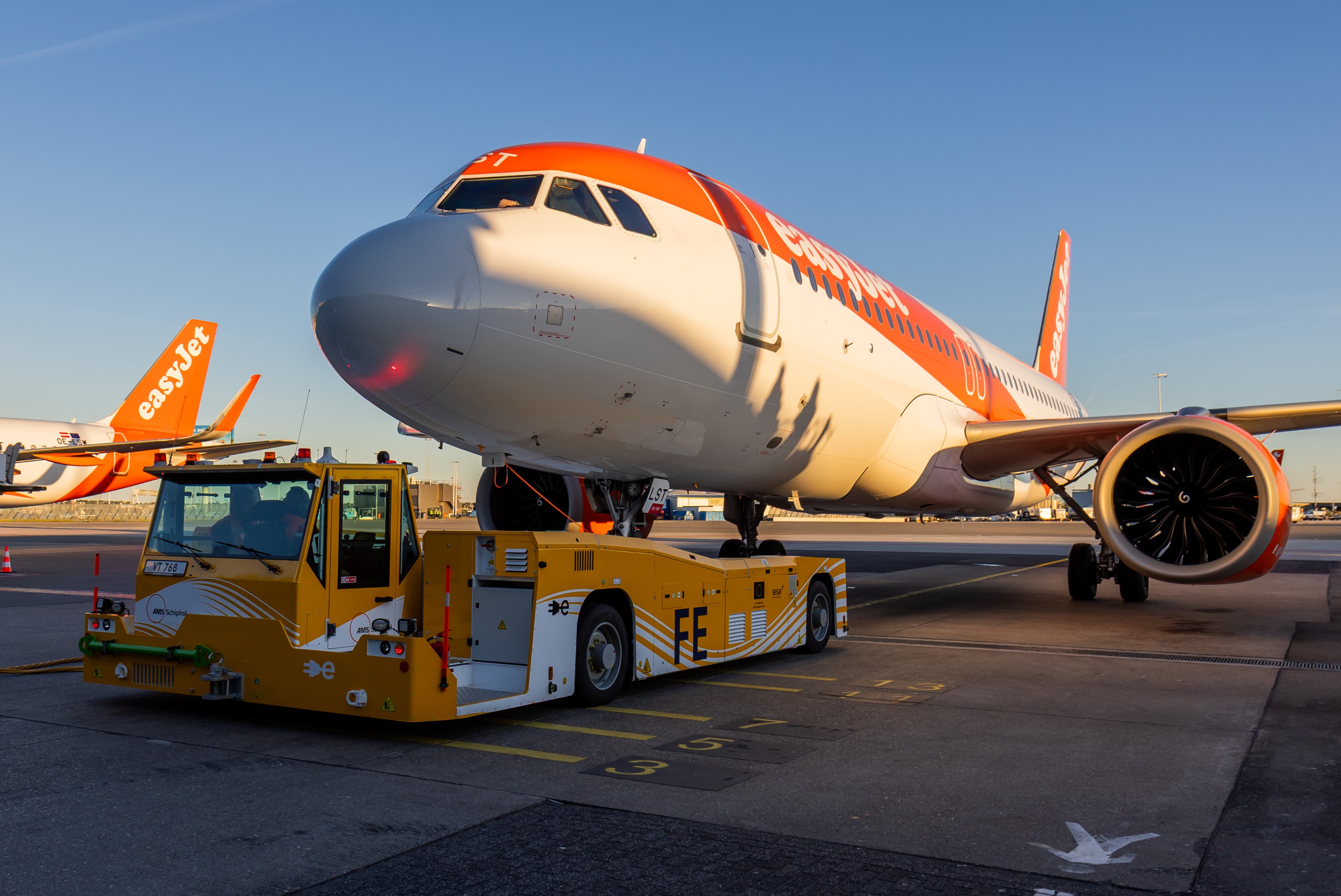 Photo: easyjet
TaxiBot is a semi-robotic vehicle that attaches to an aircraft and tows it along the ground using an electric motor, while the aircraft itself operates only on its auxiliary power unit (APU). According to easyJet, the system is expected to save an average of 95 kilograms of fuel and 299 kilograms of CO2 emissions per flight, along with significant noise reduction in parking areas and runways.
Schiphol estimates that a widespread deployment of the system could reduce fuel consumption by up to 65% during ground transportation and reduce emissions of other pollutants, such as nitrogen oxides and fine particulate matter.
The move is part of easyJet's sustainability goals, which aim to reduce its carbon footprint by 35% by 2035. Innovation and industry collaboration can reduce the environmental impact of aviation, both in the air and on the ground, explained the company's chief operating officer, David Morgan.