Santorini remains one of the most recognizable travel destinations in the world, and despite growing crowds, it continues to dominate global “bucket list” rankings from major travel authorities such as National Geographic Travel, Lonely Planet, and the Greek National Tourism Organization.
As for me, the second I discovered this beautiful Greek island perched on the edge of a volcanic caldera in the Aegean Sea, it became one of my favorite places to escape whenever I get the chance to fly there. The island has that special mix of dramatic landscape, whitewashed architecture, and deep blue water that make it one of the most Instagrammable destinations worldwide.
A Volcanic Island Shaped by History
One of the things that continues to impress me most is the island's unique crescent shape, the result of one of the largest volcanic eruptions in recorded history that reshaped it thousands of years ago. Today, that collapsed volcanic caldera defines its identity, sheer cliffs drop into the sea, with villages built along the rim.
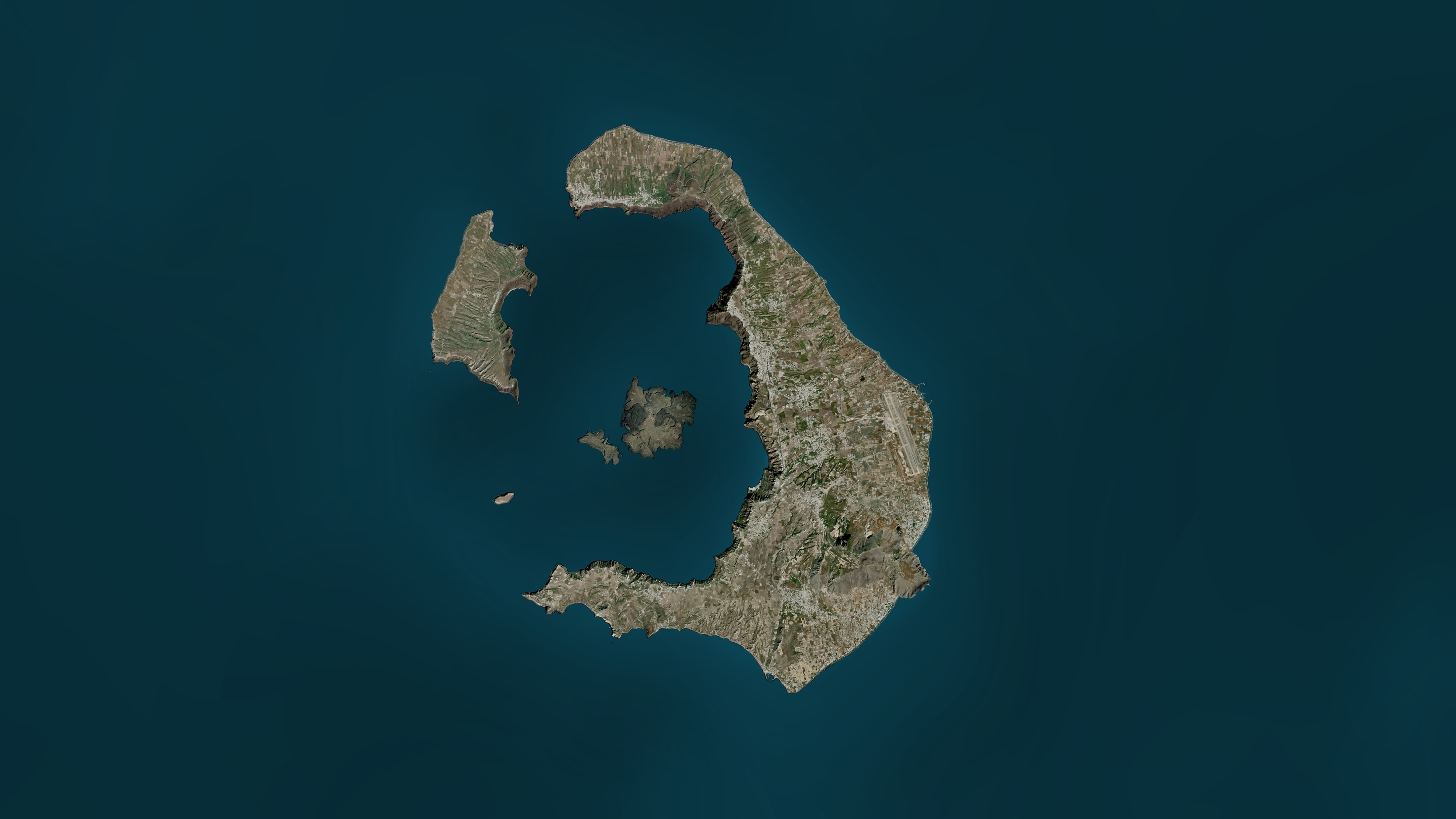 Photo: Shutterstock
This unique geology is what gives Santorini its signature views defined by endless horizons, layered cliffs, and sunsets that have become globally famous.
The Villages That Define the Island
The island’s most iconic settlements, including Oia, Fira, and Imerovigli, are built into the cliffside and are instantly recognizable from travel photography and films.
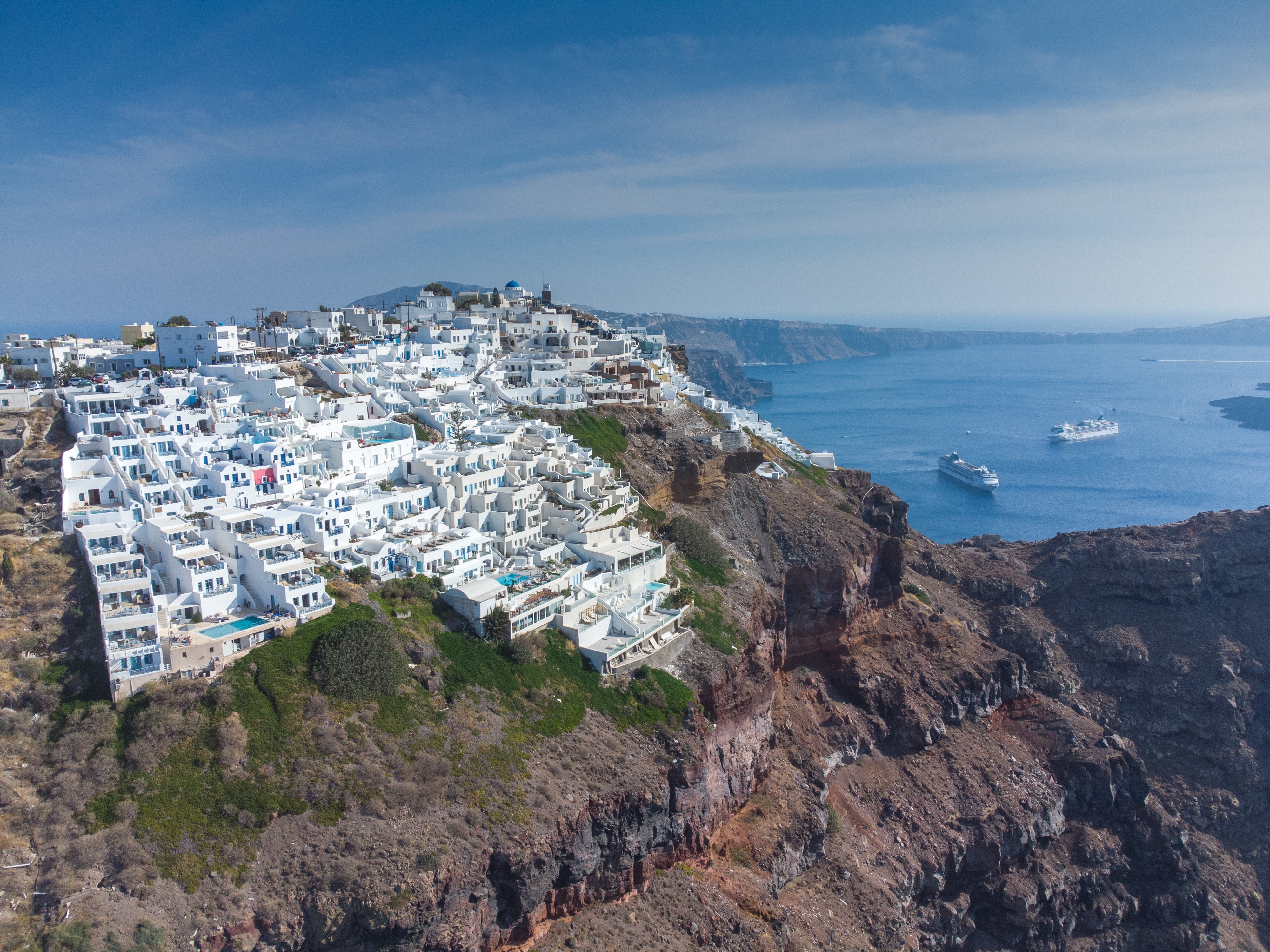 Imerovigli, Santorini. Photo: Shutterstock
Oia, in particular, is probably best known for offering one of the best sunset viewpoints in the world. As the sun dips into the Aegean, crowds gather along narrow terraces to watch the sky shift from gold to deep red over the caldera, and it's a feeling that can't be put into words. You simply must be there.
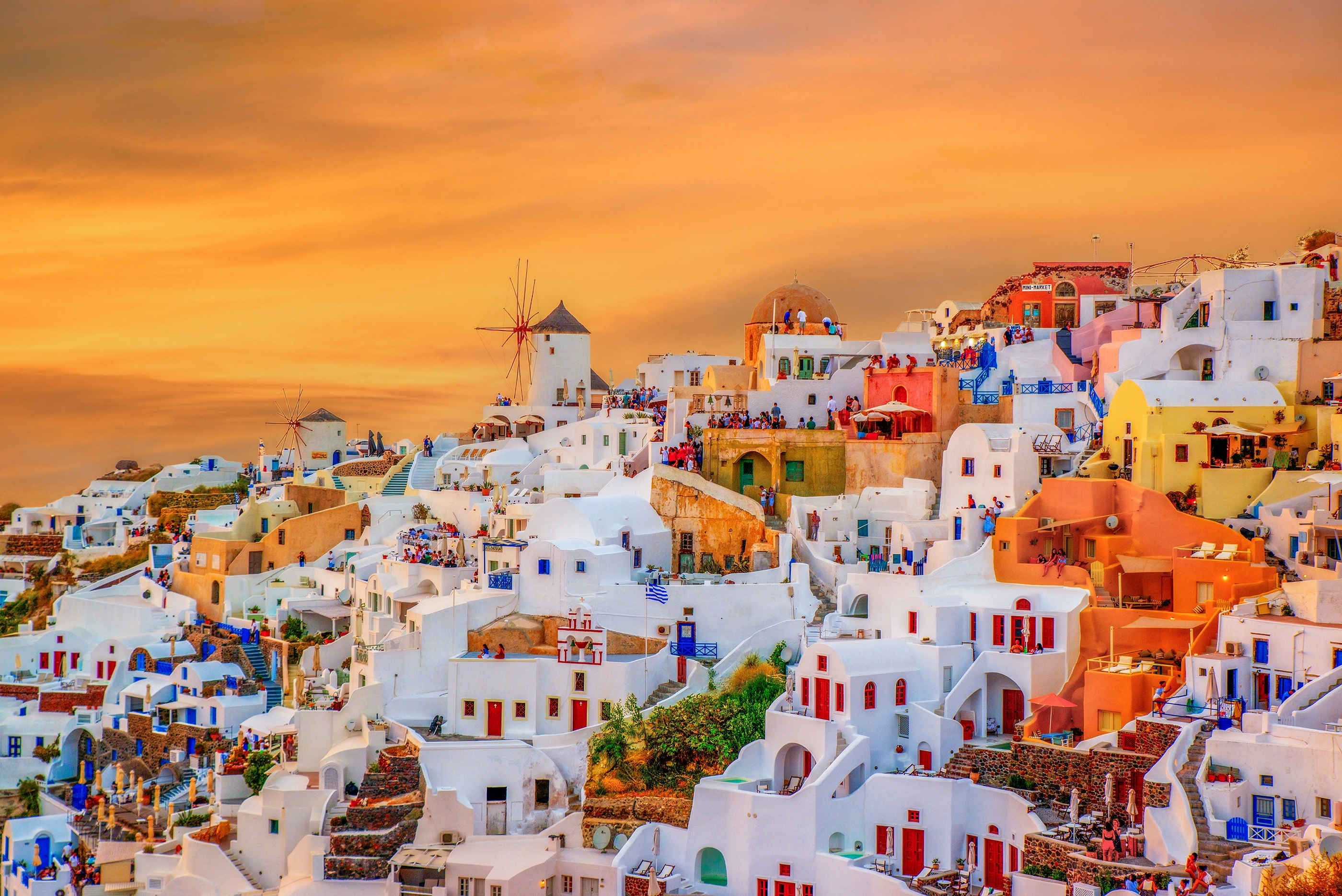 Oia at sunset. Photo: Shutterstock
Fira, the island’s capital, offers a more energetic atmosphere, with restaurants, boutiques, and cliffside bars overlooking the sea.
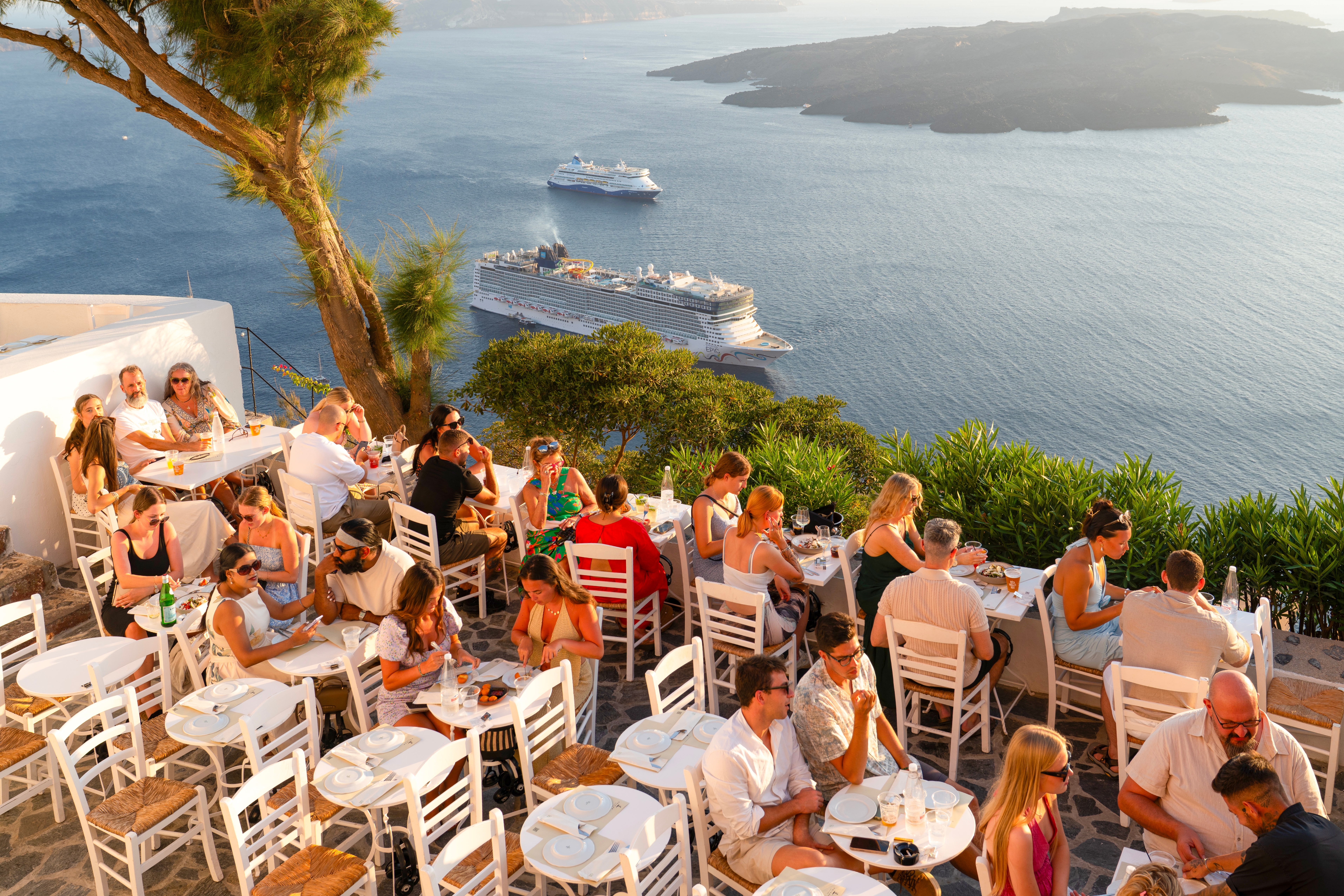 Fira, Santorini. Photo: Bilal Kocabas / Shutterstock.com
Beaches with a Volcanic Twist
Unlike typical Mediterranean islands, Santorini’s beaches are shaped by volcanic material rather than soft sand. This creates striking contrasts: black sand at Perissa and Perivolos, red cliffs at Red Beach, and rugged volcanic formations along the coastline.
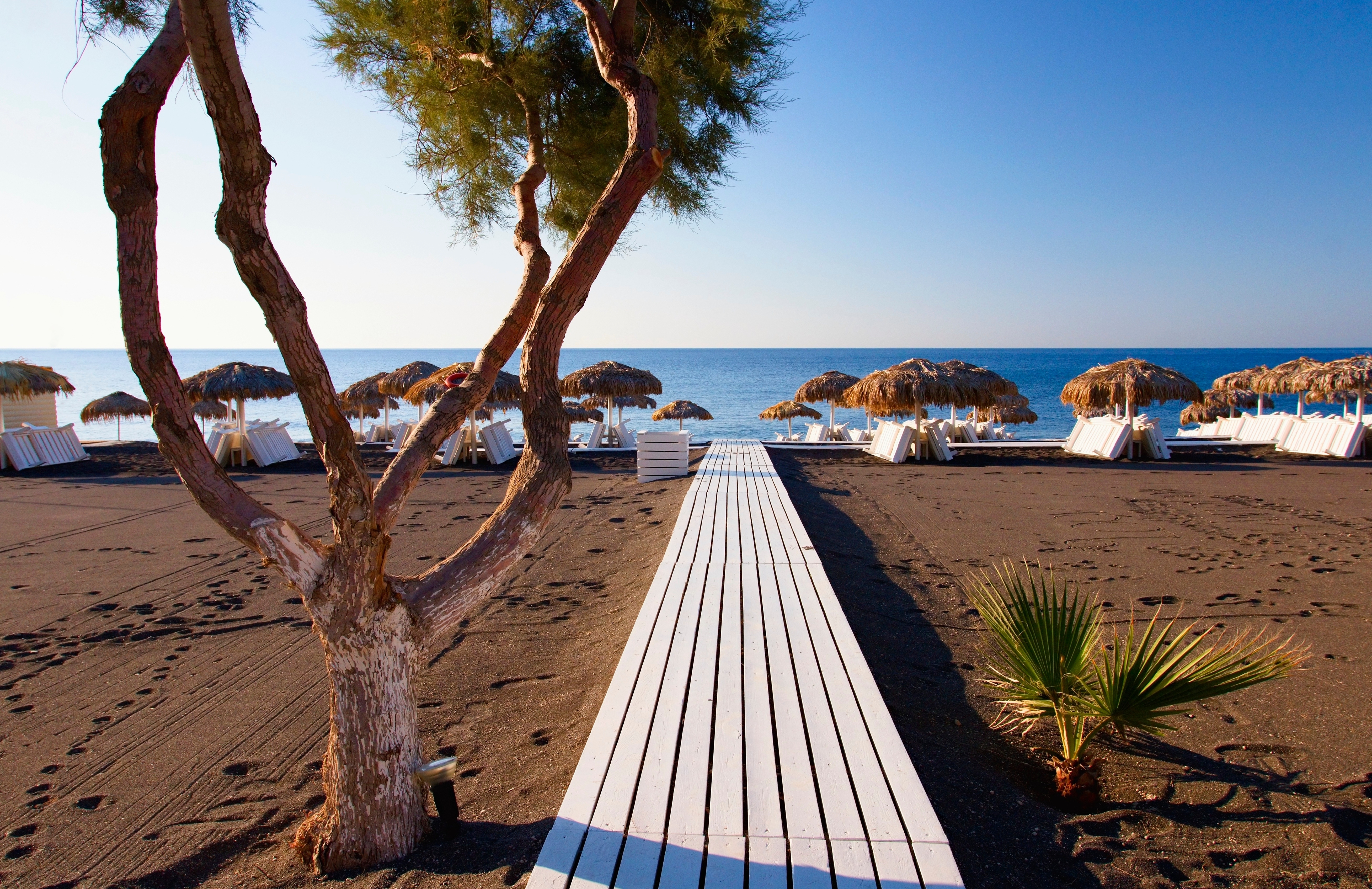 Photo: Shutterstock
These unique landscapes are frequently highlighted in international travel features as part of what sets Santorini apart from other Greek islands.
Luxury, Romance, and Slow Travel
Santorini has evolved into one of Europe’s leading luxury destinations with its high-end boutique hotels carved into cliffs, infinity pools overlooking the caldera, and private terraces have become defining features of the island’s hospitality scene. What more could you ask for, truly?
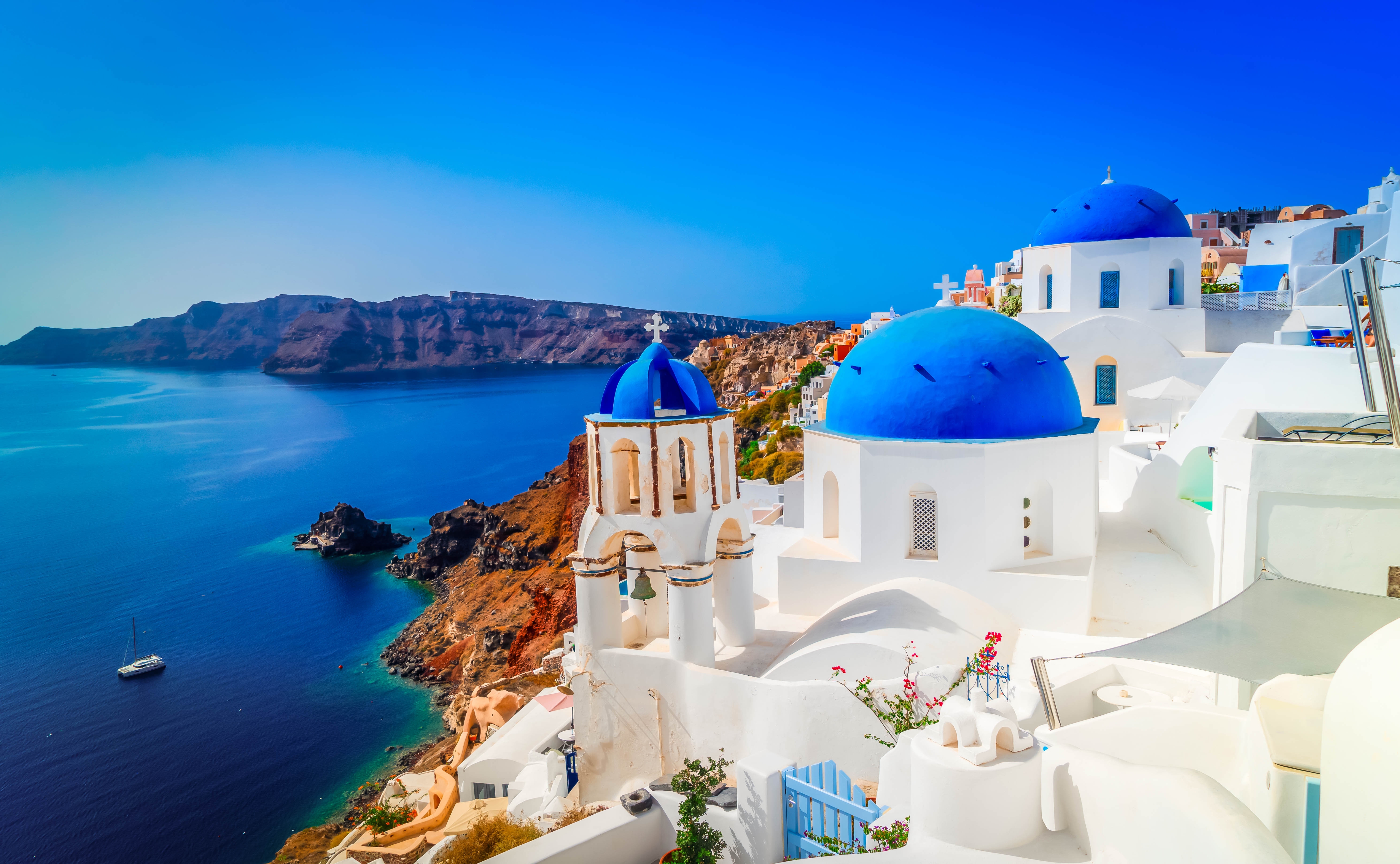 Santorini, Greece. Photo: Shutterstock
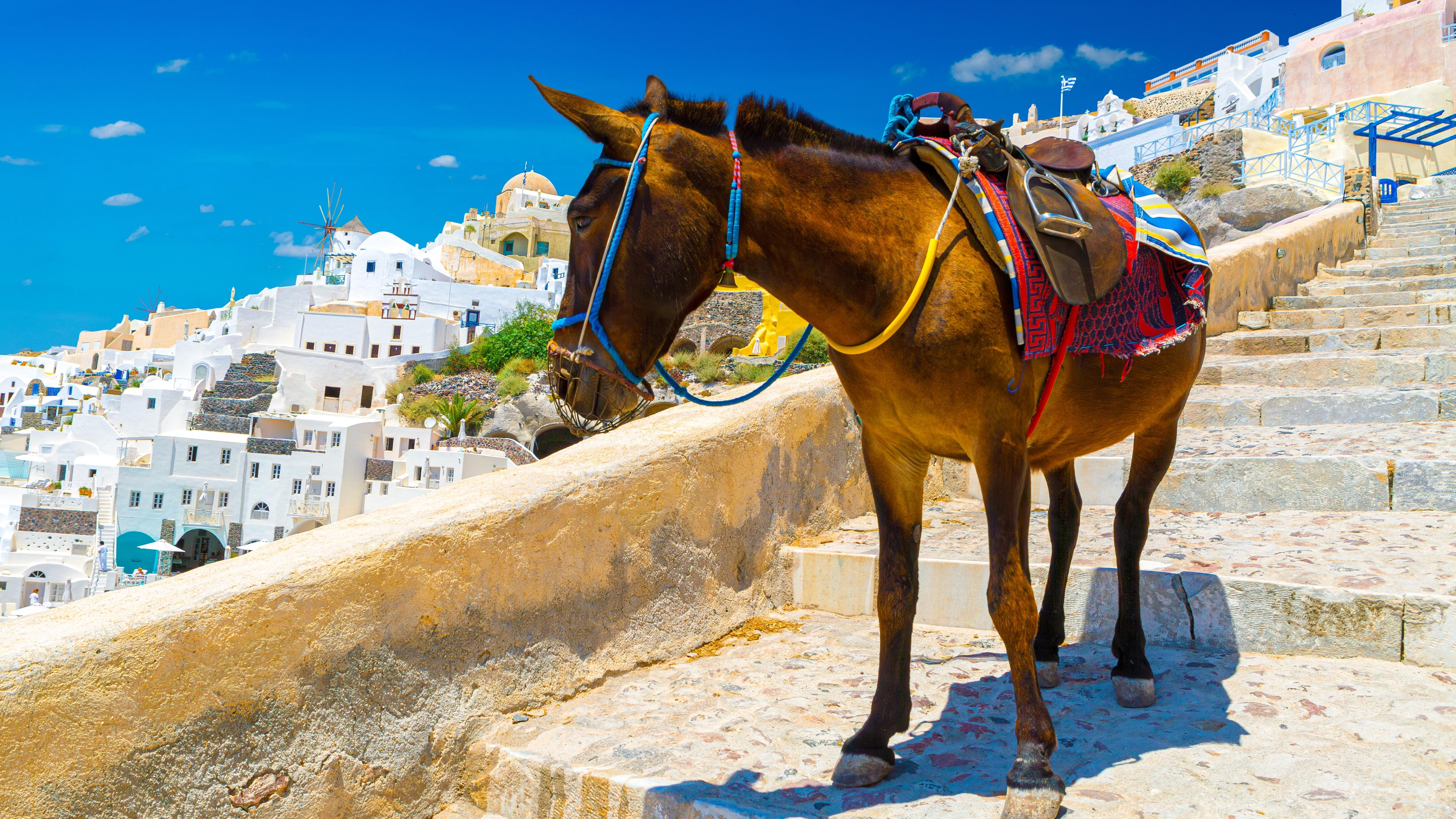
It is also widely considered one of the top global destinations for honeymoons and romantic travel, and for good reason. It's not only the general relaxed vibe and gorgeous views everywhere you look, but also the little gems like the idea of a donkey taxi. Even though I did not see many adults riding them, the kids certainly enjoyed the ride!
Food and Wine with a View
The island’s volcanic soil produces distinctive wines, particularly Assyrtiko, which has become one of Greece’s most celebrated white wine varieties.
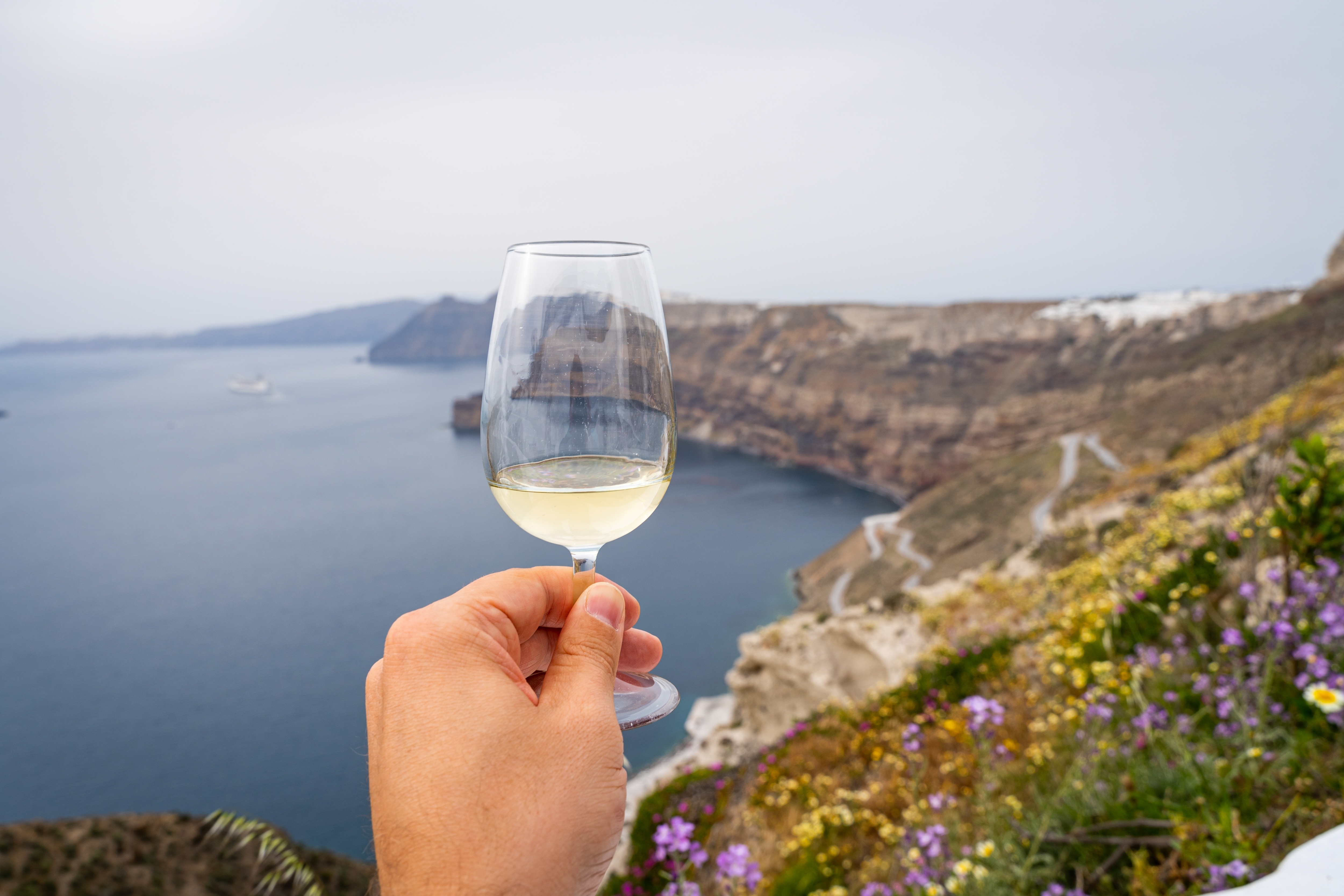 Photo: Shutterstock
Dining in Santorini is less about quantity and more about atmosphere, cliffside restaurants serve Mediterranean dishes paired with panoramic sea views, often timed precisely for sunset.
The Best Time to Visit
The best times to visit Santorini is late spring (May–June) or early autumn (September–October), if you are looking for warm weather while avoiding the peak summer congestion of July and August.
Despite increasing visitor numbers and rising prices, Santorini continues to hold its place as Greece’s most iconic island. Its combination of geological drama, architectural identity, and global recognition ensures it remains a benchmark destination in European travel.
For many travelers, myself included, Santorini is not just a Greek island, but the Greek island experience.