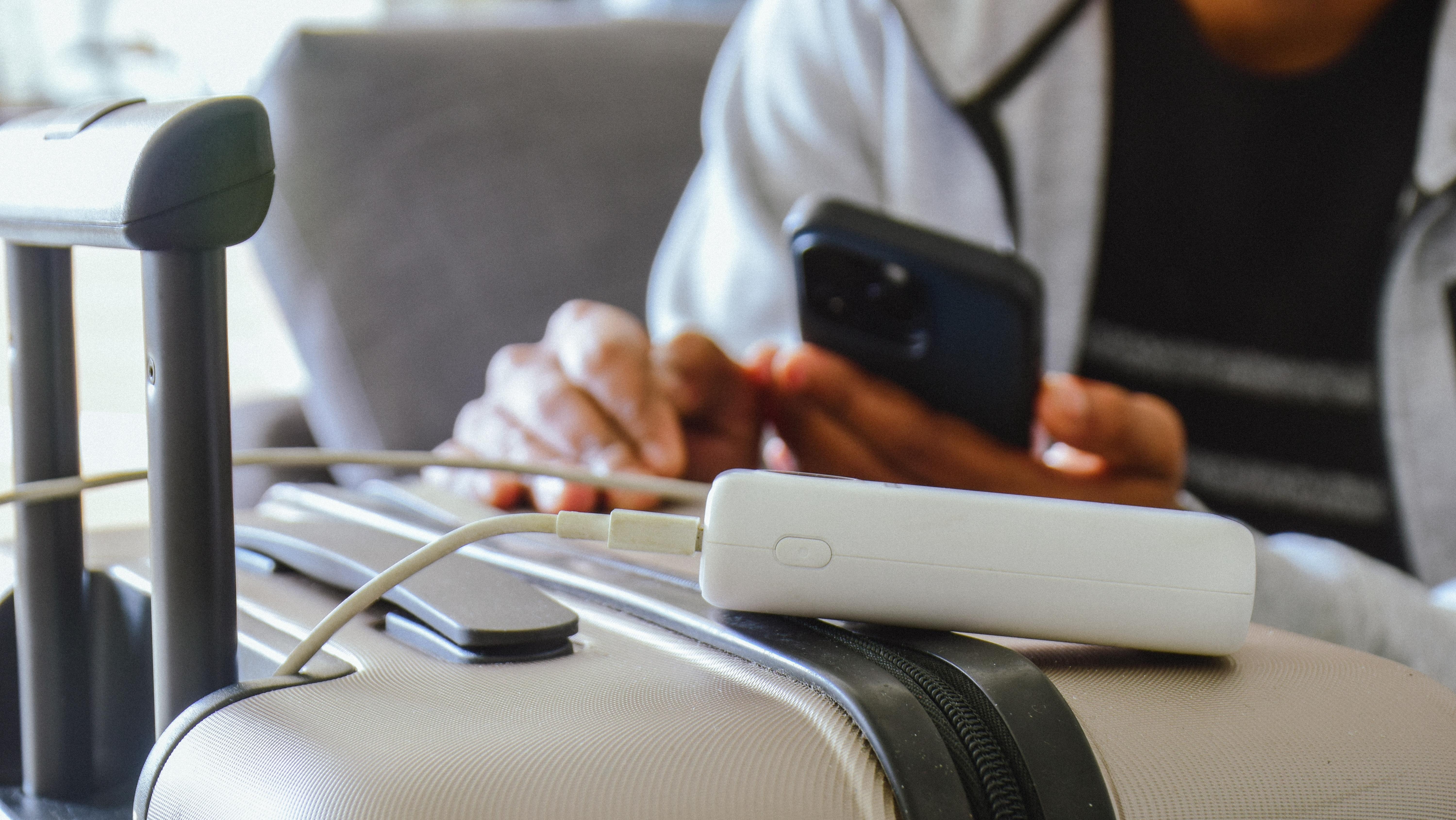
Thailand's Government Public Relations Department has announced updated rules for passengers traveling with power banks on flights as part of efforts to reduce the risk of lithium battery fires.
Under the new regulations, travelers may carry a maximum of two power banks in their carry-on baggage, with each device limited to 100Wh or 20,000mAh.
"Each power bank exceeding 100Wh but not exceeding 160Wh requires prior approval from the air operator or the flight operator," authorities further informed the public.
Power banks are not permitted in checked luggage and cannot be used during flights, charged from any power source on board of the aircraft, used to charge mobile phones or any other electronic device, or stored in the overhead compartments.
The new rules say power banks should be kept in the seat pocket, under the seat in front, carried throughout the journey, or "stored in an area designated by the airline."
Authorities further added that power banks with no indicated capacity, or whose capacity cannot be verified, are not allowed on board.
The government also offered tips on how to safely protect power banks from short circuits when not in use, either by keeping them in their original packaging or by placing each power bank separately "in a plastic bag or protective pouch."
Authorities said the measures align with international aviation safety standards and are intended to strengthen onboard safety amid growing concerns about battery-related incidents on aircraft.
Last December, Qantas significantly tightened its safety procedures on its flights, now allowing passengers to bring up to two portable chargers (not exceeding 160 watts per hour) on board and not use them during the flight. Before it, airline giant Emirates completely banned the use of portable chargers from October 2025.
Restrictions have been implemented or expanded in South Korea, Taiwan, Thailand and Singapore, with carriers such as Vietnam Airlines and VietJet now banning the use of backup batteries during flights. Other carriers that already ban the use of backup batteries in the cabin include Singapore Airlines, Scoot, EVA Air, Thai Airways, AirAsia, Starlux, Tigerair Taiwan, China Airlines and Air Busan .
In China, procedures have been tightened on domestic flights, with backup batteries only permitted if they bear the Chinese regulator's 3C standard mark. Batteries without the mark will be confiscated or sent to the passenger for an additional fee.