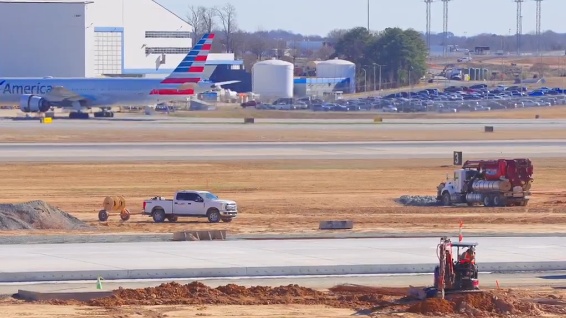
Charlotte Douglas International Airport (CLT) is making visible progress on its long-awaited Fourth Parallel Runway, with construction work steadily advancing toward a planned opening in fall 2027.
Reducing Congestion, Improving Traffic Flow
The 10,000-foot runway, part of a wider billion-dollar airfield expansion, is designed to significantly increase capacity at one of the busiest airports in the United States. The project also includes new taxiways, drainage systems, electrical infrastructure and safety upgrades across the airfield.
Recent updates from the airport show crews actively placing concrete, installing underground drainage networks and expanding supporting infrastructure around the site. The work is part of a broader effort to modernize the airfield and improve efficiency for arrivals and departures.
WATCH VIDEO (Source: CLT)
The new runway will sit west of the existing parallel runway system and will operate alongside Charlotte’s current three-runway configuration. Once complete, it will help reduce congestion and improve traffic flow, especially during peak travel periods.
Beyond the runway itself, the project also includes a new airport fire station and changes to runway numbering across the airfield. These adjustments are required to align with aviation standards and ensure safe navigation for pilots as the airport expands.
Officials have previously described the Fourth Parallel Runway as a key part of CLT’s long-term growth strategy. The airport has experienced steady increases in passenger traffic in recent years, making additional capacity a central priority.
Construction is expected to continue through 2026, with paving and finishing work taking place before testing and certification phases begin ahead of its 2027 opening.
Airport officials say the project remains on schedule and is one of the most significant infrastructure investments currently underway in the United States aviation sector.
Recently, CLT announced it was evaluating a biometric screening system expected to become a permanent feature of its security checkpoints.
Together with the Transportation Security Administration, the airport installed eight e-Gates at Checkpoint 2 that use facial recognition technology to verify the identities of TSA PreCheck and TSA PreCheck Touchless ID passengers.