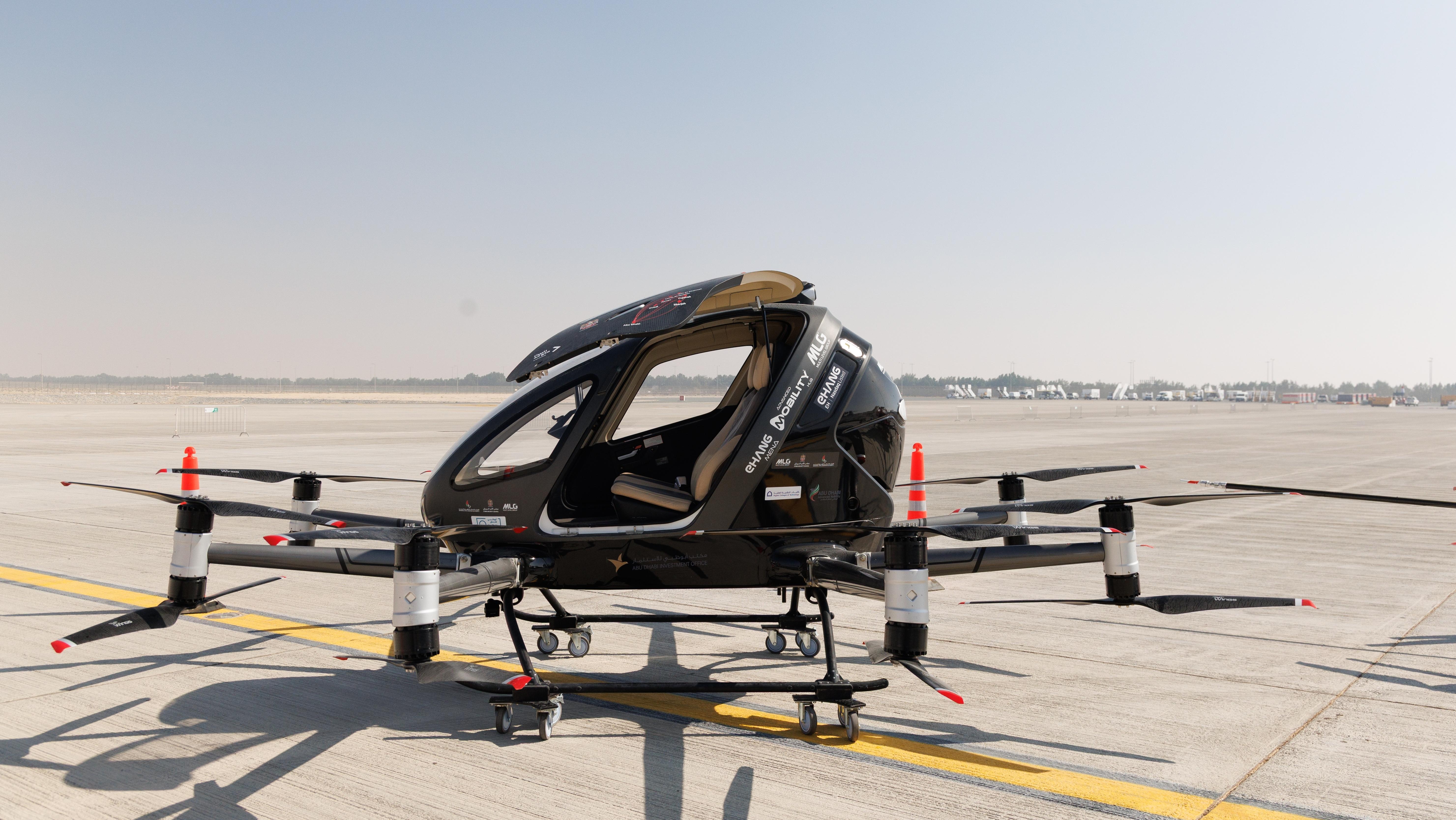
The future of urban air travel has taken another step forward as the U.S. Department of Transportation and the Federal Aviation Administration (FAA) break ground on a new research facility designed to support the safe integration of next-generation air taxis into American skies.
The new Vertical Take-Off and Landing Procedures and Analysis Range (V-PAR) is being built at the Mike Monroney Aeronautical Center in Oklahoma City. The approximately $8.3 million facility will serve as a dedicated testing and research site for advanced air mobility (AAM) aircraft, including electric and hybrid-electric vertical take-off and landing (eVTOL) aircraft.
Although commercial air taxi services are not yet operating on a large scale in the United States, several manufacturers are developing aircraft designed to carry passengers on short urban and regional routes. Companies including Joby Aviation, Archer Aviation and Beta Technologies are working toward commercial certification in the coming years.
The FAA says the new facility will play a key role in ensuring these aircraft can operate safely alongside conventional airplanes and helicopters.
"The V-PAR is a critical step in helping the FAA better understand how to integrate advanced air mobility aircraft safely into the National Airspace System," said Department of Transportation Deputy Secretary Steven Bradbury.
"As advanced air mobility technologies continue to evolve, the FAA must ensure they meet the same high safety standards expected throughout the National Airspace System," added FAA Deputy Administrator Chris Rocheleau.
The research center will feature a vertiport, a covered hangar and a control building where researchers will study how these new aircraft interact with airports and surrounding environments. Areas of research will include wake turbulence, rotor downwash, radio-frequency interference and day-to-day vertiport operations.
Advanced air mobility is widely viewed as one of aviation's next major developments. The aircraft are expected to provide short-distance transport between airports and city centres, connect suburban communities, and improve regional mobility while producing fewer emissions than conventional helicopters.
While widespread passenger operations are still several years away, projects such as V-PAR are laying the groundwork for the certification, infrastructure and operational procedures that will eventually allow air taxis to enter commercial service safely.
The facility is expected to become one of the FAA's primary hubs for research, testing and training as the agency prepares for the next generation of passenger aviation.