I still have the special glasses and the anniversary paper money they printed for the occasion. I remember my heart pounding as darkness slowly replaced daylight and thousands of people around me whistled and cheered.
The Moon completely covered the Sun during the last total solar eclipse of the 20th century on continental Europe. The year was 1999, the date was August 11, and I still remember it like it was yesterday.
This summer, millions of people across Europe may get the chance to (re)live that feeling as a total solar eclipse occurs on August 12. And if there's one country that stands out for the occasion, it's Spain, offering some of the best viewing conditions in the world.
While northern Spain lies directly within the path of totality, several other destinations will experience spectacular partial eclipses, so you cannot really go wrong no matter where you plan to go.
Bilbao: Watch the Eclipse from a Mountain Top
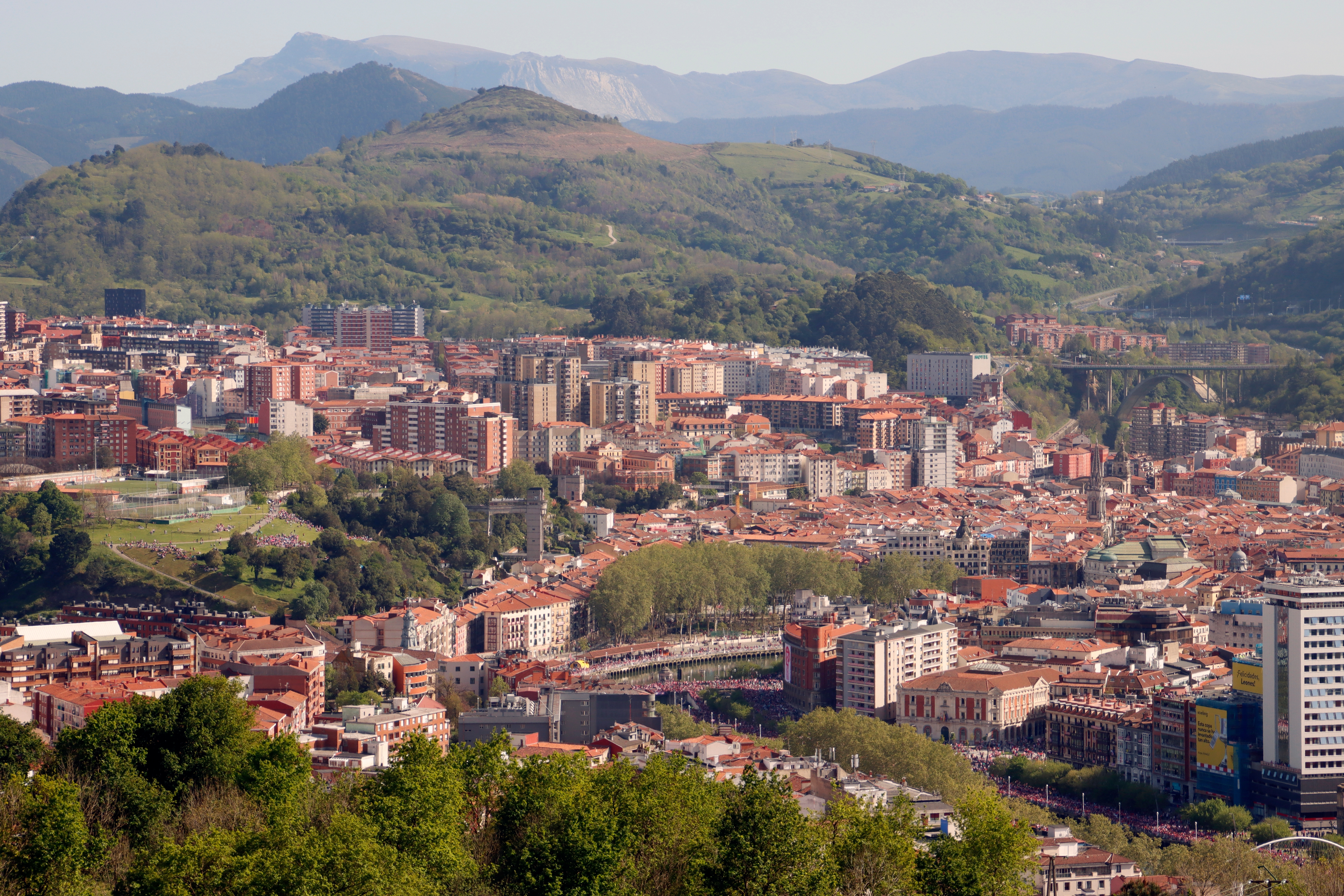 View of Bilbao from Mount Artxanda. Photo: Shutterstock
Bilbao offers one of the best urban settings to experience the eclipse, combining a location within the path of totality with world-class attractions. Beyond the celestial spectacle, you can explore the iconic Guggenheim Museum Bilbao (possibly the next wonder of the world), stroll along the Nervión River, and enjoy the city's renowned pintxos scene in the Old Town.
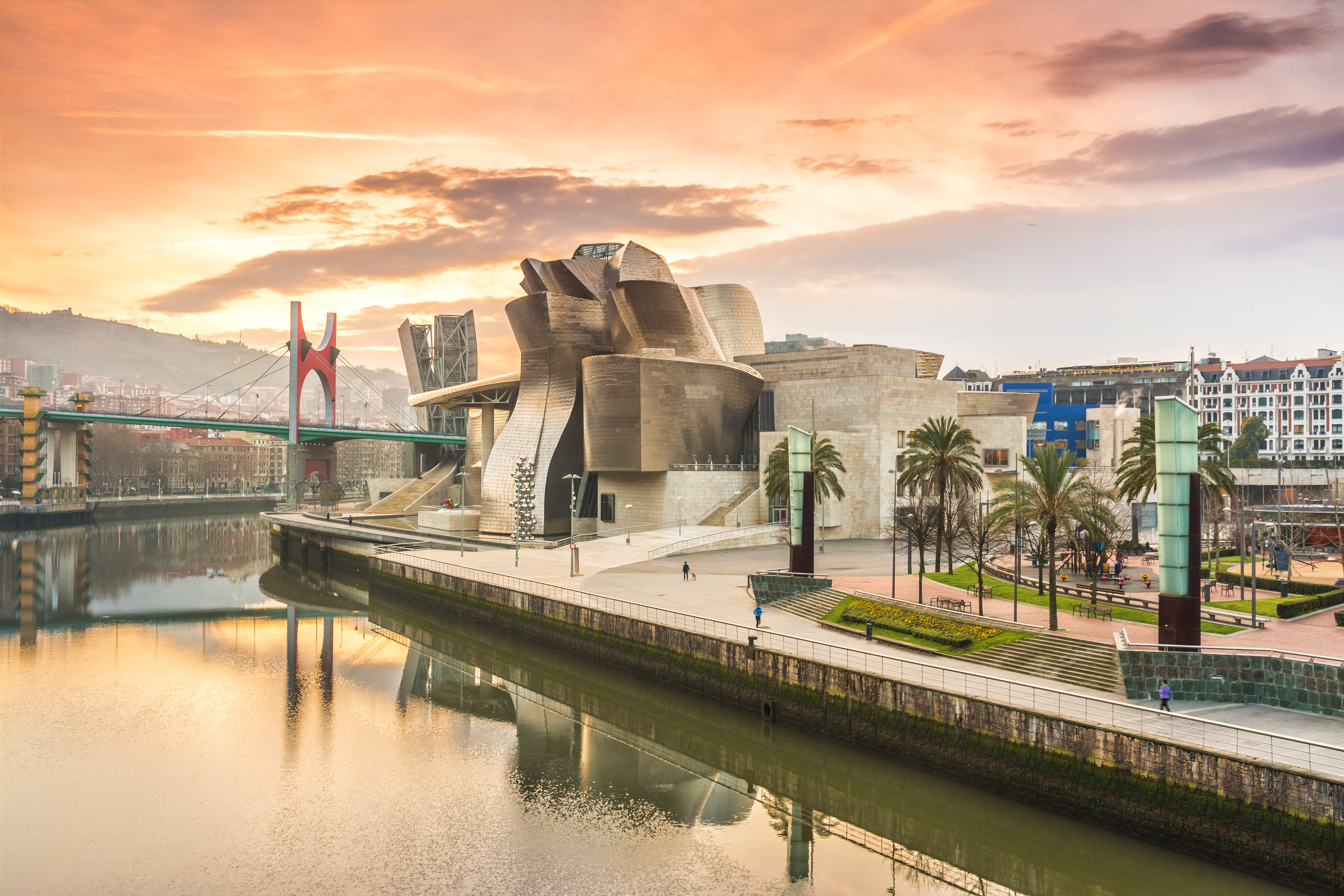 Guggenheim Museum Bilbao. Photo: Shutterstock
 For eclipse viewing, consider elevated spots such as Mount Artxanda or the surrounding hills. If you want to explore some more, take a day trip to the dramatic coastline of Gaztelugatxe or relax on the nearby beaches of Getxo. After sunset, celebrate the moment with Basque specialties and a glass of local txakoli wine.
A Coruña: Eclipse from the Tower of Hercules
Sitting directly within the path of the eclipse, the city is expected to offer one of the most dramatic eclipse settings in the country.
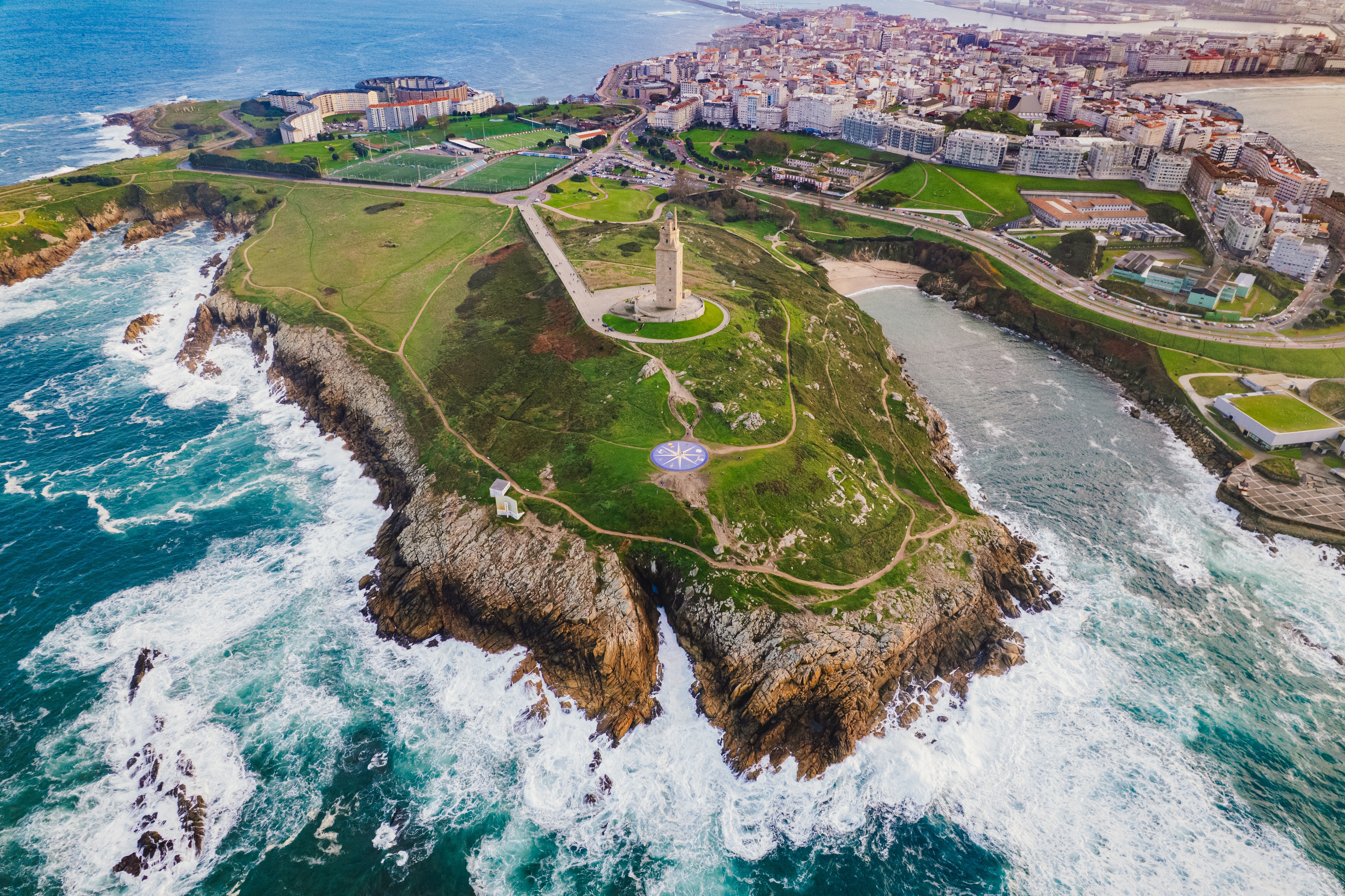 Hercules' Tower, A Coruna, Spain. Photo: Shutterstock
Watch the sky darken over the Atlantic Ocean from landmarks such as the Tower of Hercules, the world's oldest functioning lighthouse, or stroll along one of Europe's longest waterfront promenades. After the eclipse, explore the charming Old Town, sample fresh Galician food, and raise a glass of local Albariño wine. Nearby, Playa de Riazor and Playa del Orzán, the Aquarium Finisterrae, and the interactive science museum Domus will keep you entertained the rest of your stay.
Malaga: Watch the Eclipse from a Sunset Cruise
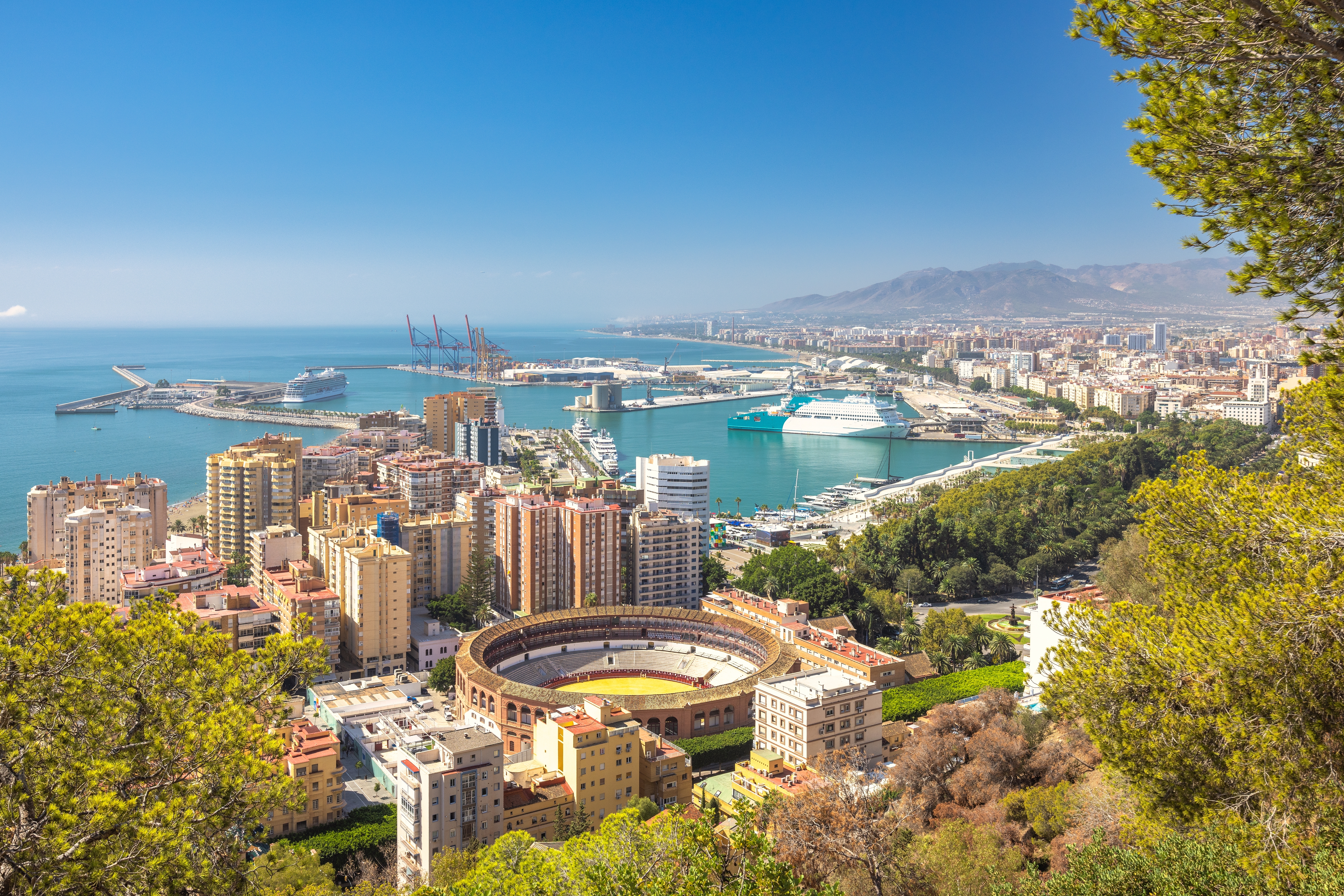 Malaga, Spain. Shutetrstock
For the best eclipse views around Málaga, choose hilltop viewpoints around Gibralfaro Castle, west-facing rooftop terraces, or even a sunset catamaran cruise across Málaga Bay.
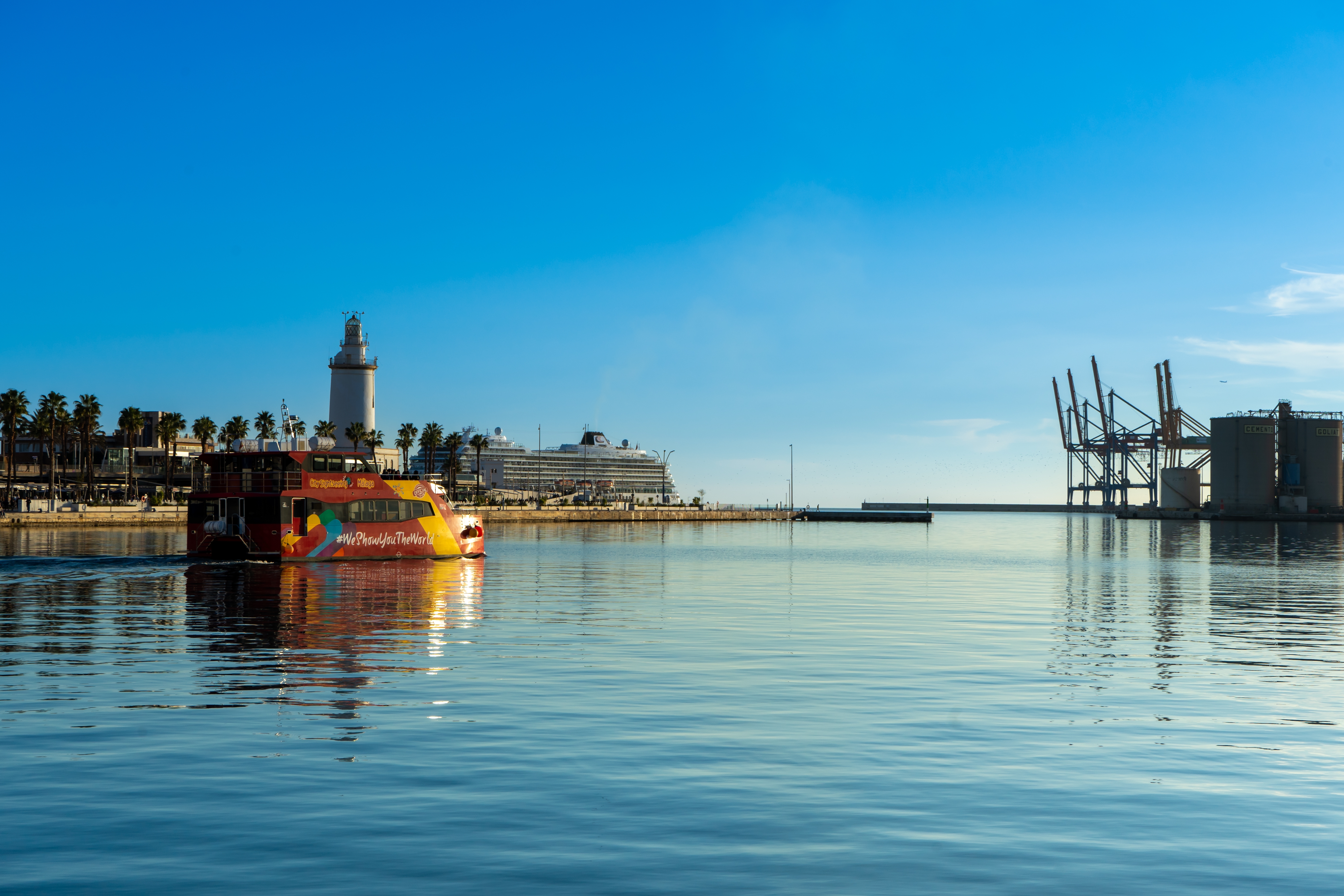 Catamaran cruise in Malaga. Photo: Vitalii Biliak / Shutterstock.com
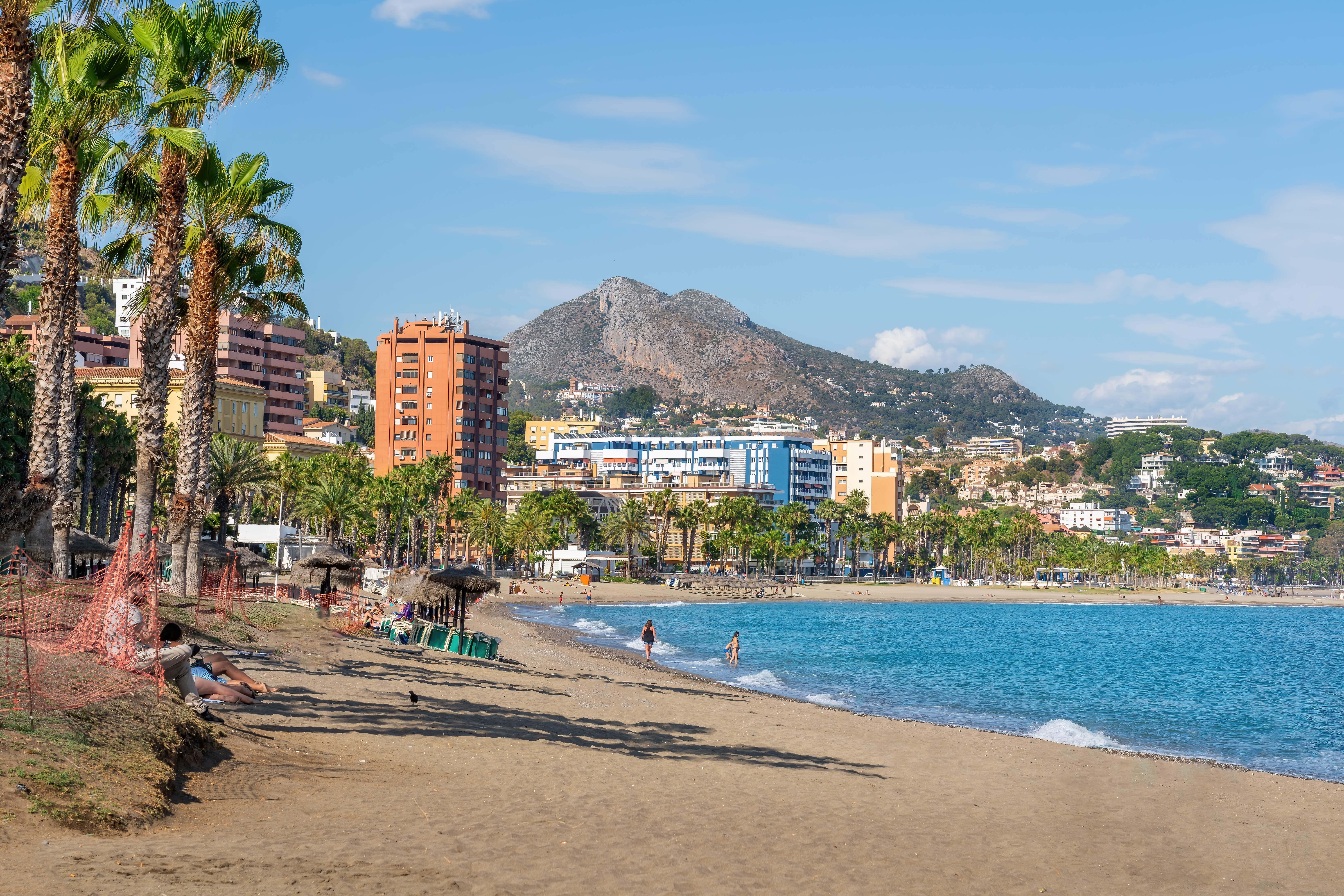 Playa de la Malagueta. Photo: Shutterstock
Malaga also has excellent beaches like Playa de La Malagueta, the city's most famous beach with plenty of restaurants and beach bars (chiringuitos), Playa de Pedregalejo, a local favorite known for its relaxed atmosphere, and Playa de Burriana, one of the Costa del Sol's top beaches with crystal-clear water, water sports, and excellent dining options.
Zaragoza: Watch the Sun Disappear from a Village Frozen in Time
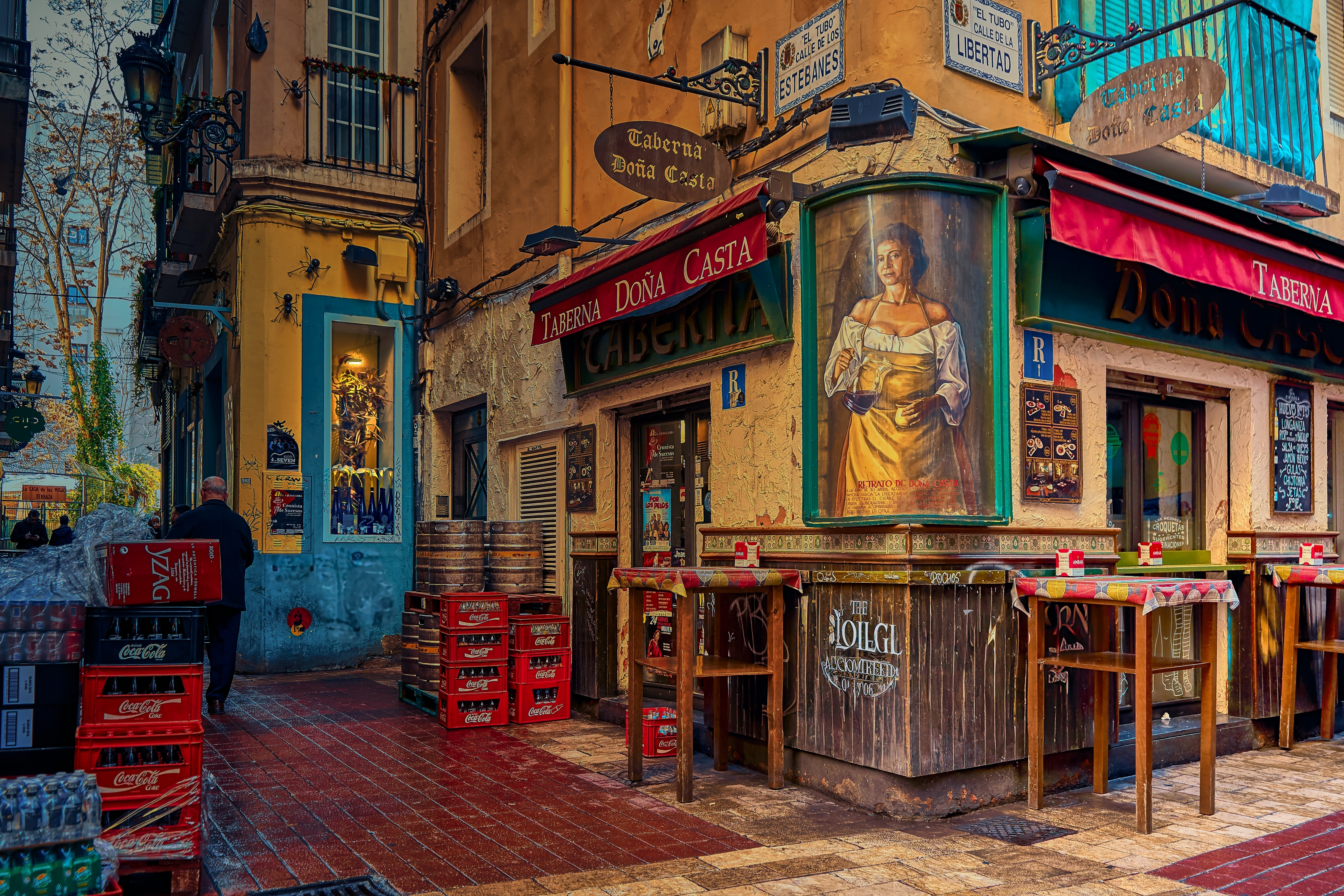 Zaragoza. Photo: jose luis Zueras / Shutterstock.com
 Located along the Ebro River, the city offers a good combination of easy transport connections and a rich cultural scene. You can walk through the historic streets, explore traditional tapas bars and local markets, and take day trips into Aragón’s countryside.
For eclipse viewing, smaller towns outside the city may offer even better conditions thanks to wider open spaces and reduced light pollution.
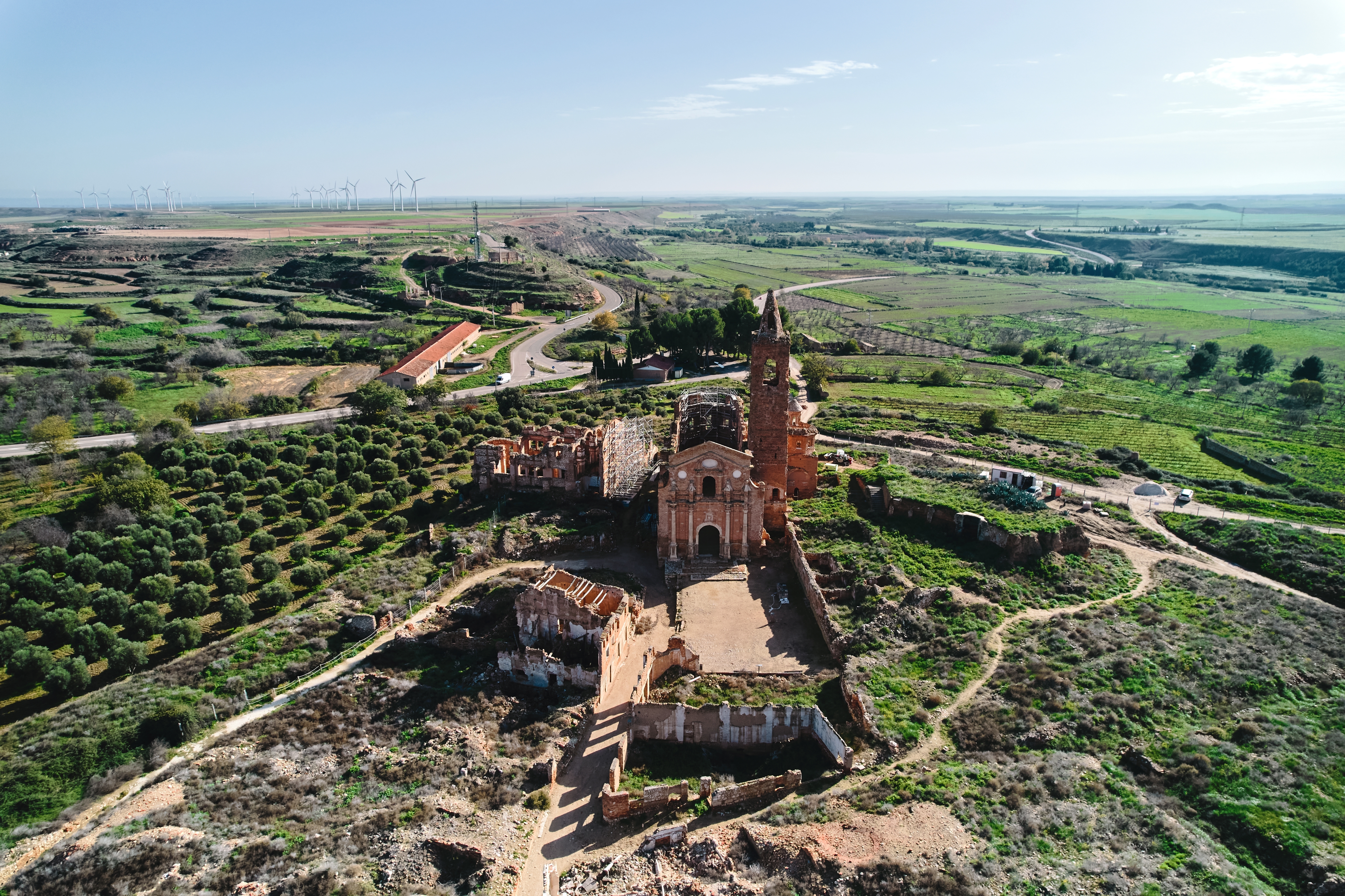 Belchite. Photo: Shutterstock
Belchite is a historic village surrounded by wide plains and rural landscapes where the ruins of the old village are frozen in time for over 80 years. Fuendetodos sits in the open countryside, while Cariñena is best-known for its wine tradition.
At night, go to Plaza del Pilar, one of Spain's most iconic squares, and enjoy succulent Ternasco de Aragón (roasted or wood-grilled lamb with potatoes) and a cold beer or a glass of sangria. And, of course, take a funny picture at the giant Globe in the middle of the square.
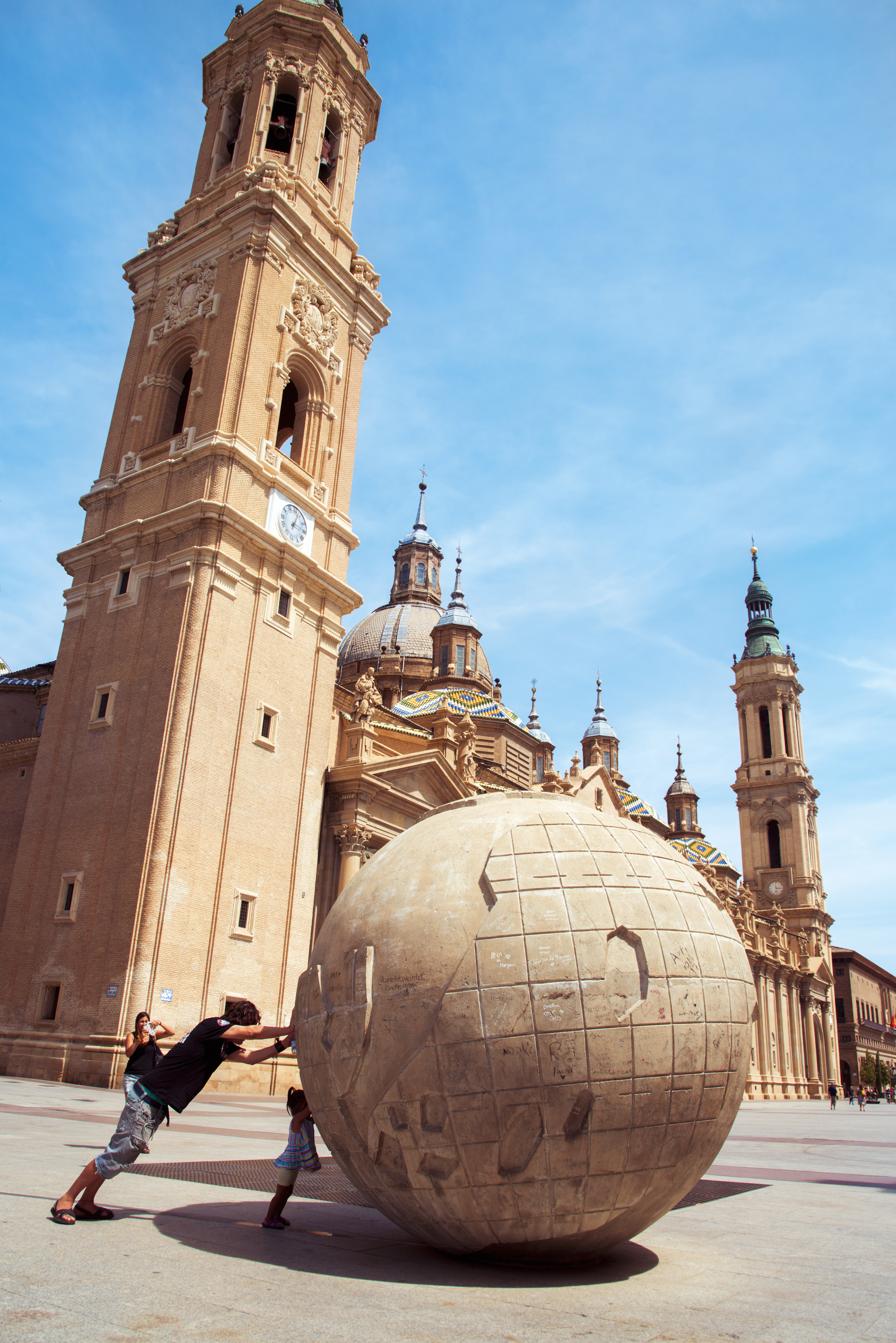 Plaza del Pilar. Photo: nito / Shutterstock.com
North of Madrid: Watch the Eclipse from a Hot Air Balloon
Another excellent option is the area north of Madrid, where you can combine the eclipse with visits to some of central Spain’s most impressive historic cities.
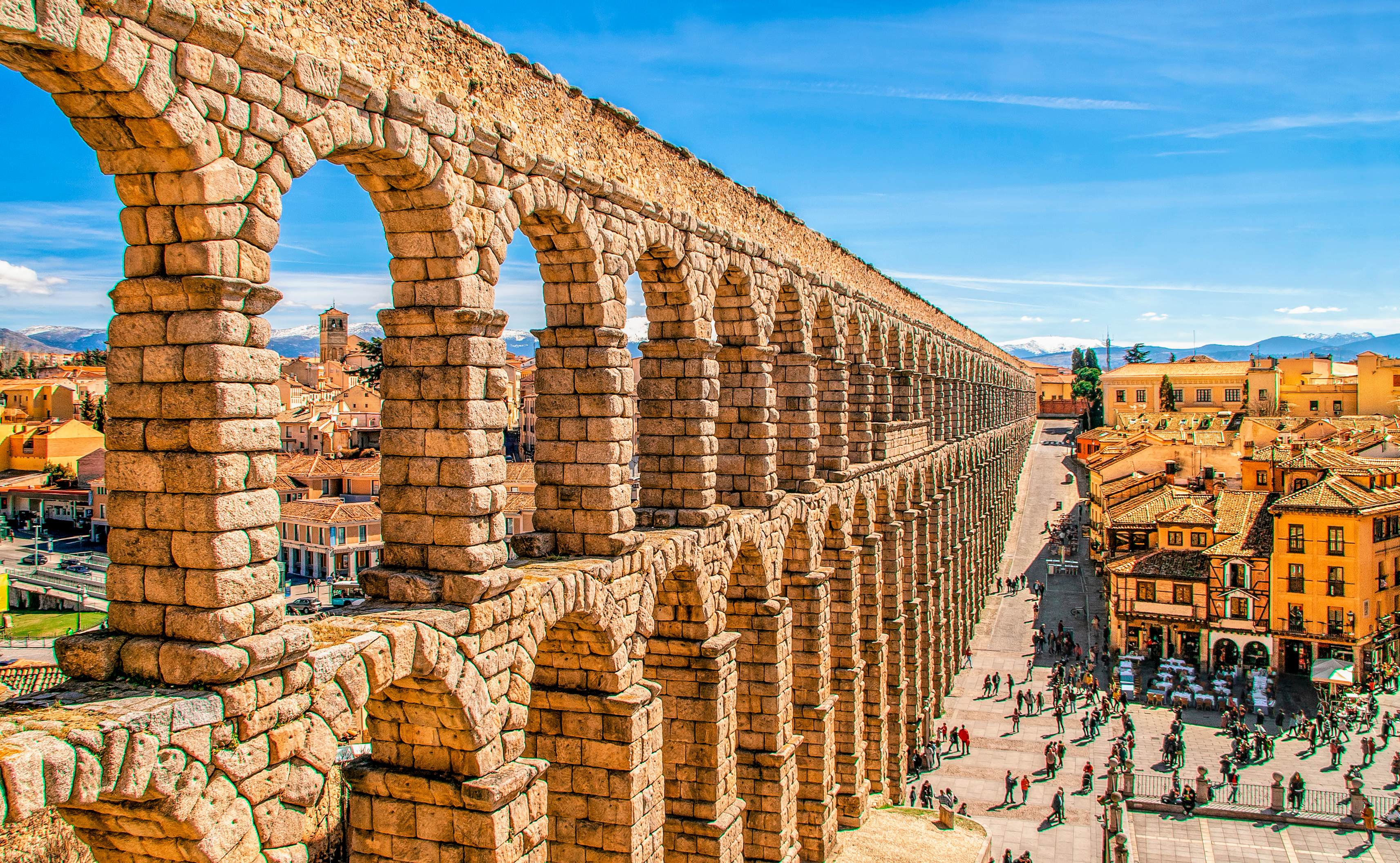 Zegovia. Photo: Shutterstock
Segovia is famous for its ancient Roman aqueduct, medieval streets, and the fairy-tale-like Alcázar castle, which you can admire from a hot-air balloon for a truly memorable backdrop to an eclipse experience. Imagine watching daylight slowly fade while floating above Segovia's Roman aqueduct with a glass of cava in hand. (45-60 minutes for €120 on August 12).
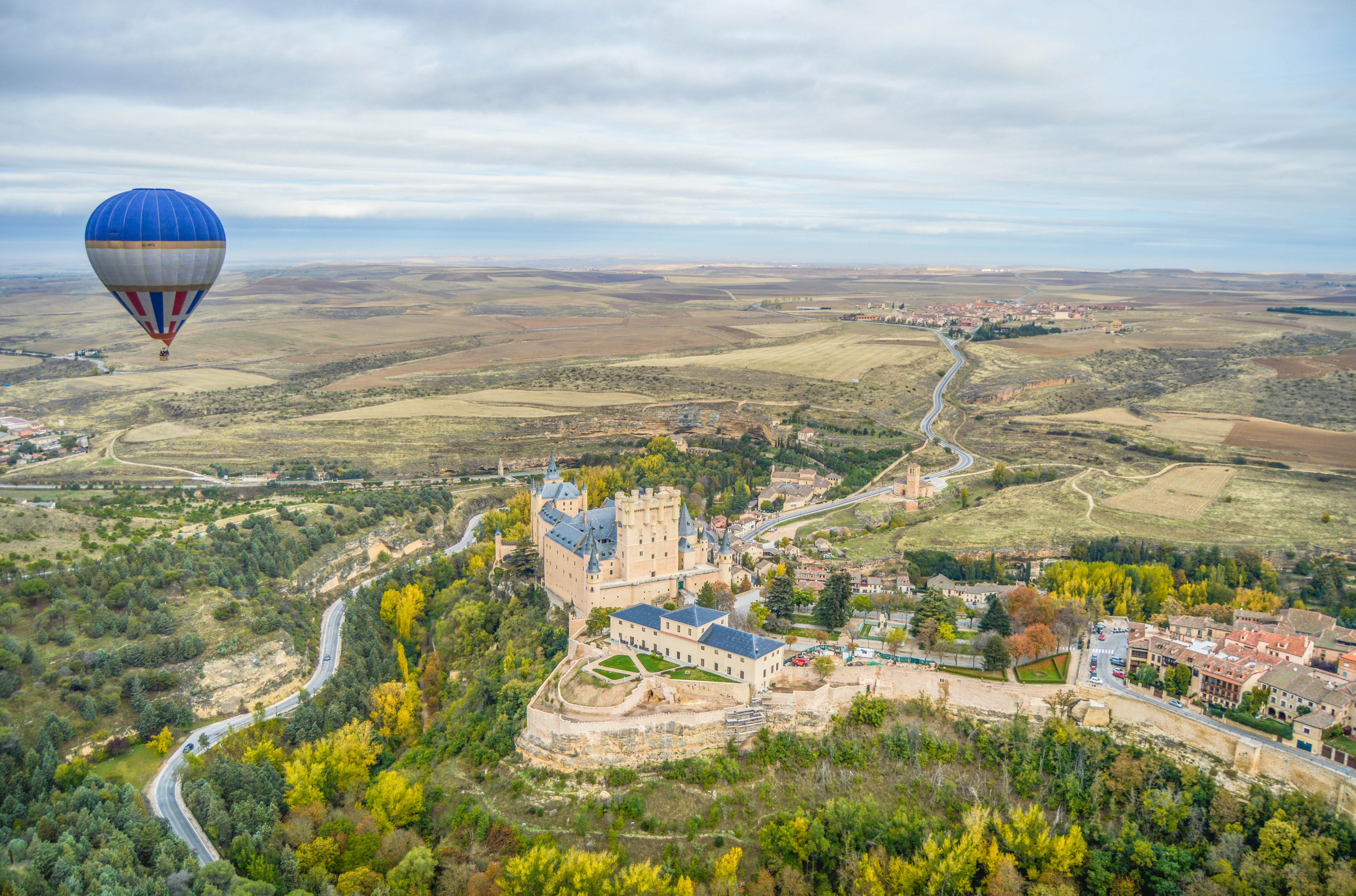 Hot air baloon in Zegovia. Photo: Shutterstock
Further north, Burgos features a magnificent Gothic cathedral, while its location along the Camino de Santiago makes it an appealing stop for both cultural travelers and astronomy fans.
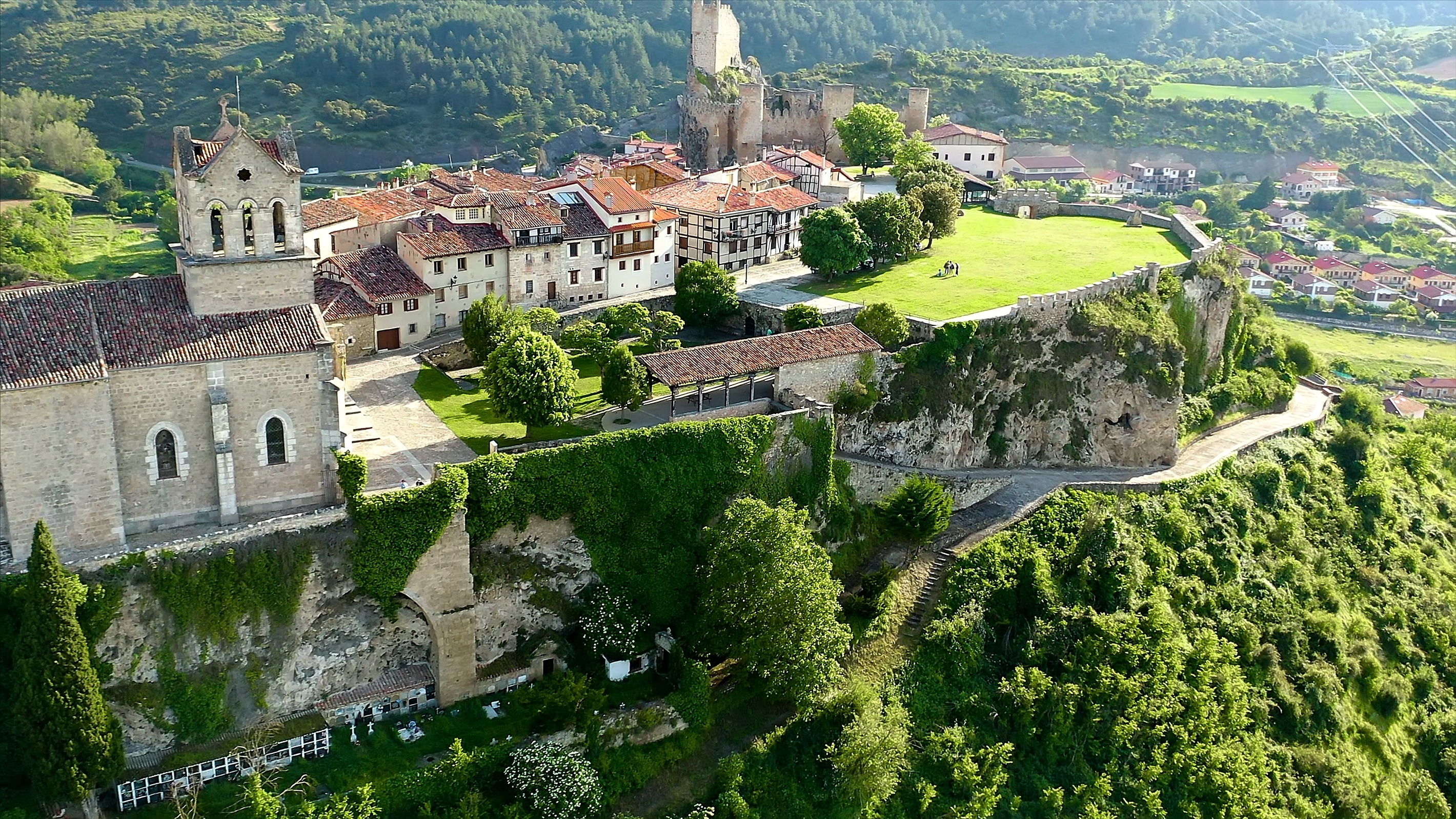 Burgos. Photo: Shutterstock
Palma de Mallorca: Eclipse Over the Mediterranean
Palma de Mallorca will offer one of the longest eclipse experiences in Spain, offering the chance to enjoy a truly spectacular sunset-like eclipse over the Mediterranean.
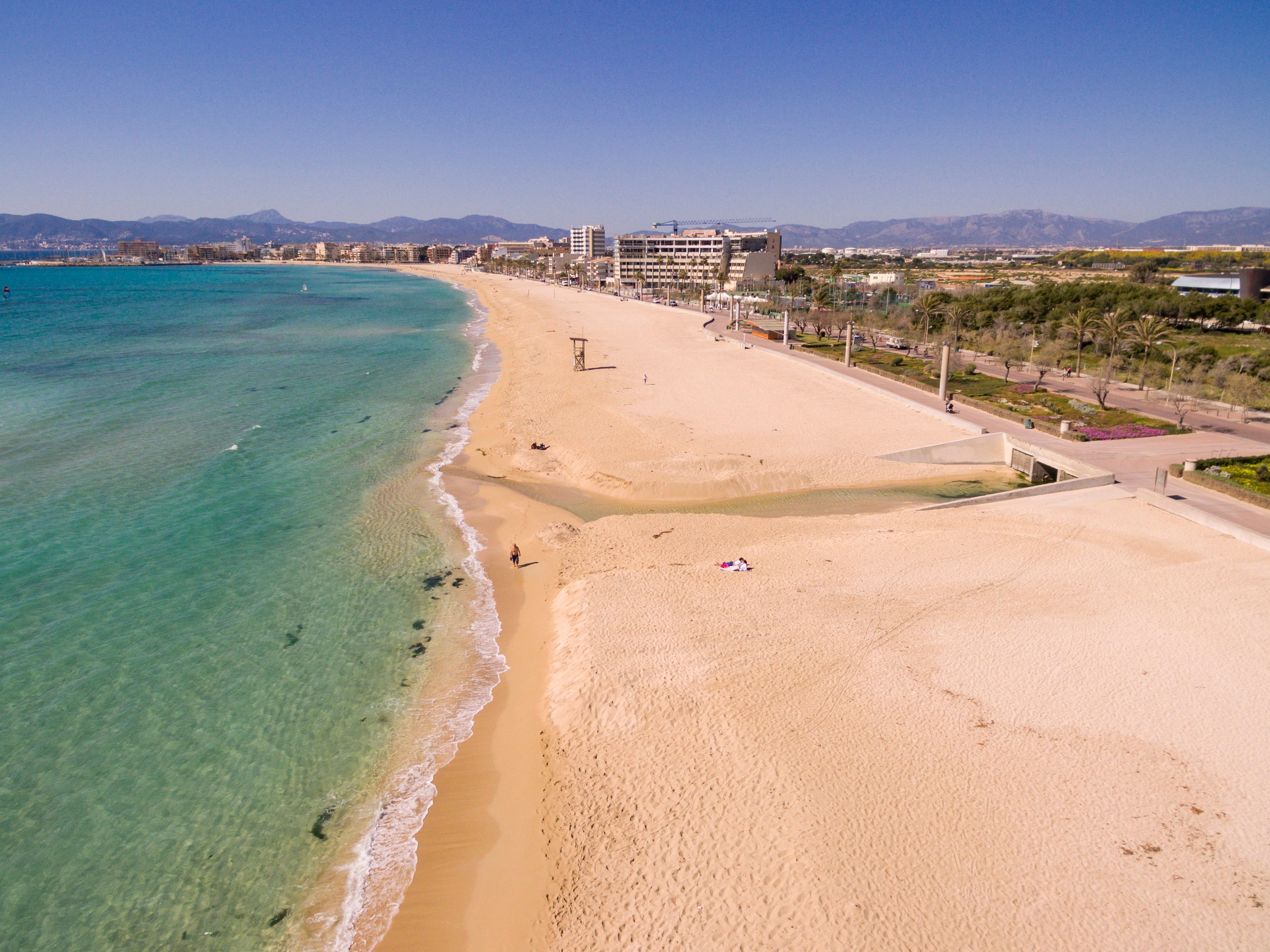 Palma de Mallorca. Photo: Shutterstock
The best viewing locations will be Playa de Palma and the island's western coastline. Extend your stay there for a few days to fully enjoy the charming Old Town and panoramic views from Bellver Castle. After a day of sightseeing, unwind with local specialties like ensaimada and sobrasada along Palma's lively waterfront.
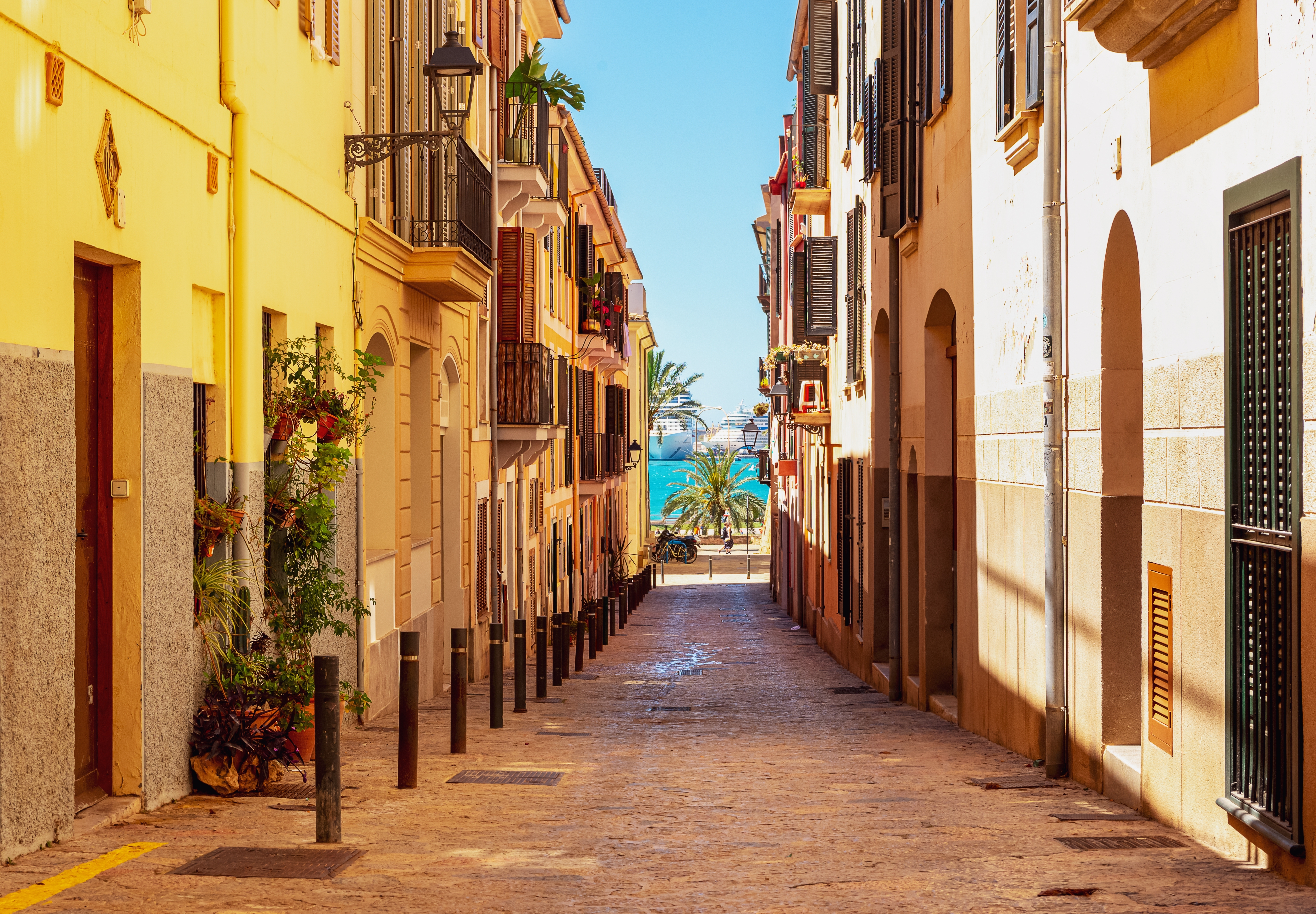 Palma de Mallorca. Photo: Shutterstock
Valencia: Dramatic Eclipse Views
Valencia will also provide an unforgettable setting for the eclipse over the Mediterranean. While coastal areas carry a slightly greater risk of afternoon cloud development compared with inland regions, the city's beaches and waterfront promenades could provide a dramatic backdrop as daylight briefly turns to darkness.
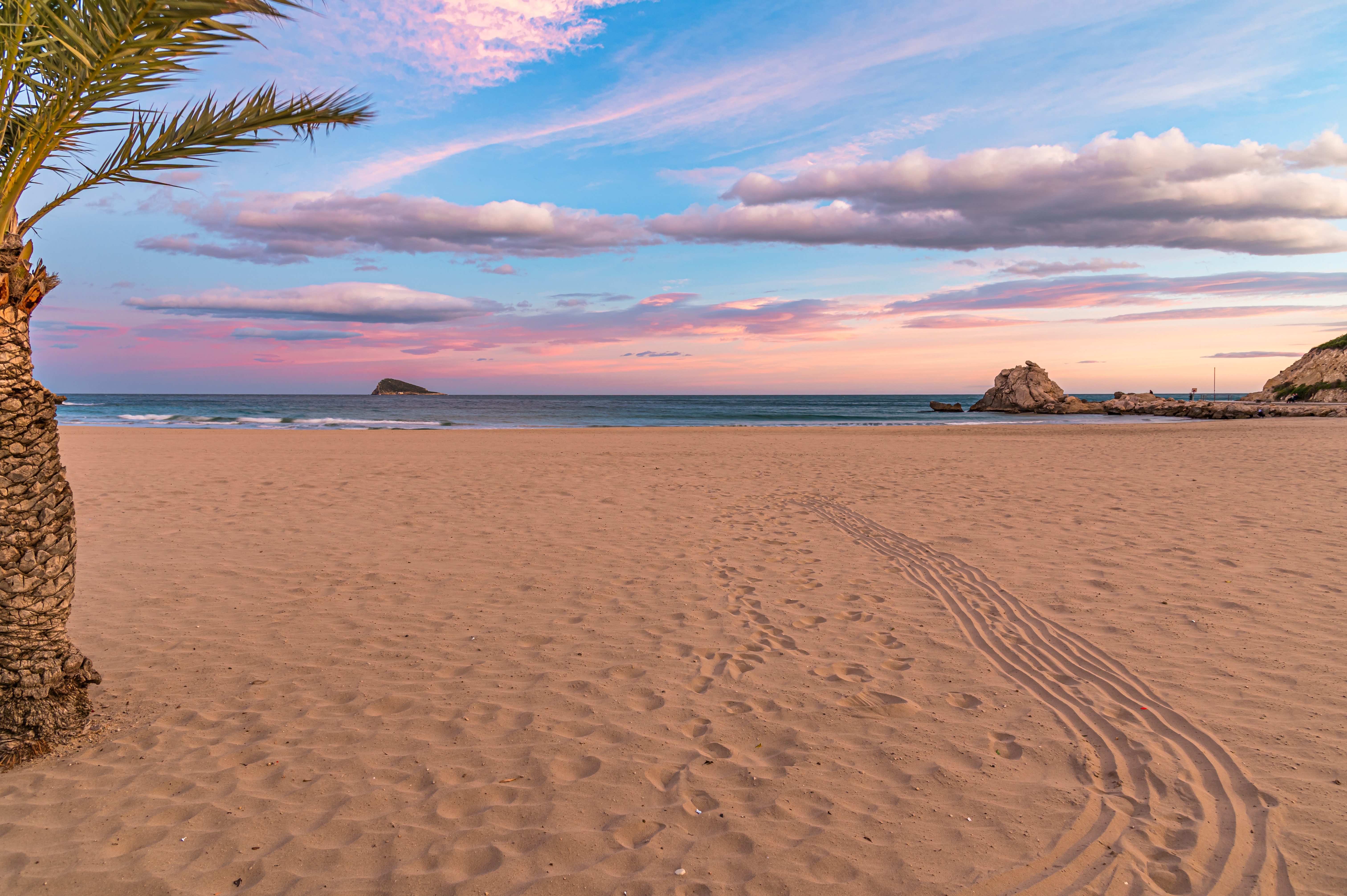 Valencia. Photo: Shutterstock
Once here, explore the futuristic City of Arts and Sciences, wander through the historic center, or relax along the beaches. If you love nature, take a short trip to Albufera Natural Park, famous for its sunsets and boat rides.
Final Thoughts
The path of totality of the eclipse will also pass through neighboring Portugal in a tiny, remote northeastern sliver of mainland near Bragança and Montesinho Natural Park, as well as Greenland, Iceland, and Russia.
A partial solar eclipse will also be visible from much of Europe, northern Africa, and parts of the Atlantic region.
But if you want to create memories that will stay with you for the rest of your life while enjoying a fun Mediterranean-style vacation, Spain is definitely the best place to be this August.