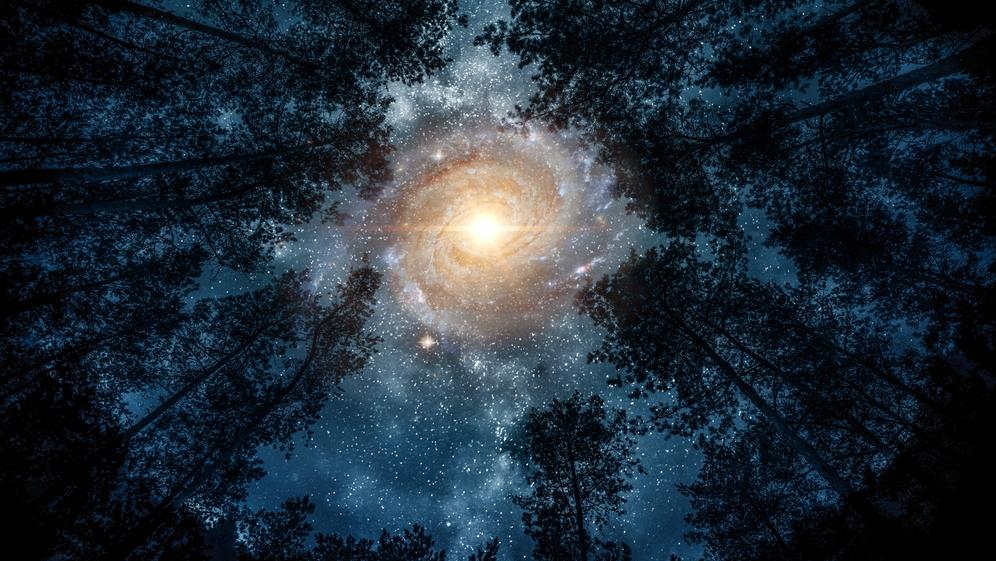
One of my favorite childhood memories is running up a hill next to my grandparents’ house to lie in the heavenly-smelling grass, listen to nothing but the soothing crickets, and watch the night sky in all of its glory, waiting for a Perseid meteor shower. Since this would happen in the summer, either July or August, school was off. This meant I was allowed to roam around freely, long after midnight (the best time to spot the meteors), as long as I was accompanied by friends.
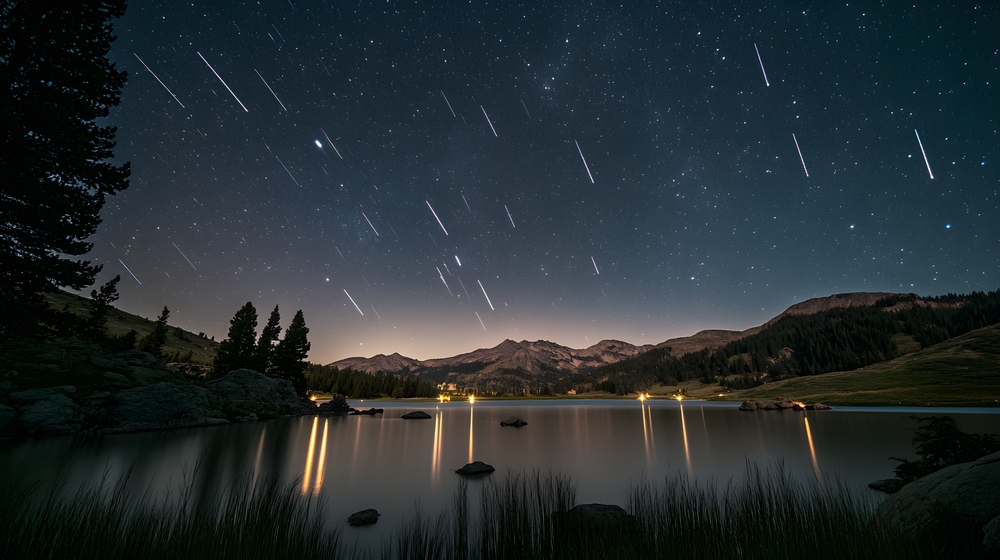 Perseid Meteor Shower observation. Jan Garbers / Shutterstock
And together we sat, my friends and I who shared the same passion, hoping to catch as many Perseids as we could, praying that the Moon wouldn't shine too brightly, since we knew it would interfere with our plans. I remember counting more than 70 Perseids on one of those particularly clear nights. What a joy!
As I grew older, my interest in these meteors that can be observed with the naked eye didn’t dim. However, spotting Perseids from a big city with glaring lights interfering just wasn’t the same. Astronomical phenomena are best seen from places where the sky is clear and light pollution is minimal, I learned later. Such places allow observers to spot up to 100 meteors per hour, compared with 10 to 20 per hour in big cities.
The Rising Dark Sky Tourism Trend
The problem of artificial light washing out much of the night sky, however, hasn’t prevented dark sky tourism from emerging and growing over the years. In fact, it likely made it even more successful, as more travelers are seeking meaningful experiences in the middle of nature.
While the term is pretty self-explanatory, here is a more research-based definition: travel centered on unpolluted night skies to observe natural celestial events.
In other words, travelers actively search for places where stars, planets, meteors, eclipses, and auroras are still visible to the naked eye.
This growing interest shows up in real numbers. Visits to observatories, dark sky reserves, festivals, and aurora-viewing destinations continue to rise. While the full size of the market is hard to measure, its economic impact is clear.
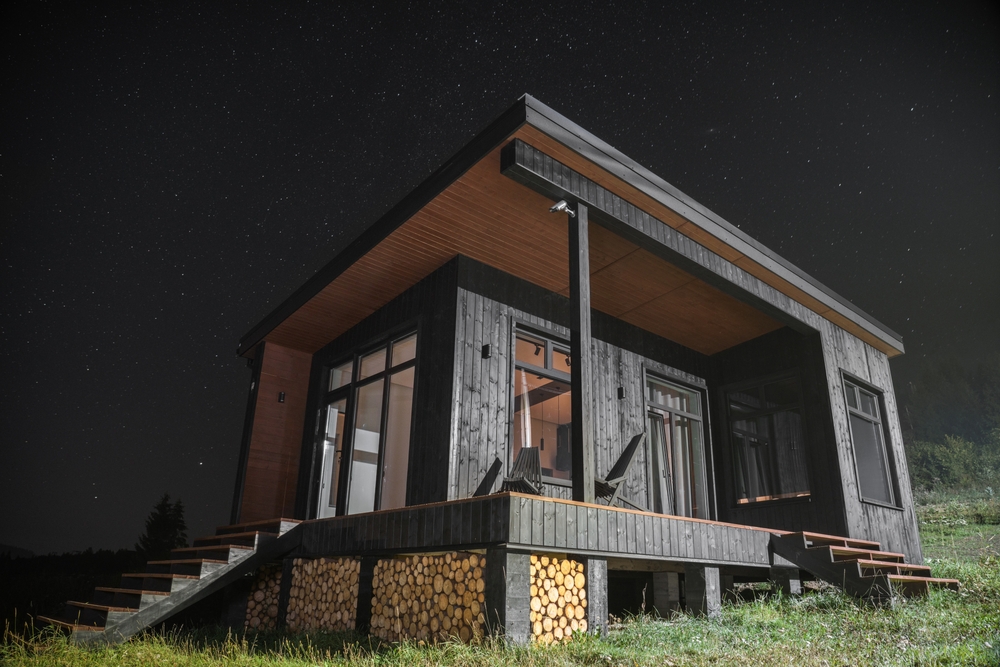 Modern wooden tiny cabin at night with stars. Photo: Ayman alakhras / Shutterstock
According to a 2019 study, dark sky travelers spend more than $500 million each year in the Colorado Plateau alone, supporting roughly 10,000 jobs. Canada’s Northwest Territories, Yellowknife, often called the aurora capital of North America, welcomes tens of thousands of visitors a year, and they spend around CA$57 million while chasing the northern lights.
These figures help explain why communities have become so motivated to protect dark skies. Travelers are looking for reliable viewing conditions and guided experiences, while towns that provide them often benefit from increased tourism outside peak seasons.
One fine example of how dark sky protection and tourism can work together is that of Jasper in Alberta, Canada. Since becoming a dark sky preserve in 2011, the Jasper Dark Sky Festival has grown into a major event that blends education, culture, and entertainment.
Even after wildfire damage in 2024, the festival has continued to bring visitors during a traditionally quiet season.
Dark Sky Certified Places Worldwide
Many local governments and organizations have also started to support better lighting practices, including limiting brightness, using timers and sensors, and directing lights downward.
Globally, more than 200 locations in 22 countries are now certified as International Dark Sky Places. In Canada alone, 27 sites have been recognized, ranging from remote national parks to urban star parks.
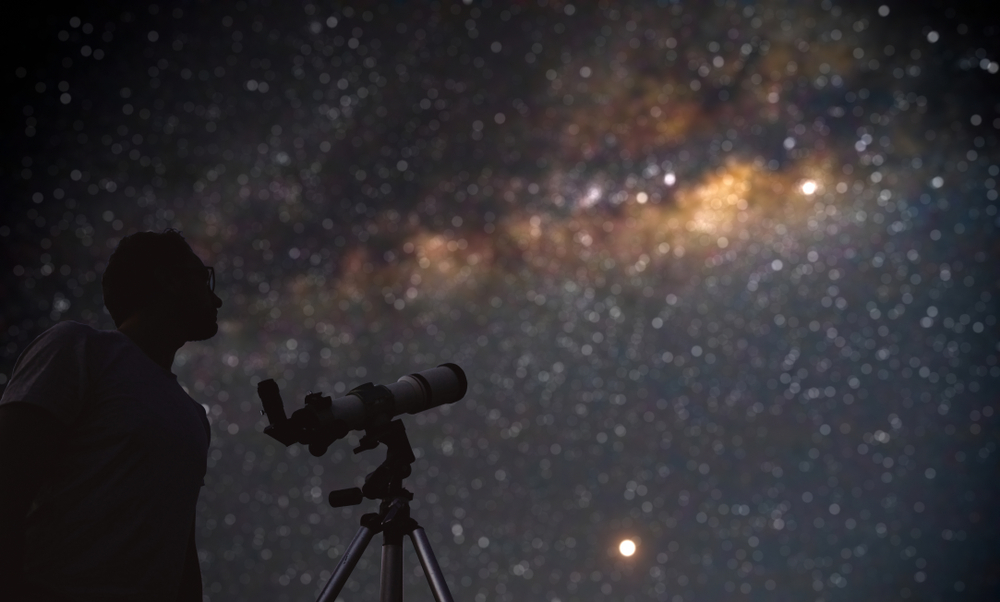 Astronomer with a telescope. Photo: AstroStar / Shutterstock
In Europe, countries like the United Kingdom (Wales, England, Scotland), France, Spain, Poland, Denmark, Germany, Hungary, Ireland, and Norway are prepared to usher in dark sky tourists, as they have been certified as official Dark Sky Places. In Asia, such locations exist in Japan, China, South Korea, Taiwan, and Saudi Arabia. Africa has Namibia and South Africa, while South America has Chile, Brazil, Peru, and Argentina.
What to Expect From a Certified Dark Sky Place
These certified places provide quality nighttime experiences that enable travelers to connect with nature at night at special Parks, Sanctuaries, and Reserves where they can freely stargaze, go for night hikes under the moon or the brilliant Milky Way, listen to stories sharing the lessons learned from the night sky passed down from generation to generation, and experiment astrophotography skills while trying to capture celestial phenomena.
- Another point of attraction is sitting in the nocturnal environment, surrounded by fireflies, owls, bats, foxes, or nightjars. These places also use DarkSky-approved lighting, fixtures, luminaires, path lighting, street lighting, and controllers to enhance the experience while minimizing light pollution.
The Strange Case of Aurora Borealis in Europe
Europe recently received a vivid reminder of why dark skies matter. In January 2026, a powerful G4-class geomagnetic storm, triggered by a fast-moving coronal mass ejection from the Sun, pushed the aurora borealis far beyond its usual northern range.
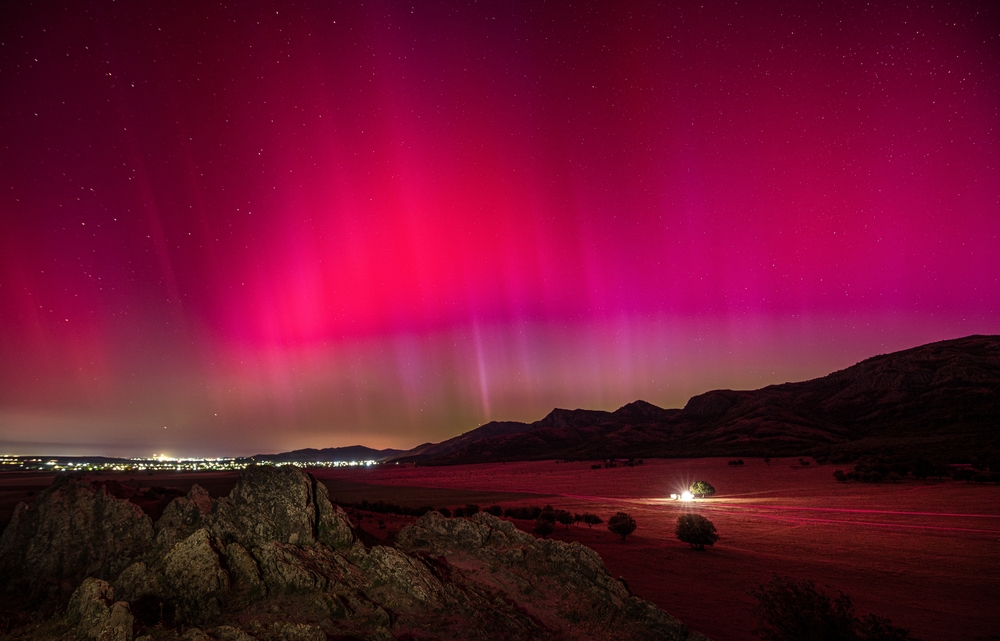 Aurora Borealis seen from Dobrogea, Romania. Photo: Ionut Musca / Shutterstock
Bright auroras were reported in countries and areas that usually have nothing to do with the phenomenon that Norway and Finland are popular for: across Germany, the Netherlands, Romania, Hungary, the Czech Republic, France, and Switzerland. In some areas, the lights appeared as intense reds and purples, which is a rare sight at these latitudes and, according to some observers, the strongest activity seen in parts of Europe since 2005.
Sightings were most successful in unusual locations in southern areas, including De Veluwe in the Netherlands, rural parts of Germany’s Ruhr region, and mountainous regions like the Krkonoše range.
As the rare auroras seen across Europe in early 2026 showed, truly dark skies make extraordinary experiences possible, reminding us that protecting the night benefits travelers and communities who enjoy the shared experience of looking up.