After recently announcing A380 that will serve as a flying test bed for advanced engine technologies aimed at powering the next generation of aircraft, Airbus has fresh and equally exciting news.
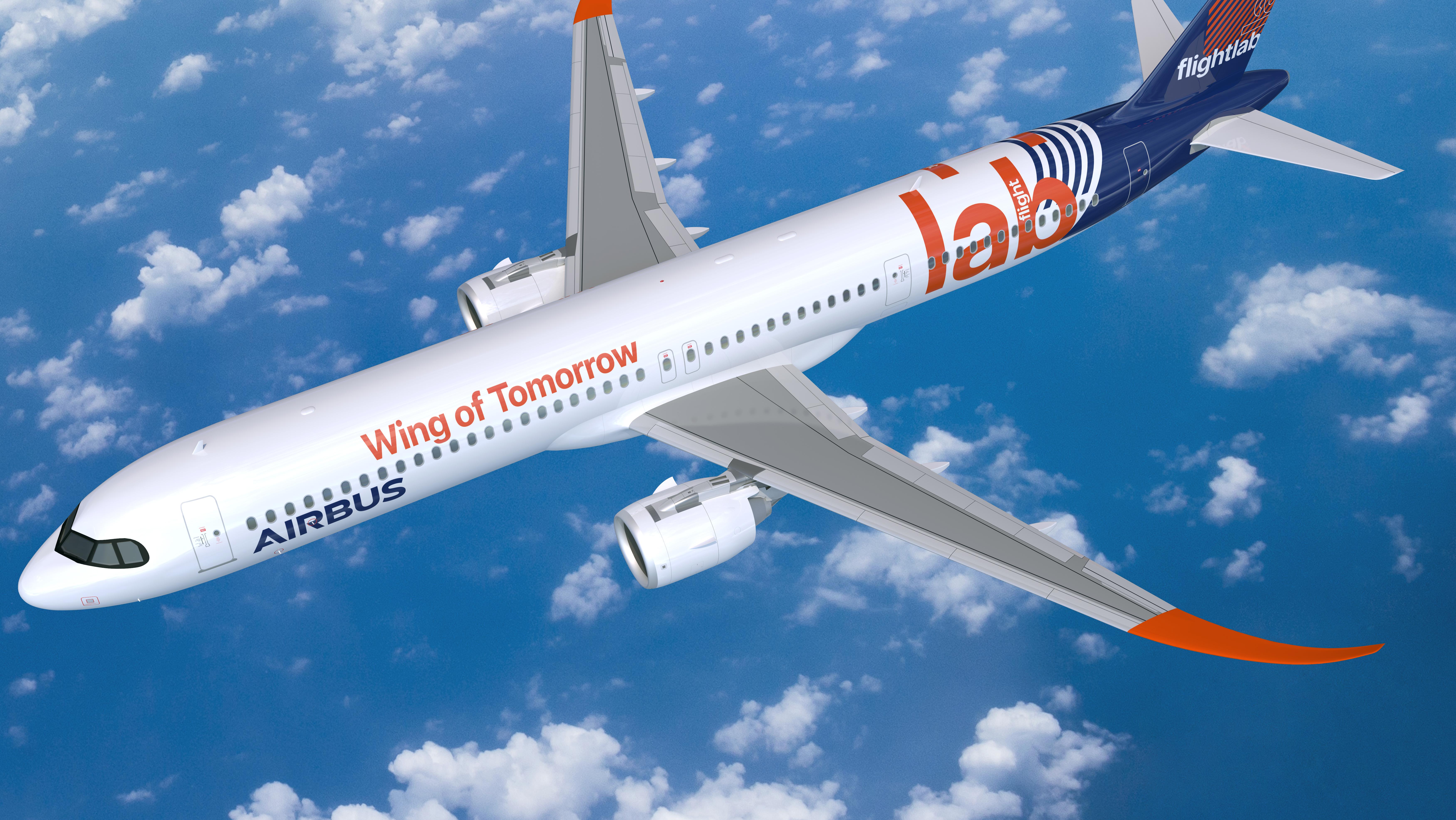
The manufacturer will be moving into the next phase of its ambitious Wing of Tomorrow program with a new flight test campaign that could help define the future of commercial aviation.
Stimulating Folding Wings
Over the next three years, the aircraft manufacturer will design, build, and test full-scale wing extensions on an Airbus A321neo, gathering real-world data on how longer wings perform in flight.
The project is part of Airbus' broader effort to develop more efficient single-aisle aircraft capable of reducing fuel consumption and emissions. According to the company, the wing remains one of the most important factors in improving aircraft performance.
The wing extensions, each measuring several meters in length, will simulate folding wings in their fully extended position during flight. Airbus says the test equipment installed on the aircraft will provide detailed information on wing behavior and how increased wingspan affects handling characteristics.
"For more than 50 years, Airbus has spearheaded aviation innovation, continually pushing the boundaries of what's possible to deliver more efficient aircraft for future generations," said Sue Partridge, Head of the Wing of Tomorrow program.
She added that the initiative will allow Airbus to safely challenge traditional design limits while exploring the benefits of longer wings for future aircraft.
Longer, Lighter, and More Slender
Before taking to the skies, Airbus engineers are using digital modeling and wind tunnel testing to finalize the designs. The company believes the flight data collected during the campaign will help unlock the full potential of advanced wing technology.
Wing of Tomorrow focuses on developing wings that are longer, lighter, and more slender to maximize aerodynamic efficiency. Airbus has already constructed three 17-meter ground-based wing demonstrators and tested more than 100 manufacturing and assembly technologies as part of the program.
The wing extensions will be assembled at Airbus' Wing Technology Development Center in the United Kingdom before being transported to Toulouse for flight testing.
Since 2014, the program has received £227 million ($304 million) in funding through the Aerospace Technology Institute, a partnership involving the UK government and Innovate UK.
Airbus is also pursuing another wing technology initiative through Airbus UpNext. Its eXtra Performance WING demonstrator, which can change shape during flight to optimize efficiency, is expected to make its maiden remotely piloted flight by the end of 2026.
Together, the projects underline Airbus' determination to develop the technologies that could power the next generation of single-aisle aircraft.