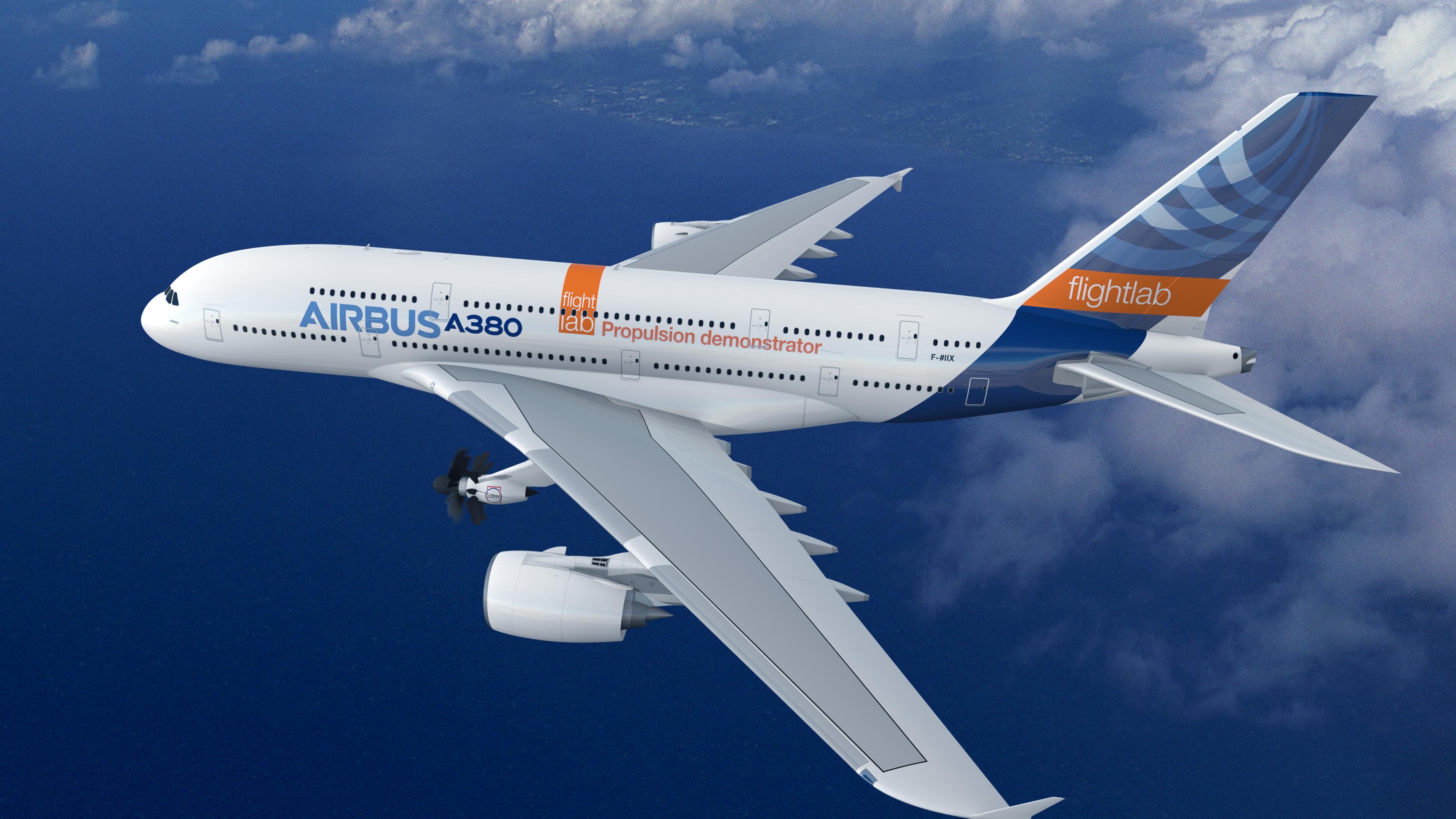
The Airbus A380 is getting a second life, not as a passenger aircraft, but as a flying laboratory for what could become the next generation of aviation technology.
Airbus unveiled its newly painted A380 test aircraft, which will play a key role in evaluating advanced propulsion systems designed to make future air travel more efficient and environmentally friendly.
"Fresh livery. New look. The same legendary A380, completely reimagined to test the future of flight," Airbus said in a social media post on Tuesday, July 21, accompanying images of the aircraft's striking new appearance.
The superjumbo's mission is far removed from carrying hundreds of passengers across continents. Instead, the aircraft will be used to flight test CFM's Revolutionary Innovation for Sustainable Engines, or RISE, an open fan engine concept that promises to significantly improve fuel efficiency for future single-aisle aircraft.
Airbus says the A380 is uniquely suited for the task. Its four-engine configuration allows engineers to safely test an experimental engine while retaining the aircraft's existing powerplants. The aircraft's enormous interior also provides ample space for the sophisticated equipment needed to monitor performance during test flights.
The open fan engine is one of several technologies Airbus is exploring as it looks beyond today's aircraft designs. Developed in partnership with CFM International, the engine is expected to reduce fuel consumption and carbon emissions by as much as 20% compared with current narrow-body engines.
Flight testing is expected to take place before the end of the decade as part of the European Union-funded OFELIA project.
Airbus is also investing in other propulsion technologies, including hydrogen fuel cells, hybrid electric systems, and engines capable of operating on 100% sustainable aviation fuel. Another major initiative, known as SWITCH, is investigating hybrid electric and heat recovery technologies that could improve fuel efficiency by up to 25 percent.
While the A380's commercial future may be limited, the aircraft is proving that retirement does not necessarily mean the end of innovation.
Once the world's largest passenger jet, the A380 is now helping shape what comes next. And if Airbus succeeds, the skies of the 2030s could look very different from those of today.
As a reminder, at the end of July, the European Union Aviation Safety Agency issued an Emergency Airworthiness Directive requiring immediate inspections of Airbus A380 aircraft after the discovery of cracks in the wing mid-spar structure, a key load-bearing component of the aircraft’s wing.